A great man is always willing to be little.
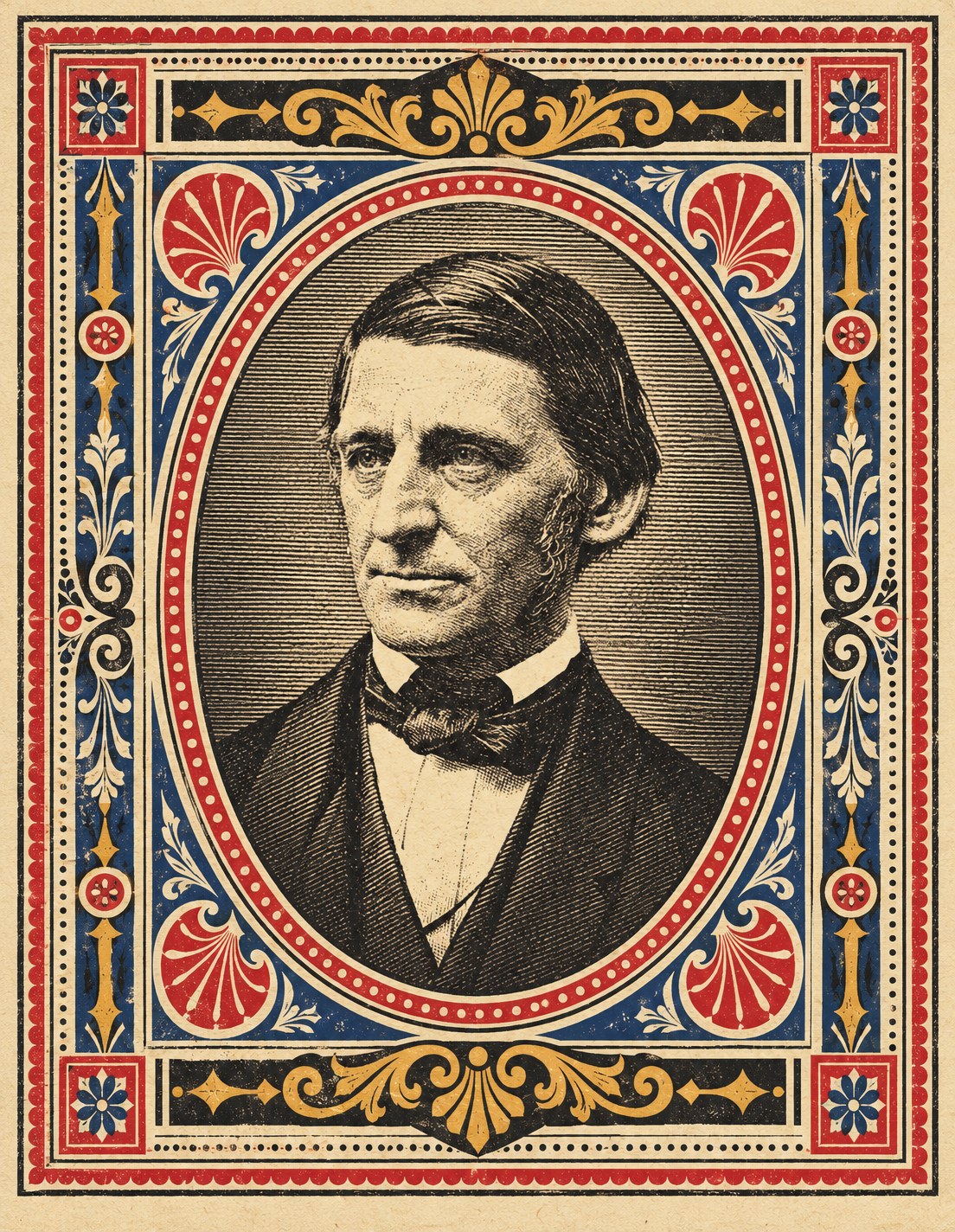
Genuine
Yes. In Essays: First Series (1841), Essay III, “Compensation”.
Found word for word by program in the full text.
- Work
- Essays: First Series (Essays), 1841
- Where
- Essay III, “Compensation”
- Found at
- Paragraph 162 of the text
Researched by AI; checked by program against the full text on 29 November 2026. Editorial review: pending. How we check
On the page
[…] Has he a defect of temper that unfits him to live in society? Thereby he is driven to entertain himself alone and acquire habits of self-help; and thus, like the wounded oyster, he mends his shell with pearl.
Our strength grows out of our weakness. The indignation which arms itself with secret forces does not awaken until we are pricked and stung and sorely assailed. A great man is always willing to be little. Whilst he sits on the cushion of advantages, he goes to sleep. […]
The same guards which protect us from disaster, defect, and enmity, defend us, if we will, from selfishness and fraud. Bolts and bars are not the best of our institutions, nor is shrewdness in trade a mark of wisdom. […]
The history of persecution is a history of endeavors to cheat nature, to make water run up hill, to twist a rope of sand. It makes no difference whether the actors be many or one, a tyrant or a mob. […]
The scene
In the latter part of the essay, Emerson argues that weaknesses and setbacks can become aids to growth. The paragraph begins with strength emerging from weakness. After this sentence he contrasts the complacency of advantage with the learning forced on someone who is defeated, corrected and made aware of his ignorance.
What it means
Genuine greatness includes accepting a diminished position and learning from correction rather than protecting one’s importance.
Often misread
The sentence is not praise for helplessness or enforced submission. The surrounding argument is about voluntarily facing one’s weak points so that adversity can teach something.
Topics
Related quotes
- True intelligence very readily conceives of an intelligence greater than its own; that is why truly intelligent people are modest. André Gide
- Satisfaction lies in the effort, not in the attainment. Full effort is full victory. Mahatma Gandhi
- If any man is able to convince me and show me that I do not think or act right, I will gladly change; for I seek the truth by which no man was ever injured. But he is injured who abides in his error and ignorance. Marcus Aurelius
- Receive wealth or prosperity without arrogance; and be ready to let it go. Marcus Aurelius
- Do the thing, and you shall have the Power.
Sources
Cite it
Ralph Waldo Emerson, Essays: First Series (1841), Essay III, “Compensation”. Checked at Quotogeny, https://quotogeny.com/q/a-great-man-is-always-willing-to-be-little/ (29 November 2026).
Have a different wording, or a source we missed? Check it or submit it.
Do you hold the rights to anything on this page? Tell us.
Checked by people
People who checked this entry against its source, under their own names. Their checks do not change the verdict: an editor reviews every entry.
Comments