Computers are incredibly fast, accurate and stupid; humans are incredibly slow, inaccurate and brilliant; together they are powerful beyond imagination.
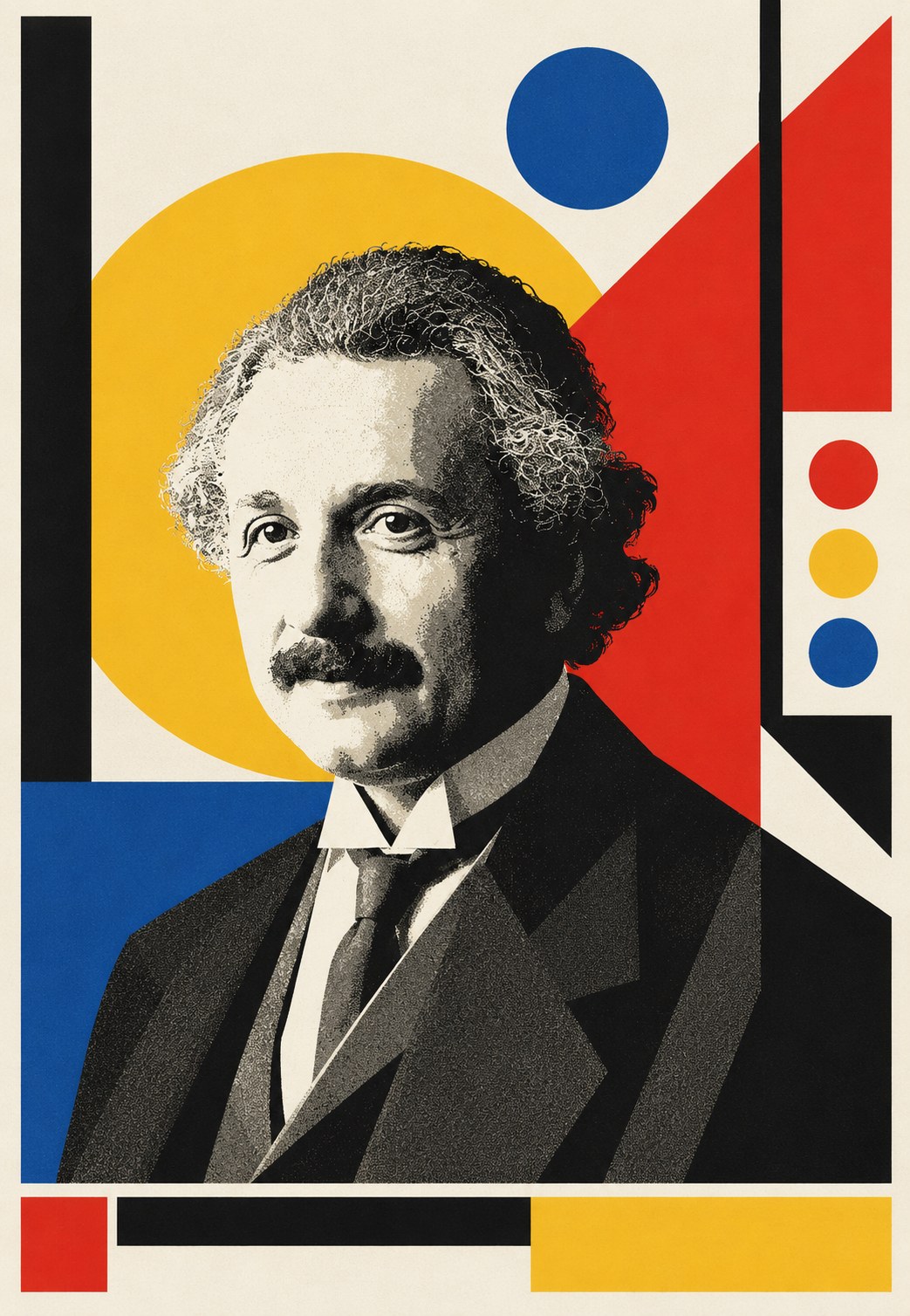
Not found
No. It is not in Einstein’s works, and who first wrote it is not known.
Researched by AI. Entry updated 27 November 2026. Editorial review: pending. How we check
About this quote
Where it comes from
No source in Einstein’s writings. Wikiquote (Einstein, Misattributed) reports the earliest source it located on Google Books crediting him is Mary McGuire, The Internet Handbook for Writers, Researchers, and Journalists (2000), p. 14, and an internet post of 1997 before that. It also finds the saying much older and uncredited: the October 1961 issue of Fortune, in John Pfeiffer’s article ‘Problems, Too, Have Problems’, has the line ‘Man is a slow, sloppy, and brilliant thinker; computers are fast, accurate, and stupid’ (Wikiquote’s most likely origin); a 1969 conference article by H. D. Couture Jr. and M. A. Keyes has ‘Computers are incredibly fast, accurate, and stupid’; and S. G. Walesh, Urban Surface Water Management (1989), p. 315, gives ‘The computer is incredibly fast, accurate, and stupid. Man is unbelievably slow, inaccurate, and brilliant. The marriage of the two is a challenge and opportunity beyond imagination’, said to be ‘stated anonymously’. Wikiquote also points to an April 1968 article with looser wording (not read here). This run read none of these publications, only Wikiquote’s account of them; whether the Fortune line has the full popular wording, and who first joined ‘together they are powerful beyond imagination’, is not settled. Searched: Wikiquote’s Einstein page; Quote Investigator’s site search (no entry).
How it travelled
- October 1961Earliest found · credited to John PfeifferJohn Pfeiffer’s article in Fortune, in which Wikiquote finds the earliest form of the saying, with no mention of Einstein.
Man is a slow, sloppy, and brilliant thinker; computers are fast, accurate, and stupid.
Fortune, October 1961, John Pfeiffer, ‘Problems, Too, Have Problems’. Checked on another researcher’s citation, not seen first-hand. Source - 1969Reworded · credited to no oneHas the first clause of the saying, ‘Computers are incredibly fast, accurate, and stupid’, and then contrasts a trained operator, not yet the full saying.
Computers are incredibly fast, accurate, and stupid.
H. D. Couture Jr. and M. A. Keyes, ‘A Paper Industry Application of Systems Engineering and Direct Digital Control’, Advances in Instrumentation, vol. 24, part 4, 1969. Checked on another researcher’s citation, not seen first-hand. Source - 1989Reworded · credited to no oneA book on urban water management gives the full three-part form, ‘stated anonymously’.
The computer is incredibly fast, accurate, and stupid. Man is unbelievably slow, inaccurate, and brilliant. The marriage of the two is a challenge and opportunity beyond imagination.
S. G. Walesh, Urban Surface Water Management (1989), p. 315. Checked on another researcher’s citation, not seen first-hand. Source - 1997Credited to Albert EinsteinAn internet post credits it to Einstein, the earliest located by Wikiquote.An internet post of 1997, as cited by Wikiquote. Checked on another researcher’s citation, not seen first-hand. Source
- 2000Credited to Albert EinsteinThe earliest book credit to Einstein that Wikiquote found.Mary McGuire, The Internet Handbook for Writers, Researchers, and Journalists (2000), p. 14. Checked on another researcher’s citation, not seen first-hand. Source
In context
Credited to Einstein in talks, slides and computing books as a neat division of labour between people and machines. Einstein died in 1955, and no letter or interview of his holds it. The wording is a computing-age saying that Wikiquote’s editors traced to a 1961 magazine article.
What it says
Computers are quick and exact but have no judgement; people are slow and prone to error but can think. Joined, they do more than either alone.
Often misread
Taken as the physicist’s foresight about computing. The earliest known form, by the science writer John Pfeiffer in 1961, does not mention Einstein at all, and later forms in engineering literature call it anonymous.
Use with care
Not Einstein’s: the earliest known forms are from 1961 on and do not name him.
Also shared as
- A misquotationThe computer is incredibly fast, accurate, and stupid. Man is unbelievably slow, inaccurate, and brilliant. The marriage of the two is a challenge and opportunity beyond imagination. The 1989 engineering-book form, said to be ‘stated anonymously’, not credited to Einstein (Walesh, Urban Surface Water Management, p. 315, according to Wikiquote). Where it was seen
Topics
Related quotes
- So many books, so little time. (not found) Frank Zappa
- Knowledge which is acquired under compulsion has no hold on the mind. Plato
- Success does not consist in never making blunders, but in never making the same one a second time. (misattributed) George Bernard Shaw
- Wise men talk because they have something to say ; fools, because they would like to say something. (not found) Plato
- All women become like their mothers. That is their tragedy. No man does. That’s his. Oscar Wilde
Sources
- en.wikiquote.org/wiki/Albert_Einstein (Misattributed: “Computers are incredibly fast, accurate and stupid”)
Cite it
“Computers are incredibly fast, accurate and stupid; humans are incredibly slow, inaccurate and brilliant; together they are powerful beyond imagination.” Attributed to Albert Einstein. No. It is not in Einstein’s works, and who first wrote it is not known. Quotogeny, https://quotogeny.com/q/computers-are-incredibly-fast-accurate-and-stupid/ (checked 27 November 2026).
Have a different wording, or a source we missed? Check it or submit it.
Do you hold the rights to anything on this page? Tell us.
Checked by people
People who checked this entry against its source, under their own names. Their checks do not change the verdict: an editor reviews every entry.
Comments