AI-generated · About the image
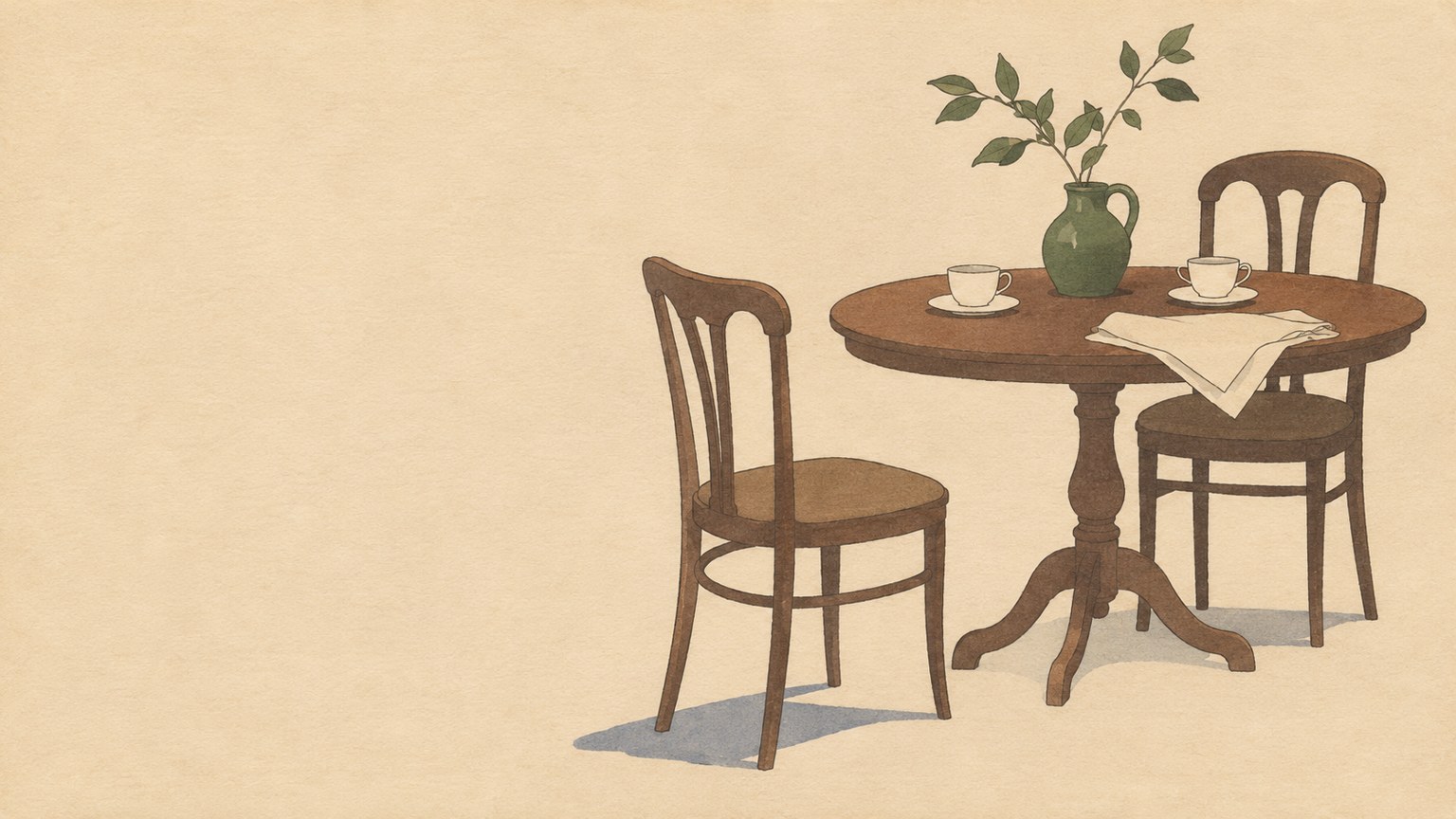
Set in the manner of Mir iskusstva Book Art, a style from Stylogeny. The narrator’s generalisation leads straight into domestic disorder. Mir iskusstva’s retrospective book-art language gives that contrast a restrained setting of outlined household objects and flat washes, without depicting the novel’s characters or reconstructing its household.
The picture is AI‑generated: not a historical work, and it holds no words of the quote.
Happy families are all alike; every unhappy family is unhappy in its own way.
Genuine
Yes. In Anna Karenina (1875), Part 1, chapter 1 (opening sentence).
Found word for word by program in the Russian original and in Constance Garnett’s English translation (1901).
- Work
- Anna Karenina (Анна Каренина), 1875
- Where
- Part 1, chapter 1 (opening sentence)
- Found at
- Paragraph 2 of the Russian text, 3 of the English
- Translation
- Constance Garnett, 1901
Researched by AI; checked by program against the full text on 29 November 2026. Editorial review: pending. How we check
On the page
Happy families are all alike; every unhappy family is unhappy in its own way.
Все счастливые семьи похожи друг на друга, каждая несчастливая семья несчастлива по-своему.
Everything was in confusion in the Oblonskys’ house. […]
Все смешалось в доме Облонских. Жена узнала, что муж был в связи с бывшею в их доме француженкою-гувернанткой, и объявила мужу, что не может жить с ним в одном доме. […]
Three days after the quarrel, Prince Stepan Arkadyevitch Oblonsky—Stiva, as he was called in the fashionable world—woke up at his usual hour, that is, at eight o’clock in the morning, not in his wife’s bedroom, but on the leather-covered sofa in his study. […]
The scene
The narrator opens the novel with this contrast and immediately turns to the disorder in the Oblonsky household. Dolly has discovered her husband Stepan Arkadyevitch’s affair with a former governess; for three days the spouses, children and servants have been living in confusion. The generalisation introduces a particular family’s crisis, rather than a speech by one of its members.
What it means
Family happiness is presented as depending on a shared pattern, while each family’s unhappiness has its particular history and form.
Often misread
This is the narrator’s opening generalisation, not a character’s diagnosis or a promise that happy people have identical personalities. It sets up the novel’s inquiry into marriage and family life.
Topics
Related quotes
- And naught soe’er that’s great to such degree, Nor wonderful so far, but all mankind Little by little abandon their surprise. Lucretius
- The laws of conscience, which we pretend to be derived from nature, proceed from custom. Michel de Montaigne
- Righteously and honourably he would obtain them, if he might, or else forego them. Xenophon
- Thus it is That rolling ages change the times of things: What erst was of a price, becomes at last A discard of no honour; Lucretius
- No pleasure is in itself evil, but the things which produce certain pleasures entail annoyances many times greater than the pleasures themselves. Epicurus
Sources
Cite it
Leo Tolstoy, Anna Karenina (1875), Part 1, chapter 1 (opening sentence), translated by Constance Garnett (1901). Checked at Quotogeny, https://quotogeny.com/q/happy-families-are-all-alike/ (29 November 2026).
Have a different wording, or a source we missed? Check it or submit it.
Do you hold the rights to anything on this page? Tell us.
Checked by people
People who checked this entry against its source, under their own names. Their checks do not change the verdict: an editor reviews every entry.
Comments