If one has one’s why of life, one can come to terms with almost any how.
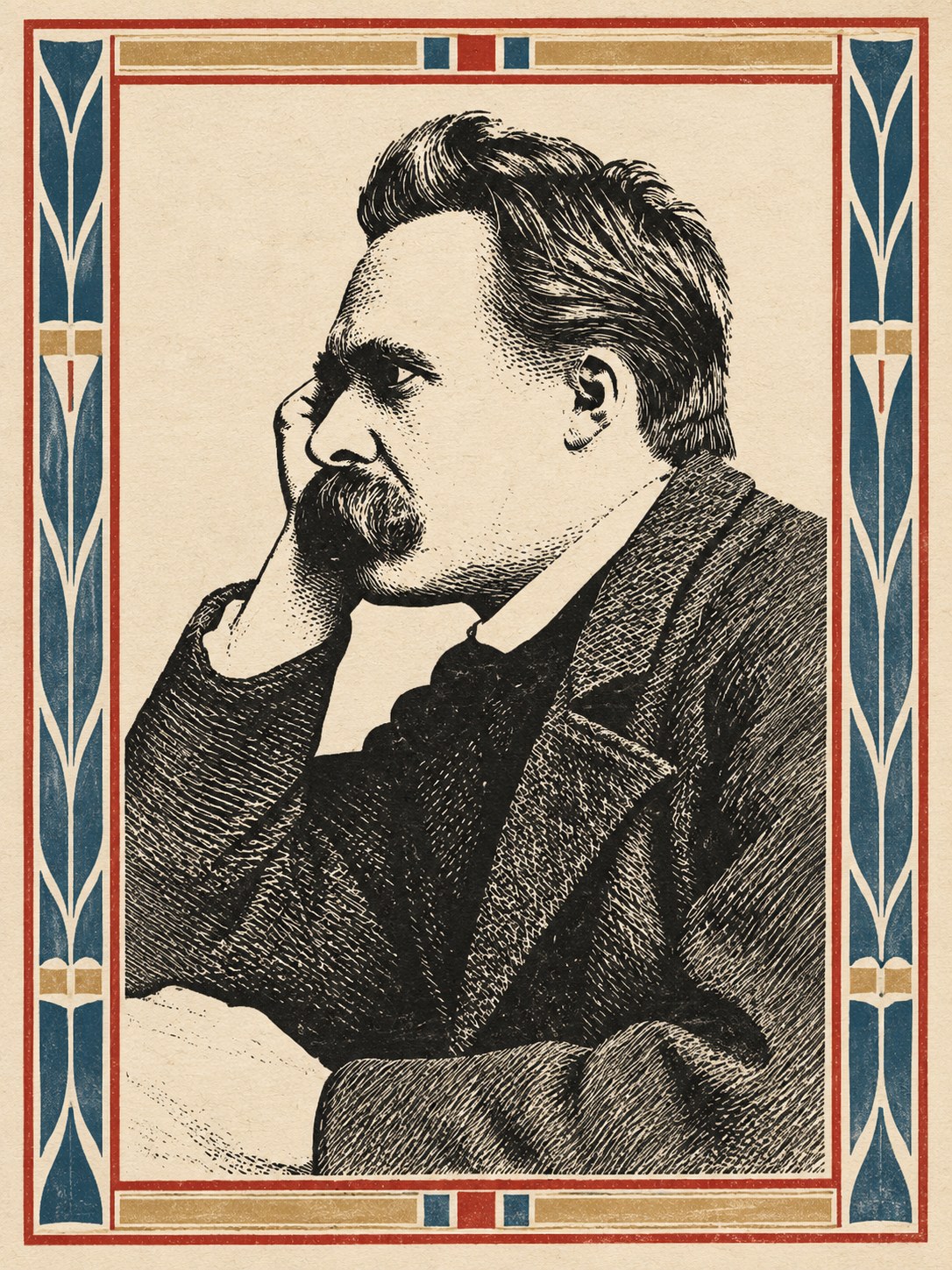
Genuine
Yes. In Twilight of the Idols (1889), Maxims and Arrows (Sprüche und Pfeile), § 12.
Found word for word by program in the German original.
The English is our own translation, not yet reviewed: there is no public-domain translation of this text in our sources.
- Work
- Twilight of the Idols (Götzen-Dämmerung), 1889
- Where
- Maxims and Arrows (Sprüche und Pfeile), § 12
- Found at
- Paragraph 6 of the German text
- Translation
- Our own, not yet reviewed (no public-domain translation in our sources)
Researched by AI; checked by program against the full text on 29 November 2026. Editorial review: pending. How we check
On the page
12.
Hat man sein warum? des Lebens, so verträgt man sich fast mit jedem wie? – Der Mensch strebt nicht nach Glück; nur der Engländer thut das.
If one has one’s why of life, one can come to terms with almost any how. — Man does not strive for happiness; only the Englishman does.
The scene
This is the first sentence of maxim 12, in Maxims and Arrows. Nietzsche immediately adds a provocation: man does not strive for happiness, only the Englishman does; the point is not that happiness is the universal purpose of life.
What it means
Having a reason for living can make very difficult conditions bearable. The qualification almost matters: the sentence does not promise unlimited endurance.
Often misread
Often made into an unconditional promise that a purpose lets someone endure anything. The German says almost any how, and the following sentence challenges the assumption that happiness is the aim of life.
Topics
Related quotes
- It does not matter what you bear, but how you bear it. Seneca the Younger
- Human felicity is produc’d not so much by great pieces of good fortune that seldom happen, as by little advantages that occur every day. Benjamin Franklin
- We may encounter many defeats, but we must not be defeated. Maya Angelou
- By precepts the road is long; by examples it is short and effective. Seneca the Younger
- Positive anything is better than negative nothing. Elbert Hubbard
Sources
Cite it
Friedrich Nietzsche, Twilight of the Idols (1889), Maxims and Arrows (Sprüche und Pfeile), § 12, our own translation. Checked at Quotogeny, https://quotogeny.com/q/if-one-has-ones-why-of-life/ (29 November 2026).
Have a different wording, or a source we missed? Check it or submit it.
Do you hold the rights to anything on this page? Tell us.
Checked by people
People who checked this entry against its source, under their own names. Their checks do not change the verdict: an editor reviews every entry.
Comments