If the bee disappears from the surface of the earth, man would have no more than four years to live
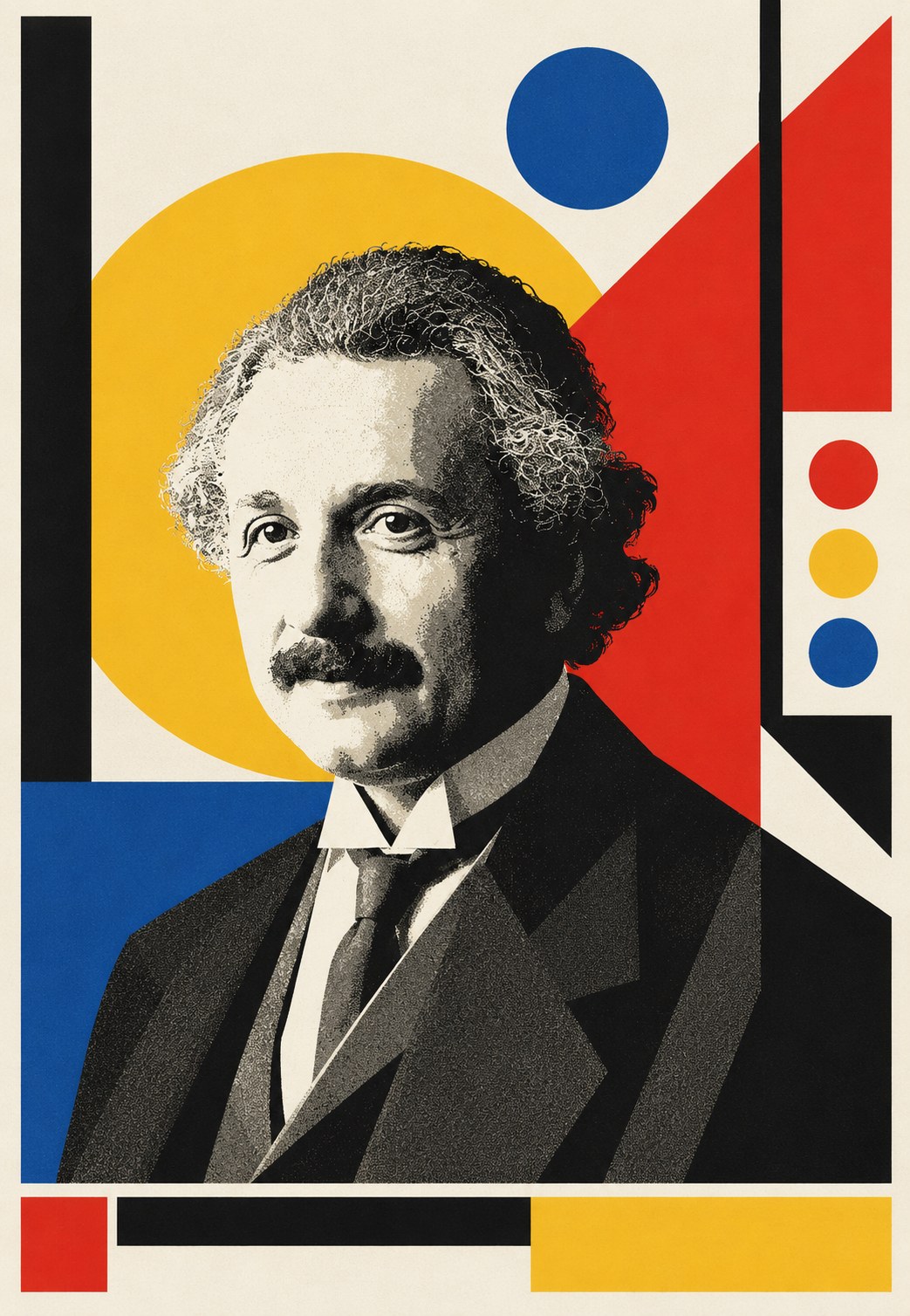
Not found
No. No authenticated Einstein source supports this prediction; the four-year claim was attributed to him in print in 1965, but its originator remains unknown.
Researched by AI. Entry updated 25 October 2026. Editorial review: pending. How we check
About this quote
Where it comes from
No Einstein source for the four-year prediction has been located. Quote Investigator documents a different statement attributed to Einstein by Ernest A. Fortin in January 1941: removing bees would remove at least 100,000 plants. QI relates that earlier idea to Maurice Maeterlinck’s The Life of the Bee (1901), not to evidence of an Einstein calculation. Its earliest located four-year claim is Pierre Pascaud’s article in La Vie des Bêtes et l’Ami des Bêtes, May 1965, p. 18, followed by Abeilles et Fleurs in June and an English report in The Irish Beekeeper in April 1966. A January 1994 newspaper report describes a French beekeepers’ pamphlet repeating it. All these historical items were checked only through QI. The original author of the four-year claim remains unknown; Maeterlinck is not established as its author. A 2021 research article by Dyer and colleagues documents Einstein’s genuine 18 October 1949 letter about sensory biology, a separate subject. This run read that article, QI, Wikiquote and a University of Georgia discussion, not Einstein’s complete correspondence. No Einstein corpus is held locally.
How it travelled
- 1901Before it · credited to Maurice MaeterlinckMaeterlinck discusses the dependence of plants and possibly civilization on bees, without the modern four-year deadline.Maurice Maeterlinck, The Life of the Bee, translated by Alfred Sutro (London: George Allen, 1901), pp. 317–318. Checked on another researcher’s citation, not seen first-hand. Source
- January 1941Before it · credited to Albert EinsteinFortin tentatively attributes a claim about bees and 100,000 plants to Einstein; this earlier attribution has no four-year deadline.Ernest A. Fortin, “Comments From Quebec,” Canadian Bee Journal, vol. 49, no. 1 (January 1941), p. 13. Checked on another researcher’s citation, not seen first-hand. Source
- May 1965Earliest found · credited to Albert EinsteinPascaud says Einstein calculated that humanity would disappear within four years if bees were exterminated; this is QI’s earliest located four-year claim, not an Einstein document.Pierre Pascaud, “La démoustication mortelle,” La Vie des Bêtes et l’Ami des Bêtes (May 1965), p. 18, column 3. Checked on another researcher’s citation, not seen first-hand. Source
- April 1966Reworded · credited to Albert EinsteinThe Irish Beekeeper prints an English version, acknowledging Abeilles et Fleurs, June 1965.Mrs. G. V. Poulton, “News From Abroad: Which Queens Are The Best?”, The Irish Beekeeper: An Beachaire, vol. 20, no. 4 (April 1966), p. 74, column 2. Checked on another researcher’s citation, not seen first-hand. Source
- 25 January 1994Spread · credited to Albert EinsteinA report of a Brussels beekeepers’ demonstration describes a French apiculture union pamphlet repeating the four-year warning under Einstein’s name.Chris Mclaughlin, “Fearful beekeepers plead for curbs on honey imports,” The Scotsman (25 January 1994). Checked on another researcher’s citation, not seen first-hand. Source
In context
A warning used in discussions of pollinator loss, generally promoted as a prediction or calculation by Einstein. Quote Investigator finds a four-year extinction claim attributed to him in French publications in 1965 and in English in The Irish Beekeeper in 1966; a 1994 Brussels beekeepers’ demonstration helped spread a later form.
What it says
The saying warns of human dependence on pollinators by asserting a dramatic four-year deadline after bees disappear.
Often misread
Neither the Einstein attribution nor the supposed four-year calculation is authenticated. An authentic 1949 Einstein letter concerns animal perception and possible new physical insights, not a prediction of human extinction; it should not be confused with this saying.
Use with care
An unverified attribution and prediction, not a documented four-year calculation by Einstein. His authentic letter about bees and animal perception does not contain this warning.
Topics
Related quotes
- Tolerance will reach such a level that intelligent people will be banned from thinking so as not to offend the imbeciles. (not found) Fyodor Dostoevsky
- I fear the day that technology will surpass our human interaction. The world will have a generation of idiots. (not found)
- Insanity is doing the same thing over and over again and expecting different results. (not found)
- The worst form of inequality is to try to make unequal things equal. (not found) Aristotle
- All religions are equally sublime to the ignorant, useful to the politician, and ridiculous to the philosopher. (misattributed) Lucretius
Sources
Cite it
“If the bee disappears from the surface of the earth, man would have no more than four years to live” Attributed to Albert Einstein. No. No authenticated Einstein source supports this prediction; the four-year claim was attributed to him in print in 1965, but its originator remains unknown. Quotogeny, https://quotogeny.com/q/if-the-bee-disappears-four-years-to-live/ (checked 25 October 2026).
Have a different wording, or a source we missed? Check it or submit it.
Do you hold the rights to anything on this page? Tell us.
Checked by people
People who checked this entry against its source, under their own names. Their checks do not change the verdict: an editor reviews every entry.
Comments