It is never too late to give up our prejudices.
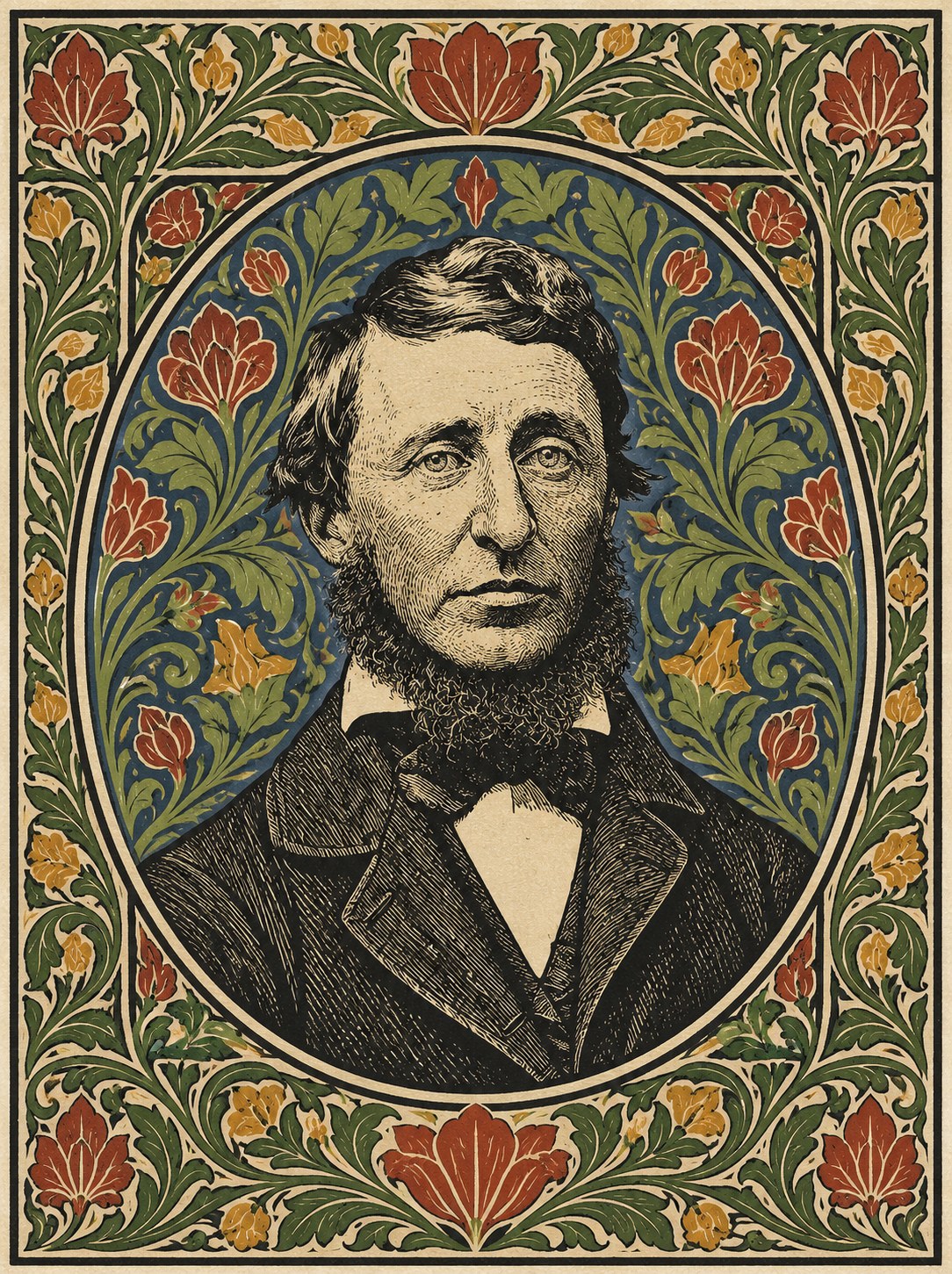
Genuine
Yes. In Walden (1854), Economy.
Found word for word by program in the full text.
- Work
- Walden (Walden; or, Life in the Woods), 1854
- Where
- Economy
- Found at
- Paragraph 16 of the text
Researched by AI; checked by program against the full text on 29 November 2026. Editorial review: pending. How we check
On the page
[…] There is no play in them, for this comes after work. But it is a characteristic of wisdom not to do desperate things.
When we consider what, to use the words of the catechism, is the chief end of man, and what are the true necessaries and means of life, it appears as if men had deliberately chosen the common mode of living because they preferred it to any other. Yet they honestly think there is no choice left. But alert and healthy natures remember that the sun rose clear. It is never too late to give up our prejudices. No way of thinking or doing, however ancient, can be trusted without proof. What everybody echoes or in silence passes by as true to-day may turn out to be falsehood to-morrow, mere smoke of opinion, which some had trusted for a cloud that would sprinkle fertilizing rain on their fields. […]
One farmer says to me, “You cannot live on vegetable food solely, for it furnishes nothing to make bones with;” and so he religiously devotes a part of his day to supplying his system with the raw material of bones; walking all the while he talks behind his oxen, which, with vegetable-made bones, jerk him and his lumbering plough along in spite of every obstacle. […]
The whole ground of human life seems to some to have been gone over by their predecessors, both the heights and the valleys, and all things to have been cared for. […]
The scene
Thoreau asks why people accept the prevailing way of life as though no alternative existed. He challenges inherited assumptions and immediately adds that even the oldest habits of thought or conduct need proof. The paragraph goes on to question the authority of age and to describe life as an experiment not yet tried by the person living it.
What it means
A settled belief can still be abandoned. Familiarity and age do not exempt a belief or practice from examination.
Often misread
Prejudices here are inherited preconceptions broadly, including assumptions about work, necessity and respectable living; the sentence is not confined to hostility toward a particular social group.
Topics
Related quotes
- The object of teaching a child is to enable him to get along without his teacher. Elbert Hubbard
- On the occasion of every accident (event) that befalls you, remember to turn to yourself and inquire what power you have for turning it to use. Epictetus
- Live the questions now. Rainer Maria Rilke
- A student is the most important person ever in this school. William W. Purkey
- Escape competition through authenticity. Naval Ravikant
Cite it
Checked by people
People who checked this entry against its source, under their own names. Their checks do not change the verdict: an editor reviews every entry.
Comments