What is great in man is that he is a bridge and not a goal.
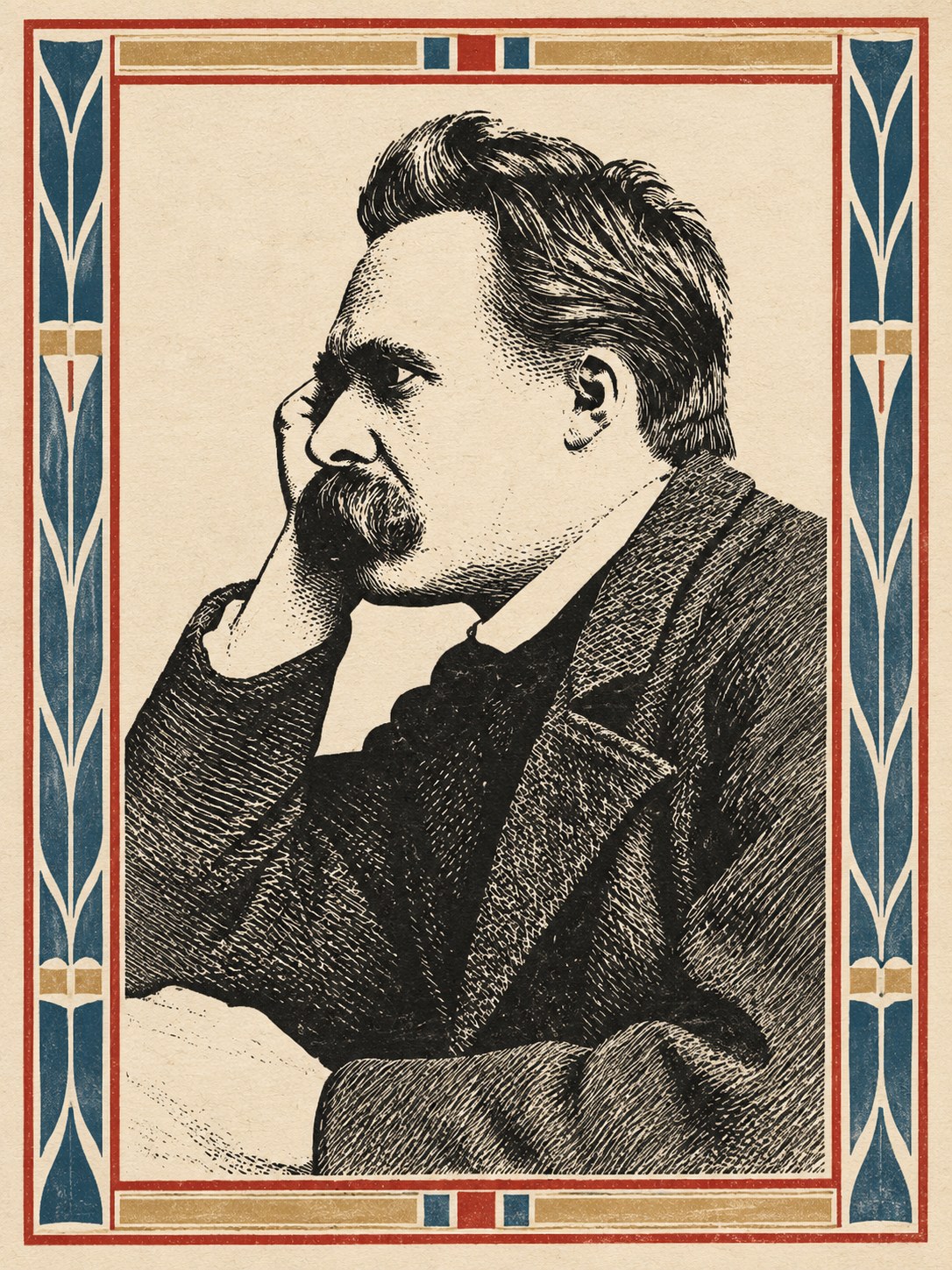
Genuine
Yes. In Thus Spoke Zarathustra (1883), Prologue, section 4 (Zarathustra’s Prologue, Zarathustras Vorrede), said by Zarathustra. These are the character’s words, not a statement in Nietzsche’s own voice.
Found word for word by program in the German original and in Thomas Common’s English translation (1909).
- Work
- Thus Spoke Zarathustra (Also sprach Zarathustra), 1883
- Where
- Prologue, section 4 (Zarathustra’s Prologue, Zarathustras Vorrede)
- Found at
- Paragraph 78 of the German text, 112 of the English
- Translation
- Thomas Common, 1909
Researched by AI; checked by program against the full text on 31 October 2026. Editorial review: pending. How we check
On the page
A dangerous crossing, a dangerous wayfaring, a dangerous looking-back, a dangerous trembling and halting.
Ein gefährliches Hinüber, ein gefährliches Auf-dem-Wege, ein gefährliches Zurückblicken, ein gefährliches Schaudern und Stehenbleiben.
What is great in man is that he is a bridge and not a goal: what is lovable in man is that he is an OVER-GOING and a DOWN-GOING.1
Was gross ist am Menschen, das ist, dass er eine Brücke und kein Zweck ist: was geliebt werden kann am Menschen, das ist, dass er ein Übergang und ein Untergang ist.
I love those that know not how to live except as down-goers, for they are the over-goers.
Ich liebe Die, welche nicht zu leben wissen, es sei denn als Untergehende, denn es sind die Hinübergehenden.
I love the great despisers, because they are the great adorers, and arrows of longing for the other shore.
Ich liebe die grossen Verachtenden, weil sie die grossen Verehrenden sind und Pfeile der Sehnsucht nach dem andern Ufer.
The scene
In the market-place Zarathustra teaches the Overman: man is a rope stretched between animal and Overman, over an abyss. He says what is great in man is that he is a bridge and not a goal, and what is lovable is that he is a going-over and a going-under. The sentences that follow list the dangers of the crossing, and he goes on to say that he loves those who do not know how to live except by going under, for they are the ones going over.
What it means
Humanity is not the end of anything but a passage toward something beyond it; its worth lies in the willingness to cross and to perish for that.
Often misread
Taken as a general line about growth or transition in a life. It is bound to the Overman: man is to be overcome, and “going-under” (Untergang) means perishing for it, which the soft versions leave out. It is Zarathustra speaking, at the opening of the book, to a crowd that laughs at him.
Topics
Related quotes
- I teach you the Superman. Man is something that is to be surpassed.
- Courage is not simply one of the virtues, but the form of every virtue at the testing point. C. S. Lewis
- What we do in life echoes in eternity. (not found) Marcus Aurelius
- One must still have chaos in oneself to be able to give birth to a dancing star.
- Of all that is written, I love only what a person has written with his blood.
Sources
- en.wikiquote.org/wiki/Friedrich_Nietzsche (Thus Spoke Zarathustra, Prologue, section 4, tr. Thomas Common; checked 25 October 2026)
Cite it
Friedrich Nietzsche, Thus Spoke Zarathustra (1883), Prologue, section 4 (Zarathustra’s Prologue, Zarathustras Vorrede), translated by Thomas Common (1909). Spoken by Zarathustra. Checked at Quotogeny, https://quotogeny.com/q/man-is-a-bridge-and-not-a-goal/ (31 October 2026).
Have a different wording, or a source we missed? Check it or submit it.
Do you hold the rights to anything on this page? Tell us.
Checked by people
People who checked this entry against its source, under their own names. Their checks do not change the verdict: an editor reviews every entry.
Comments