It is the stillest words which bring the storm. Thoughts that come with doves’ footsteps guide the world.
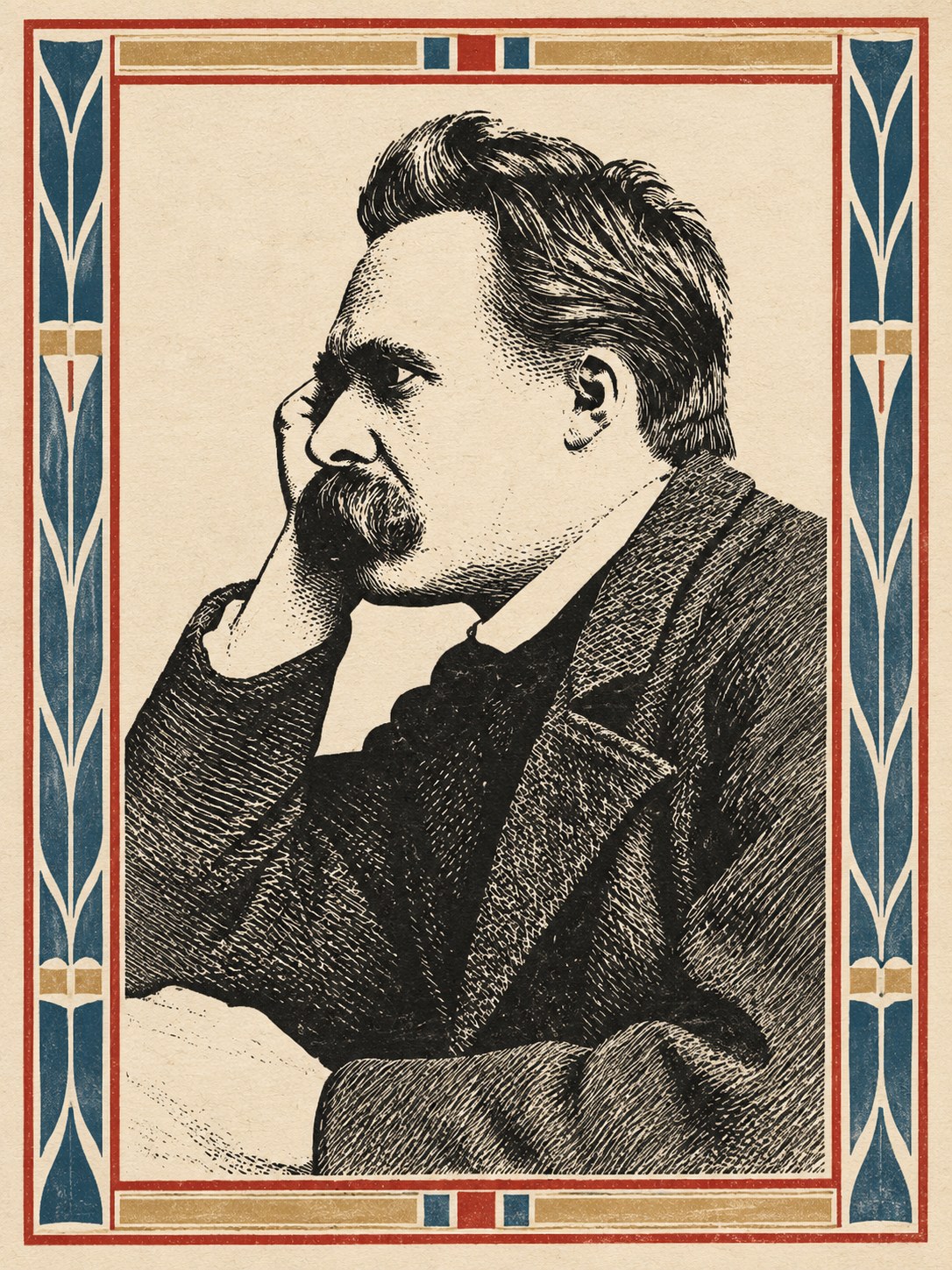
Genuine
Yes. In Thus Spoke Zarathustra (1883), Part 2, “The Stillest Hour” (Die stillste Stunde; Common XLIV), said by Zarathustra’s personified stillest hour. These are the character’s words, not a statement in Nietzsche’s own voice.
Found word for word by program in the German original and in Thomas Common’s English translation (1909).
- Work
- Thus Spoke Zarathustra (Also sprach Zarathustra), 1883
- Where
- Part 2, “The Stillest Hour” (Die stillste Stunde; Common XLIV)
- Found at
- Paragraph 1755 of the German text, 1794 of the English
- Translation
- Thomas Common, 1909
Researched by AI; checked by program against the full text on 29 November 2026. Editorial review: pending. How we check
On the page
And I answered: “I lack the lion’s voice for all commanding.”
Und ich antwortete: „Mir fehlt des Löwen Stimme zu allem Befehlen.“
Then was there again spoken unto me as a whispering: “It is the stillest words which bring the storm. Thoughts that come with doves’ footsteps guide the world.1
Da sprach es wieder wie ein Flüstern zu mir: „Die stillsten Worte sind es, welche den Sturm bringen. Gedanken, die mit Taubenfüssen kommen, lenken die Welt.
O Zarathustra, thou shalt go as a shadow of that which is to come: thus wilt thou command, and in commanding go foremost.”—
Oh Zarathustra, du sollst gehen als ein Schatten dessen, was kommen muss: so wirst du befehlen und befehlend vorangehen.“—
And I answered: “I am ashamed.”
Und ich antwortete: „Ich schäme mich.“
The scene
Zarathustra explains to his friends why he must leave them and return to solitude. In the dreamlike parable he recounts, his stillest hour speaks without a voice and presses him to say what he knows and accept the task of commanding. When he protests that he lacks a lion’s voice, the whisper answers with these words; he still refuses, and is told that he is not yet ripe for his own fruits.
What it means
An idea does not need a loud announcement to change the world: quiet words can prepare an upheaval.
Often misread
These are not simply Zarathustra’s reassuring words to his followers. They are spoken to him by a disturbing, personified hour that challenges his reluctance to speak and lead.
Topics
Related quotes
- The most decisive actions of our lives are most often unconsidered actions. André Gide
- Then tyranny naturally arises out of democracy. Plato
- The world is woven all of dream and error And but one sureness in our truth may lie— That when we hold to aught our thinking’s mirror We know it not by knowing it thereby. Fernando Pessoa
- But the worst enemy thou canst meet, wilt thou thyself always be.
- Thinking is being sick in the eyes. Fernando Pessoa
Sources
Cite it
Friedrich Nietzsche, Thus Spoke Zarathustra (1883), Part 2, “The Stillest Hour” (Die stillste Stunde; Common XLIV), translated by Thomas Common (1909). Spoken by Zarathustra’s personified stillest hour. Checked at Quotogeny, https://quotogeny.com/q/the-stillest-words-bring-the-storm/ (29 November 2026).
Have a different wording, or a source we missed? Check it or submit it.
Do you hold the rights to anything on this page? Tell us.
Checked by people
People who checked this entry against its source, under their own names. Their checks do not change the verdict: an editor reviews every entry.
Comments