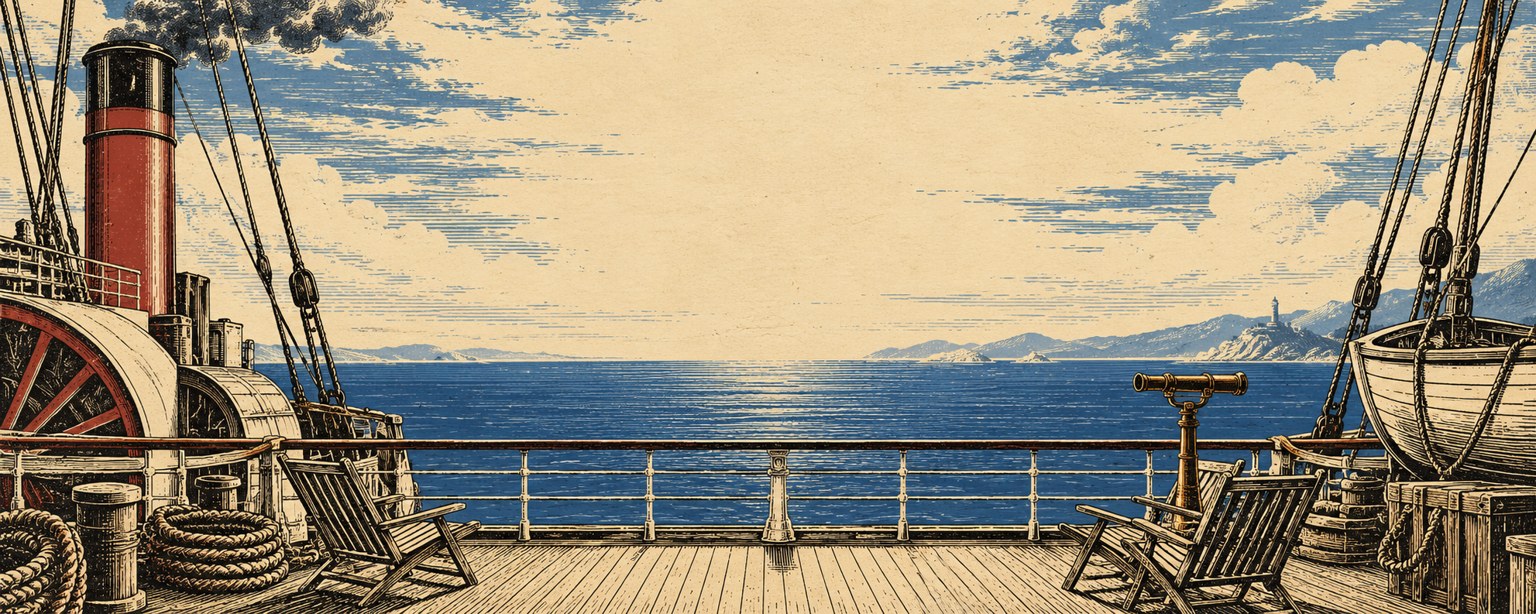
AI-generated · About the image
Set in the manner of Victorian Letterpress & Wood Type, a style from Stylogeny. Twain wrote it at the end of The Innocents Abroad (1869), his book of a steamship excursion to Europe and the Holy Land. The jobbing printers of his day announced such voyages with a stock cut of a steamer and slab-serif capitals.
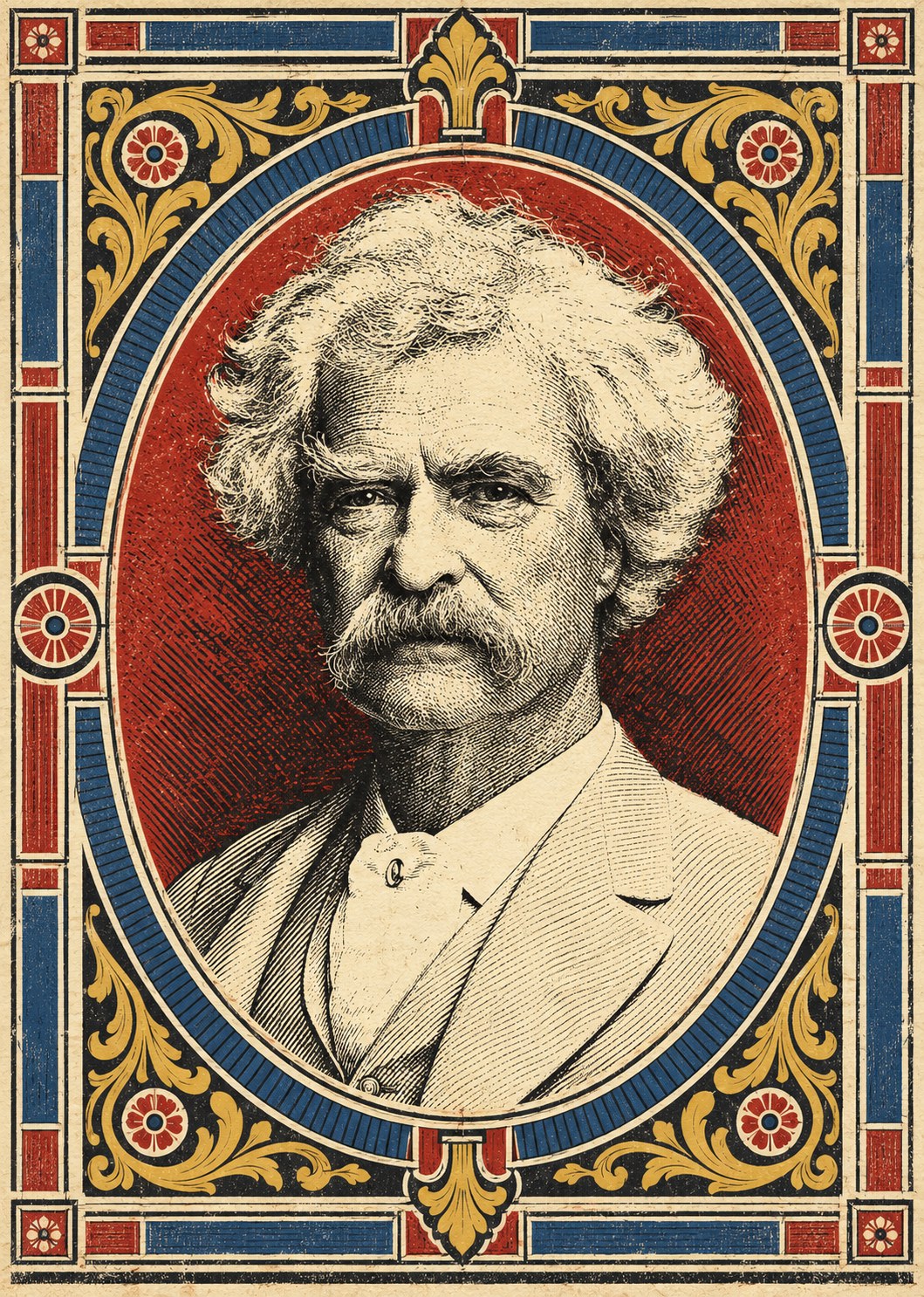
The picture is AI‑generated: not a historical work, and it holds no words of the quote. The small portrait beside the name is AI‑generated too, after a public-domain original named on the person’s page.
Travel is fatal to prejudice, bigotry, and narrow-mindedness.
Genuine
Yes. In The Innocents Abroad (1869), Conclusion.
Found word for word by program in the full text.
- Work
- The Innocents Abroad, 1869
- Where
- Conclusion
- Found at
- Paragraph 1981 of the text
Researched by AI; checked by program against the full text on 31 October 2026. Editorial review: pending. How we check
On the page
[…] When we stepped on board, our cares vanished, our troubles were at an end—for the ship was home to us. We always had the same familiar old state-room to go to, and feel safe and at peace and comfortable again.
I have no fault to find with the manner in which our excursion was conducted. Its programme was faithfully carried out—a thing which surprised me, for great enterprises usually promise vastly more than they perform. It would be well if such an excursion could be gotten up every year and the system regularly inaugurated. Travel is fatal to prejudice, bigotry and narrow-mindedness, and many of our people need it sorely on these accounts. Broad, wholesome, charitable views of men and things can not be acquired by vegetating in one little corner of the earth all one’s lifetime.
The Excursion is ended, and has passed to its place among the things that were. But its varied scenes and its manifold incidents will linger pleasantly in our memories for many a year to come. […]
We shall remember something of pleasant France; and something also of Paris, though it flashed upon us a splendid meteor, and was gone again, we hardly knew how or where. […]
The scene
The last chapter of The Innocents Abroad, his book about the 1867 pleasure cruise of the Quaker City to Europe and the Holy Land. Back home in San Francisco nearly a year later, Twain writes that his memories of the trip have grown pleasant, that the excursion kept its programme, and that it would be well if such an excursion were ‘gotten up every year’. The book has mocked American tourists, himself among them, for their ignorance and their airs; here he speaks in earnest.
What it means
Seeing other countries and peoples wears down prejudice and narrow views, which no one can outgrow by staying at home all their life.
Also shared as
- ShortenedTravel is fatal to prejudice, bigotry, and narrow-mindedness. The first clause alone, the usual form on travel sites and posters; it drops ‘and many of our people need it sorely’.
Topics
Related quotes
- Classic: a book which people praise and don’t read.
- Human potential, though not always apparent, is there waiting to be discovered and invited forth. (paraphrase) William W. Purkey
- Trust thyself: every heart vibrates to that iron string. Ralph Waldo Emerson
- No one can choose a beneficial direction in life without hope that change for the better is possible. William W. Purkey
- To teach is to influence, and influence never dies. Elbert Hubbard
Sources
Cite it
Checked by people
People who checked this entry against its source, under their own names. Their checks do not change the verdict: an editor reviews every entry.
Comments