We judge of a man’s wisdom by his hope.
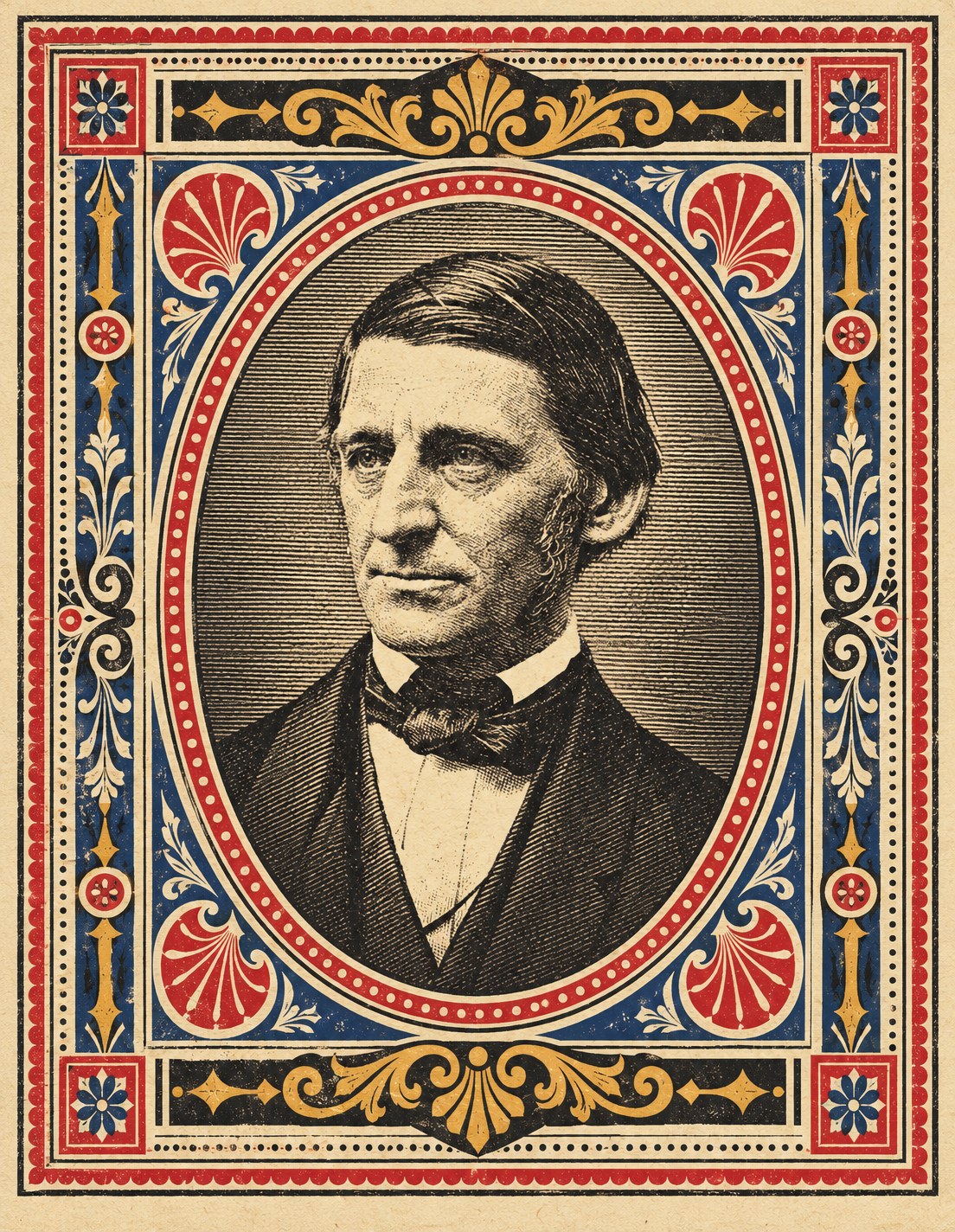
Genuine
Yes. In Essays: First Series (1841), Spiritual Laws, paragraph beginning “The simplicity of the universe”.
Found word for word by program in the full text.
The wording people share differs from the text; the words in the text are underlined below.
- Work
- Essays: First Series (Essays), 1841
- Where
- Spiritual Laws, paragraph beginning “The simplicity of the universe”
- Found at
- Paragraph 187 of the text
Researched by AI; checked by program against the full text on 29 November 2026. Editorial review: pending. How we check
On the page
[…] All our manual labor and works of strength, as prying, splitting, digging, rowing and so forth, are done by dint of continual falling, and the globe, earth, moon, comet, sun, star, fall for ever and ever.
The simplicity of the universe is very different from the simplicity of a machine. He who sees moral nature out and out and thoroughly knows how knowledge is acquired and character formed, is a pedant. The simplicity of nature is not that which may easily be read, but is inexhaustible. The last analysis can no wise be made. We judge of a man’s wisdom by his hope, knowing that the perception of the inexhaustibleness of nature is an immortal youth.1 The wild fertility of nature is felt in comparing our rigid names and reputations with our fluid consciousness. We pass in the world for sects and schools, for erudition and piety, and we are all the time jejune babes. […]
A little consideration of what takes place around us every day would show us that a higher law than that of our will regulates events; that our painful labors are unnecessary and fruitless; that only in our easy, simple, spontaneous action are we strong, and by contenting ourselves with obedience we become divine. […]
I say, do not choose; but that is a figure of speech by which I would distinguish what is commonly called choice among men, and which is a partial act, the choice of the hands, of the eyes, of the appetites, and not a whole act of the man. […]
The scene
Emerson distinguishes the inexhaustible simplicity of nature from the simplicity of a machine. He rejects the person who thinks character and knowledge have been completely explained, then describes the contrast between fixed reputations and the fluid possibilities of consciousness. Hope follows from recognizing that nature and the self are not used up by current explanations.
What it means
Wisdom leaves room for fresh possibilities; hope expresses awareness that nature cannot be exhausted by what we already know.
Often misread
Hope here is grounded in nature’s inexhaustibility, not a promise that optimism makes every prediction correct.
Topics
Related quotes
- Life is a series of surprises.
- Human potential, though not always apparent, is there waiting to be discovered and invited forth. (paraphrase) William W. Purkey
- The soul is dyed by the thoughts. Marcus Aurelius
- Only that day dawns to which we are awake. Henry David Thoreau
- A failure is a man who has blundered, but is not able to cash in the experience. Elbert Hubbard
Cite it
Ralph Waldo Emerson, Essays: First Series (1841), Spiritual Laws, paragraph beginning “The simplicity of the universe”. Checked at Quotogeny, https://quotogeny.com/q/we-judge-of-a-mans-wisdom-by-his-hope/ (29 November 2026).
Have a different wording, or a source we missed? Check it or submit it.
Do you hold the rights to anything on this page? Tell us.
Checked by people
People who checked this entry against its source, under their own names. Their checks do not change the verdict: an editor reviews every entry.
Comments