AI-generated · About the image
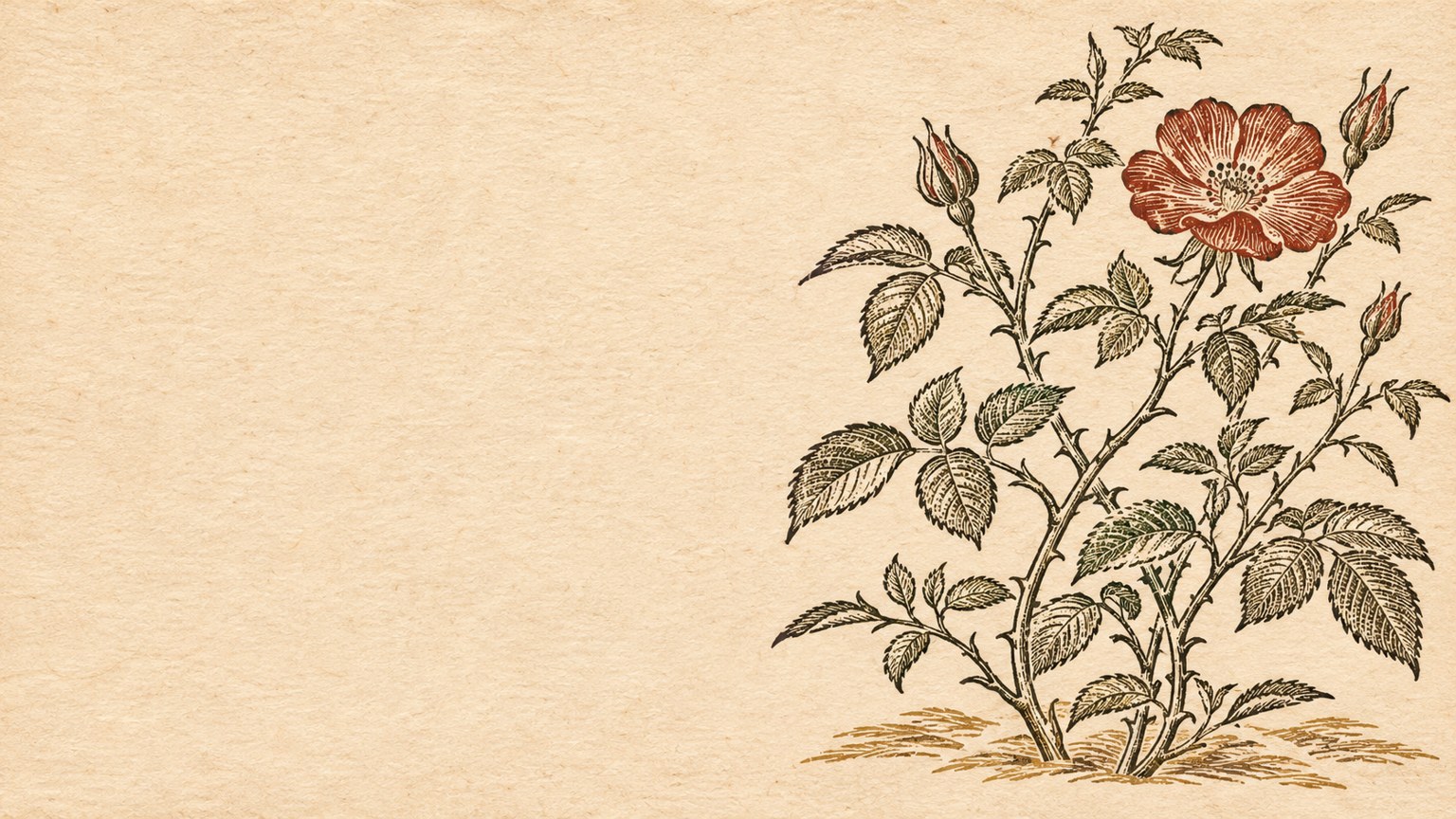
Set in the manner of Renaissance Book Typography, a style from Stylogeny. The dossier’s distinction between a person and an inherited name calls for a quiet, unlabelled garden rather than a portrait of the lovers. Renaissance book art supplies pale paper, restrained ink and botanical woodcut lines, keeping the image separate from the play’s characters and scenery.
The picture is AI‑generated: not a historical work, and it holds no words of the quote.
What’s in a name? that which we call a rose By any other name would smell as sweet.
Genuine
Yes. In Romeo and Juliet (1597), Act II, scene 2, Juliet at the window above Capulet’s orchard, said by Juliet. These are the character’s words, not a statement in Shakespeare’s own voice.
Found word for word by program in the full text.
The wording people share differs slightly from the text; the words in the text are underlined below.
- Work
- Romeo and Juliet, 1597
- Where
- Act II, scene 2, Juliet at the window above Capulet’s orchard
- Found at
- Paragraph 824 of the text
Researched by AI; checked by program against the full text on 29 November 2026. Editorial review: pending. How we check
On the page
Rom. [Aside] Shall I hear more, or shall I speak at this?[445]
Jul. ‘Tis but thy name that is my enemy; Thou art thyself, though not a Montague.[446] What’s Montague? it is nor hand, nor foot,[447] 40 Nor arm, nor face, nor any other part[448] Belonging to a man. O, be some other name![448][449] What’s in a name? that which we call a rose[450] By any other name would smell as sweet;1[451] So Romeo would, were he not Romeo call’d,[452] 45 Retain that dear perfection which he owes Without that title. Romeo, doff thy name,[453] And for thy name, which is no part of thee,[454] Take all myself.
Rom. I take thee at thy word:[455] Call me but love, and I’ll be new baptized; 50 Henceforth I never will be Romeo.
Jul. What man art thou, that, thus bescreen’d in night,[456] So stumblest on my counsel?
The scene
Juliet speaks at her window without knowing that Romeo is listening below. She separates Romeo’s person from the Montague name that makes him her family’s enemy and asks him to give up that name. Romeo answers her, revealing that he has overheard her private declaration.
What it means
A name does not constitute the person or thing it names: Romeo would retain his qualities without the surname that marks him as an enemy.
Often misread
Not proof that names have no practical force. The lovers want to escape their inherited labels, but the family feud makes those names dangerous despite their argument.
Topics
Related quotes
- My bounty is as boundless as the sea, my love as deep; the more I give to thee, the more I have, for both are infinite.
- What can be more delightful than to have some one to whom you can say everything with the same absolute confidence as to yourself? Marcus Tullius Cicero
- Love is blind.
- We are all a little weird and life’s a little weird, and when we find someone whose weirdness is compatible with ours, we join up with them and fall in mutual weirdness and call it love. (misattributed) Dr. Seuss
- How shall I hold my soul so that it does not touch yours? Rainer Maria Rilke
Sources
Cite it
William Shakespeare, Romeo and Juliet (1597), Act II, scene 2, Juliet at the window above Capulet’s orchard. Spoken by Juliet. Checked at Quotogeny, https://quotogeny.com/q/whats-in-a-name/ (29 November 2026).
Have a different wording, or a source we missed? Check it or submit it.
Do you hold the rights to anything on this page? Tell us.
Checked by people
People who checked this entry against its source, under their own names. Their checks do not change the verdict: an editor reviews every entry.
Comments