When it is dark enough, you can see the stars.
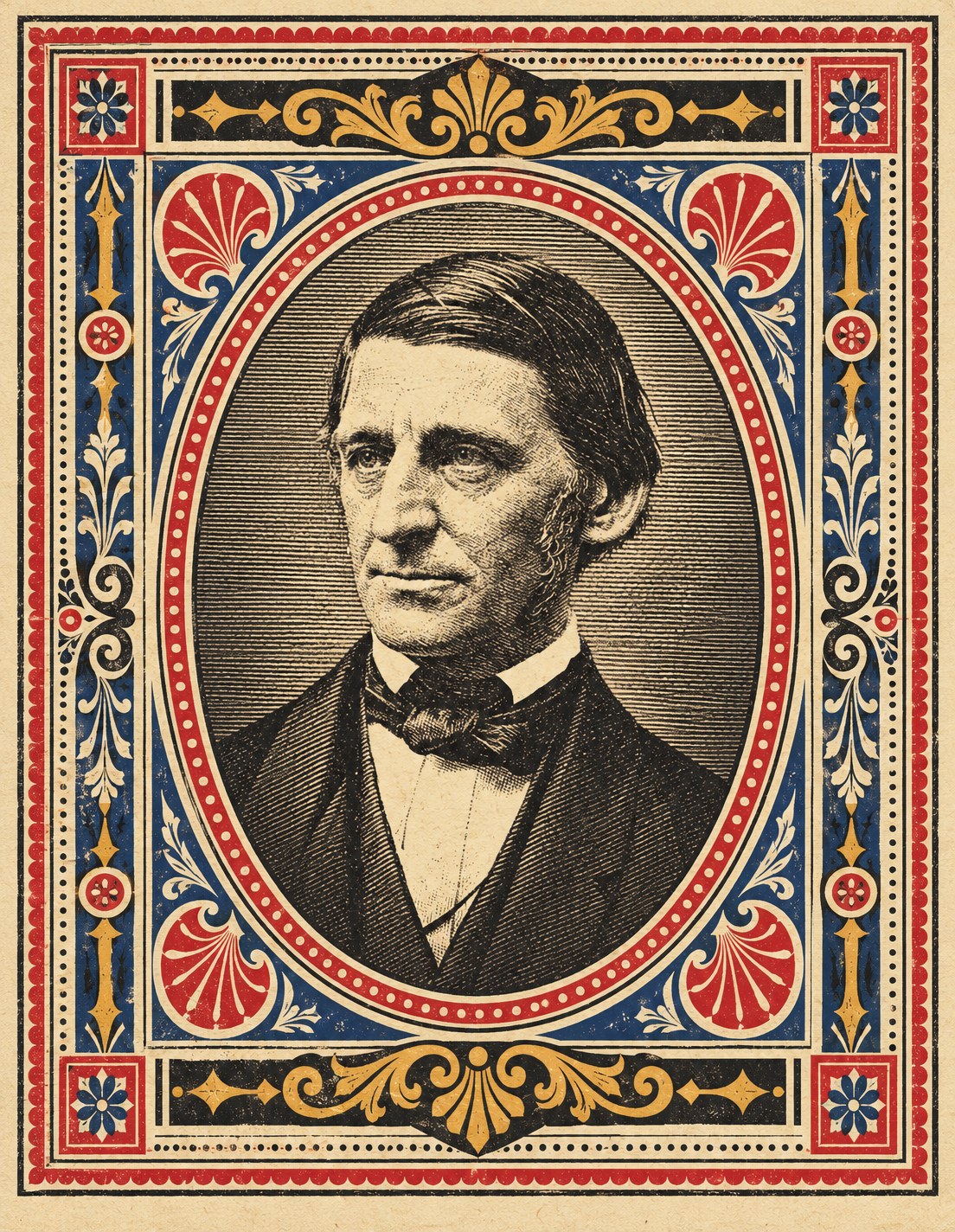
Not found
No. Not a sourced Emerson quotation; first found in a 1941 Reader’s Digest remark credited to Charles A. Beard.
Checked against Arthur H. Secord, “Condensed History Lesson”, Reader’s Digest (February 1941), 20, on another researcher’s citation, not seen first-hand.
- Source
- Arthur H. Secord, “Condensed History Lesson”, Reader’s Digest (February 1941), 20
- Checked
- On another researcher’s citation, not seen first-hand
Researched by AI. Entry updated 15 November 2026. Editorial review: pending. How we check
About this quote
Where it comes from
No known source in Emerson’s works: Wikiquote reports that the searchable edition at rwe.org shows no occurrence. The earliest appearance found there is in remarks credited to Charles A. Beard in Reader’s Digest (February 1941); its origin beyond that is undetermined. The held Essays: First Series was not the place to look (the circulating line is not in it); this note rests on Wikiquote’s report, not a search of all Emerson.
How it travelled
- February 1941Before it · credited to Charles A. BeardReader’s Digest prints the line in remarks credited to the historian Charles A. Beard, not to Emerson; the earliest appearance Wikiquote found.Arthur H. Secord, “Condensed History Lesson”, Reader’s Digest (February 1941), 20. Checked on another researcher’s citation, not seen first-hand. Source
In context
The line circulates as Emerson’s consolation that hard times reveal what could not be seen in the light. Emerson does use stars in “Illusions”, where a party in the Mammoth Cave sees an imitation night sky, but nothing in his works says this sentence.
What it says
Only in times of darkness does something hopeful become visible.
Often misread
Not Emerson’s sentence. The cave passage in “Illusions” is about a staged illusion, not about hardship revealing hope.
Topics
Related quotes
- What lies behind us and what lies before us are tiny matters compared to what lies within us. (misattributed)
- The darker the night, the brighter the stars, the deeper the grief, the closer is God! (misattributed) Fyodor Dostoevsky
- Happiness can be found, even in the darkest of times, if one only remembers to turn on the light. (misattributed) J. K. Rowling
- Faith is taking the first step even when you don’t see the whole staircase. (not found) Martin Luther King Jr.
- Be kind, for everyone you meet is fighting a hard battle. (misattributed) Plato
Sources
Cite it
“When it is dark enough, you can see the stars.” Attributed to Ralph Waldo Emerson. No. Not a sourced Emerson quotation; first found in a 1941 Reader’s Digest remark credited to Charles A. Beard. Quotogeny, https://quotogeny.com/q/when-it-is-dark-enough-you-can-see-the-stars/ (checked 15 November 2026).
Have a different wording, or a source we missed? Check it or submit it.
Do you hold the rights to anything on this page? Tell us.
Checked by people
People who checked this entry against its source, under their own names. Their checks do not change the verdict: an editor reviews every entry.
Comments