While they are silent they are loud and eloquent.
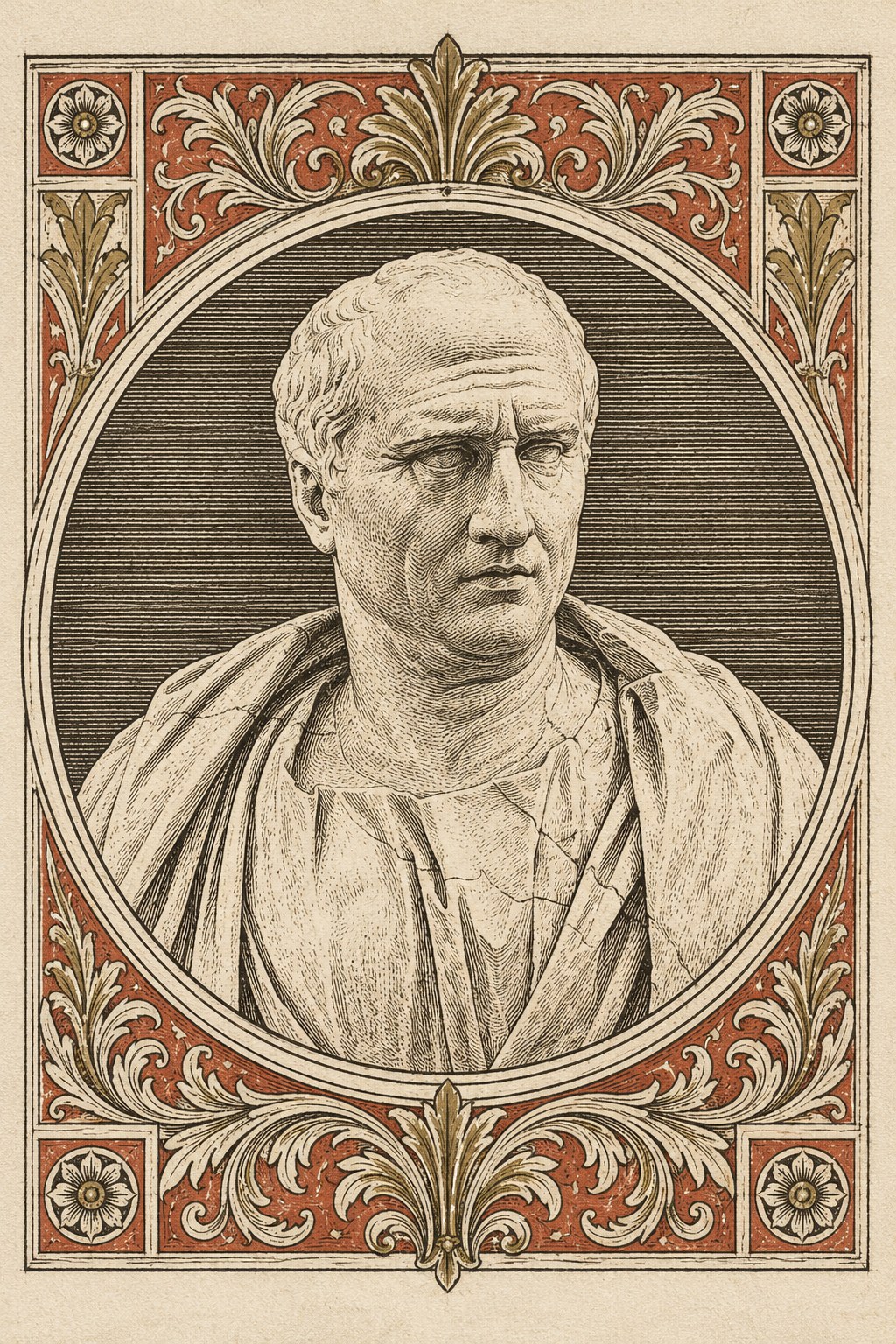
Genuine
Yes. In Against Catiline (63 BC), First Oration, section 21 (In Catilinam 1.21).
Found word for word by program in the Latin original and in Charles Duke Yonge’s English translation (1856).
- Work
- Against Catiline (In Catilinam), 63 BC
- Where
- First Oration, section 21 (In Catilinam 1.21)
- Found at
- Paragraph 22 of the Latin text, 22 of the English
- Translation
- Charles Duke Yonge, 1856
Researched by AI; checked by program against the full text on 29 November 2026. Editorial review: pending. How we check
On the page
[…] What now, O Catiline? Do you not perceive, do you not see the silence of these men; they permit it, they say nothing; why wait you for the authority of their words when you see their wishes in their silence?
[…] Quid est, Catilina? ecquid attendis, ecquid animadvertis horum silentium? Patiuntur, tacent. Quid exspectas auctoritatem loquentium, quorum voluntatem tacitorum perspicis?
But had I said the same to this excellent young man, Publius Sextius, or to that brave man, Marcus Marcellus, before this time the senate would deservedly have laid violent hands on me, consul though I be, in this very temple. But to you, Catiline, while they are quiet they approve, while they permit me to speak they vote, while they are silent they are loud and eloquent. […]
[21] At si hoc idem huic adulescenti optimo, P. Sestio, si fortissimo viro, M. Marcello, dixissem, iam mihi consuli hoc ipso in templo iure optimo senatus vim et manus intulisset. De te autem, Catilina, cum quiescunt, probant, cum patiuntur, decernunt, cum tacent, clamant, neque hi solum, quorum tibi auctoritas est videlicet cara, vita vilissima, sed etiam illi equites Romani, honestissimi atque optimi viri, ceterique fortissimi cives, qui circumstant senatum, quorum tu et frequentiam videre et studia perspicere et voces paulo ante exaudire potuisti. […]
And yet, why am I speaking? that anything may change your purpose? that you may ever amend your life? that you may meditate flight or think of voluntary banishment? […]
[22] IX. Quamquam quid loquor? te ut ulla res frangat, tu ut umquam te corrigas, tu ut ullam fugam meditere, tu ut ullum exilium cogites? […]
Wherefore, as I have said before, go forth, and if you to make me, your enemy as you call me, unpopular, go straight into banishment. […]
[23] Quam ob rem, ut saepe iam dixi, proficiscere ac, si mihi inimico, ut praedicas, tuo conflare vis invidiam, recta perge in exilium; vix feram sermones hominum, si id feceris, vix molem istius invidiae, si in exilium iussu consulis ieris, sustinebo. […]
The scene
Catiline has demanded a formal motion in the Senate on whether he should go into exile. Cicero refuses to put that motion but orders him to depart and interprets the senators’ failure to object as their approval. He then invokes the hostile crowd outside the Senate as further pressure to leave.
What it means
Cicero makes the absence of protest into an emphatic public judgment against Catiline. Silence is presented as a kind of speech.
Often misread
This is a partisan interpretation of this Senate’s silence, not a general rule that silence proves consent. Cicero expressly declines the vote that Catiline has requested.
Topics
Related quotes
- It is with fine sentiments that one makes bad literature. André Gide
- Art is born of constraint, lives by struggle, dies of freedom. André Gide
- Selfishness is not living as one wishes to live, it is asking others to live as one wishes to live. Oscar Wilde
- the white moderate, who is more devoted to “order” than to justice; who prefers a negative peace which is the absence of tension to a positive peace which is the presence of justice; Martin Luther King Jr.
- The English have not taken India; we have given it to them. Mahatma Gandhi
Sources
Cite it
Marcus Tullius Cicero, Against Catiline (63 BC), First Oration, section 21 (In Catilinam 1.21), translated by Charles Duke Yonge (1856). Checked at Quotogeny, https://quotogeny.com/q/while-they-are-silent-they-are-loud-and-eloquent/ (29 November 2026).
Have a different wording, or a source we missed? Check it or submit it.
Do you hold the rights to anything on this page? Tell us.
Checked by people
People who checked this entry against its source, under their own names. Their checks do not change the verdict: an editor reviews every entry.
Comments