It is better to be hated for what you are than to be loved for what you are not.
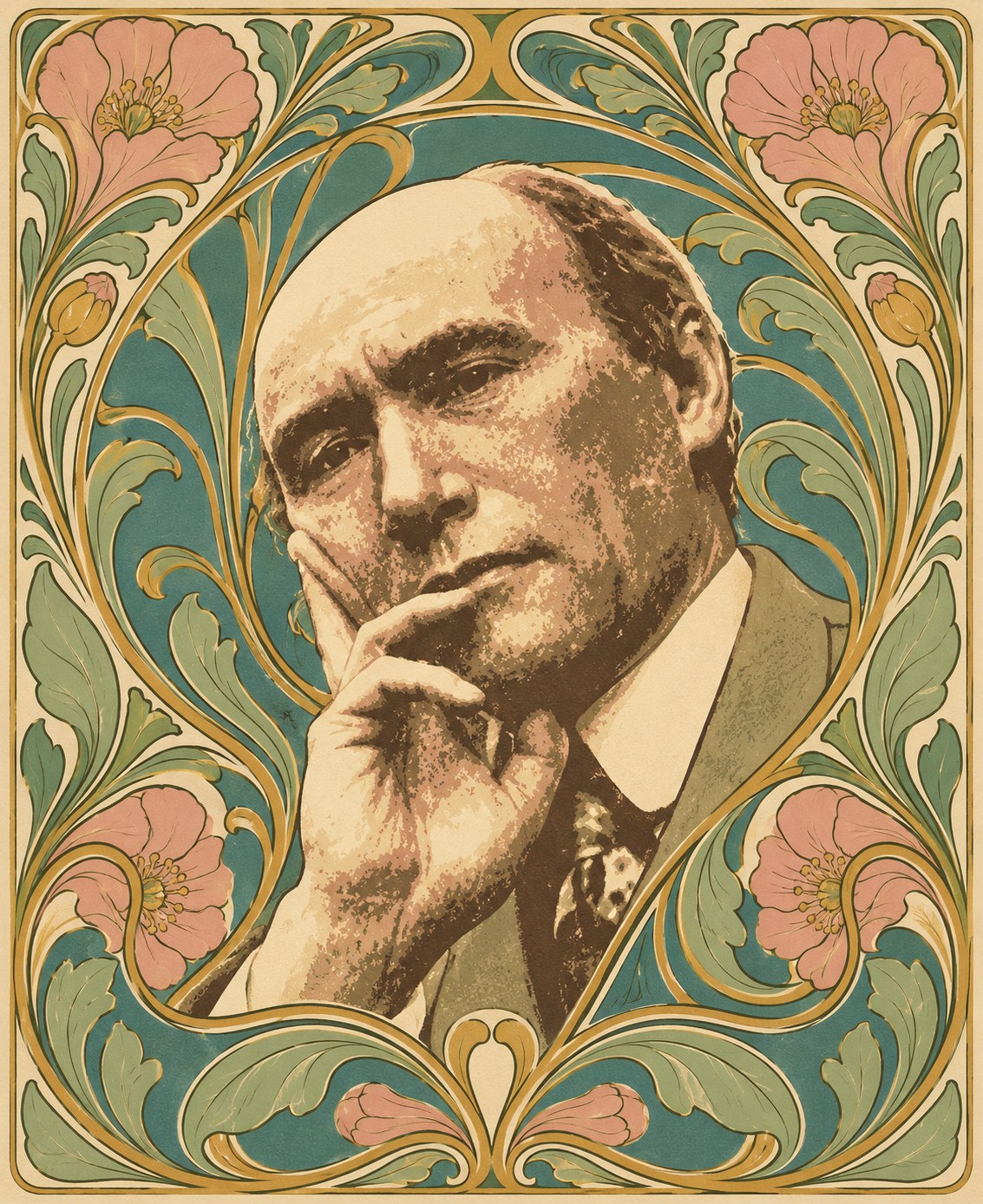
Genuine
Yes. In If It Die… (1926), Draft preface for Si le grain ne meurt (“Projet de préface”), first printed after the memoir in Œuvres complètes, vol. X (1936), pp. 453–454.
Checked against André Gide, “Projet de préface pour Si le grain ne meurt”, first published, after Si le grain ne meurt, in Gide, Œuvres complètes, vol. X (Paris: Gallimard / NRF, 1936). Seen as quoted in Paul Archambault, Humanité d’André Gide (1950), p. 183, and as reprinted in full in Philippe Lejeune, L’Autobiographie en France (Paris: Armand Colin, 1998), section 11.2, from p. 153, Œuvres complètes X (1936), pp. 453–454 (the sentence on p. 453); seen in Archambault 1950, p. 183, and Lejeune 1998, p. 153 ff, in the text of a page scan, not the image.
The wording people share differs slightly from the text; the words in the text are underlined below.
- Work
- If It Die… (Si le grain ne meurt), 1926
- Where
- Draft preface for Si le grain ne meurt (“Projet de préface”), first printed after the memoir in Œuvres complètes, vol. X (1936), pp. 453–454
- Translation
- Our own, not yet reviewed (no public-domain translation in our sources)
- Source
- André Gide, “Projet de préface pour Si le grain ne meurt”, first published, after Si le grain ne meurt, in Gide, Œuvres complètes, vol. X (Paris: Gallimard / NRF, 1936). Seen as quoted in Paul Archambault, Humanité d’André Gide (1950), p. 183, and as reprinted in full in Philippe Lejeune, L’Autobiographie en France (Paris: Armand Colin, 1998), section 11.2, from p. 153, Œuvres complètes X (1936), pp. 453–454 (the sentence on p. 453); seen in Archambault 1950, p. 183, and Lejeune 1998, p. 153 ff
- Checked
- In the text of a page scan, not the image
Researched by AI. Entry updated 21 October 2026. Editorial review: pending. How we check
About this quote
The scene
Gide wrote a draft preface for his memoir Si le grain ne meurt, the story of his childhood and youth that includes his sexual awakening with boys in North Africa. It answers two questions. Why he wrote the memoirs: for ‘great fear of the Berrichons and the Bazalgettes’, names he uses for the devoted biographers who remake a writer after his death. Why he published them in his lifetime: he did not trust posthumous publication, because the devotion of those left behind tends to camouflage the dead. Then comes this sentence, followed by the remark that what he has suffered from most in his life is lying, and that he wants none of the comfortable advantages it would have given him.
What it means
He would rather be known, and condemned, as he really is than keep people’s affection under a false picture of himself. In context it is his reason for publishing, while alive, an account of his homosexuality that he knew would cost him readers’ esteem.
Often misread
Shared as a general line about self-acceptance and authenticity, and usually credited to his late collection Autumn Leaves (Feuillets d’automne), which does not contain it. The general sense is his, but the circulating form drops his hedge (‘J’estime que… encore’, I hold that … after all) and the stakes: a decision to publish his sexual confessions in his lifetime rather than leave them to be tidied up after his death.
Also shared as
- ShortenedIt is better to be hated for what you are than to be loved for what you are not. The usual English form: Goodreads lists it (#28 among its popular quotes) under Gide’s Autumn Leaves, and so does Wikiquote, citing the 2012 Open Road Media ebook of Autumn Leaves at PT12, which by that ebook’s table of contents falls in Jeanine Parisier Plottel’s new introduction (PT8; ‘Selected Quotes’ begin at PT13), not in Gide’s text. The phrase ‘hated for’ was not found in the archive.org scans of Autumn Leaves (Philosophical Library, 1950) or of Feuillets d’automne (Mercure de France, 1949). The ‘you’ form drops Gide’s ‘J’estime que… encore’; the earliest found is in Donald O. Bolander’s Instant Quotation Dictionary (1969), credited to André Gide. Where it was seen
- ShortenedIt is better to be hated for what you are than loved for what you are not. The form in Laurence J. Peter, Peter’s Quotations: Ideas for Our Time (1977), credited to André Gide, and in Morrow’s International Dictionary of Contemporary Quotations (1982); a staple of American high-school yearbooks from the 1970s on. Where it was seen
- A misquotationIt is better to be hated for what you are than to be loved for something you are not. A common online wording, credited to Andre Gide. Where it was seen
Before and after
A similar thought
- Arthur G. Lewis, 1901: An American epigram printed before Gide’s preface: ‘I prefer to be hated for what I am than loved for what I am not.’ in his column ‘Stub Ends of Thought’ in the Baltimore & Ohio Railroad’s monthly The Book of the Royal Blue, and again in his book Stub Ends of Thought and Heart Verse (Roanoke, 1903), p. 42. No link to Gide is known. Source
Topics
Related quotes
- Rather than love, than money, than fame, give me truth. Henry David Thoreau
- It does not matter what you bear, but how you bear it. Seneca the Younger
- We may encounter many defeats, but we must not be defeated. Maya Angelou
- Never explain — your friends do not need it and your enemies will not believe you anyway. Elbert Hubbard
- Every man has a right to his opinion, but no man has a right to be wrong in his facts. Bernard Baruch
Sources
- gallica.bnf.fr/ark:/12148/bpt6k33878829 (Archambault, Humanité d’André Gide, 1950, p. 183)
- archive.org/details/lautobiographiee0000leje (Lejeune, L’Autobiographie en France, 1998, 11.2 ‘Projet de préface pour Si le grain ne meurt’)
- archive.org/details/bibliographiechr0000unse (Bibliographie chronologique de l’œuvre d’André Gide, 1974: Projet de préface, O.C. X, pp. 453–454)
- archive.org/details/contemporaryfren00obri (Justin O’Brien, Contemporary French Literature, 1971: French text with note ‘OC, X, 453’)
- archive.org/details/madeleine00gide (Madeleine, Knopf, 1952, O’Brien’s introduction: earliest English form found)
- archive.org/details/andregideparluim0000unse (Claude Martin, André Gide par lui-même, 1963)
- archive.org/details/degidesartre0000maur (André Maurois, De Gide à Sartre, 1965, around p. 41)
- en.wikiquote.org/wiki/André_Gide (lists it under Autumn Leaves; notes it is also credited to Marilyn Monroe and Kurt Cobain; its Google Books link is the 2012 Open Road ebook, PT12, inside the editor’s introduction)
- archive.org/details/autumnleaves0000andr (Autumn Leaves, Philosophical Library, 1950: not found)
- archive.org/details/feuilletsdautomn0000gide (Feuillets d’automne, Mercure de France, 1949: not found)
- goodreads.com/quotes/14304-it-is-better-to-be-hated-for-what-you-are
Cite it
André Gide, If It Die… (1926), Draft preface for Si le grain ne meurt (“Projet de préface”), first printed after the memoir in Œuvres complètes, vol. X (1936), pp. 453–454, our own translation. Checked at Quotogeny, https://quotogeny.com/q/it-is-better-to-be-hated-for-what-you-are/ (21 October 2026).
Have a different wording, or a source we missed? Check it or submit it.
Do you hold the rights to anything on this page? Tell us.
Checked by people
People who checked this entry against its source, under their own names. Their checks do not change the verdict: an editor reviews every entry.
Comments