Every man has a right to his opinion, but no man has a right to be wrong in his facts.
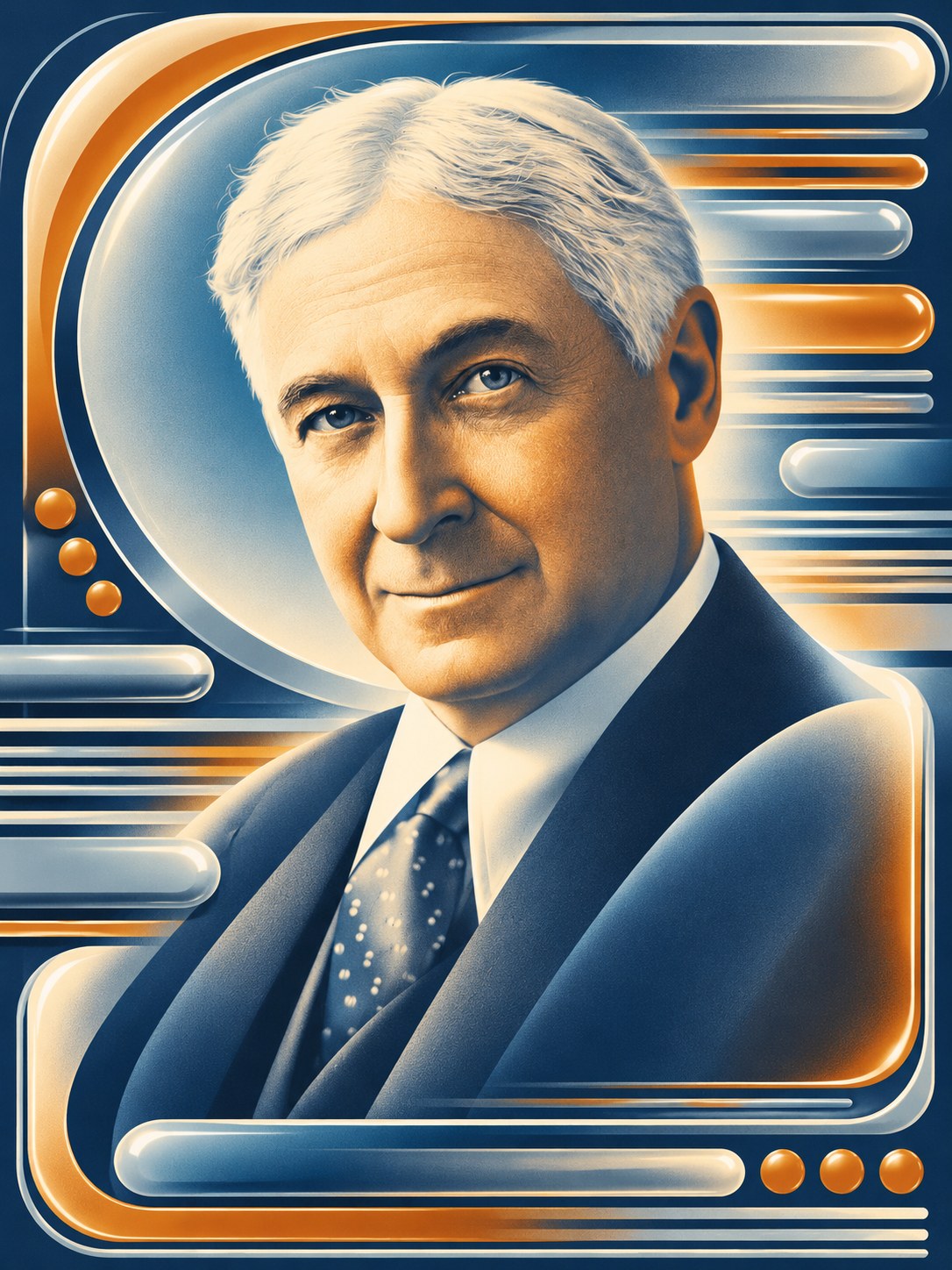
Genuine
Yes. In Associated Press, “Baruch Upholds U.S. Atom Plan; Hits at Wallace”, dateline 8 October 1946, in The Galveston Daily News, 9 October 1946, p. 1, column 3.
Checked against Associated Press, “Baruch Upholds U.S. Atom Plan; Hits at Wallace”, dateline 8 October 1946, in The Galveston Daily News, 9 October 1946, p. 1, column 3, on another researcher’s citation, not seen first-hand.
The wording people share differs slightly from the text; the words in the text are underlined below.
- Where
- Remarks reported in an Associated Press article of 8 October 1946, “Baruch Upholds U.S. Atom Plan; Hits at Wallace”
- Source
- Associated Press, “Baruch Upholds U.S. Atom Plan; Hits at Wallace”, dateline 8 October 1946, in The Galveston Daily News, 9 October 1946, p. 1, column 3
- Checked
- On another researcher’s citation, not seen first-hand
Researched by AI. Entry updated 30 October 2026. Editorial review: pending. How we check
About this quote
How it travelled
- 8 October 1946Earliest found · credited to Bernard BaruchAn Associated Press report quotes Baruch criticising an opponent’s inaccurate assertions with the saying, with an added second sentence.
Every man has the right to an opinion but no man has a right to be wrong in his facts. Nor, above all, to persist in errors as to facts.
The Galveston Daily News, 9 October 1946, AP, “Baruch Upholds U.S. Atom Plan; Hits at Wallace”, p. 1, column 3. Checked on another researcher’s citation, not seen first-hand. Source - 25 October 1946Spread · credited to Bernard BaruchA Wisconsin newspaper prints the saying as a free-standing filler item credited to Baruch.The Rhinelander Daily News, 25 October 1946, “Democrats Eye ‘Sure’ Victory in Two State Districts”, p. 8, column 3. Checked on another researcher’s citation, not seen first-hand. Source
- March 1948Spread · credited to Bernard BaruchReader’s Digest prints the shorter wording, credited to Baruch and to the weekly Pathfinder.
Every man has a right to his opinion, but no man has a right to be wrong in his facts.
Reader’s Digest, vol. 52, March 1948, “A Matter of Opinion”, p. 61. Checked on another researcher’s citation, not seen first-hand. Source - August 1948Credited to Rayburn H. CarrellA Texas teachers’ periodical prints the same wording but credits a local personality, Rayburn H. Carrell.
Every man has a right to his opinion, but no man has a right to be wrong in his facts.
The Texas Outlook, vol. 32, August 1948, “Quote and Unquote”, p. 7. Checked on another researcher’s citation, not seen first-hand. Source - 6 January 1950Credited to Bernard BaruchA New Mexico paper prints the saying with an ascription to Baruch; Fred Shapiro cites it as the earliest citation in the forthcoming Yale Book of Modern Proverbs.
Every man has a right to his own opinion, but no man has a right to be wrong in his facts.
Deming Headlight (New Mexico), 6 January 1950. Checked on another researcher’s citation, not seen first-hand. Source - 27 June 1950Reworded · credited to Bernard BaruchA New Jersey paper, copying the St. Louis Post-Dispatch, dates the saying to Baruch’s chairmanship of the War Industries Board in 1918; no earlier source for that date is known.
Every man has a right to his own opinion; but no man has a right to be wrong in his facts.
Trenton Evening Times, 27 June 1950, “Wisdom of Bernard Baruch”, p. 14. Checked on another researcher’s citation, not seen first-hand. Source - 4 December 1975Reworded · credited to James R. SchlesingerUS Defense Secretary James R. Schlesinger uses the form “not entitled to his own facts”, the root of the modern wording.
Everybody is not entitled to his own facts.
St. Louis Post-Dispatch, 4 December 1975, William K. Wyant Jr., “Colby Says CIA Has Made Contribution To Peace”, p. 7A, column 7. Checked on another researcher’s citation, not seen first-hand. Source - 18 January 1983Spread · credited to Daniel Patrick MoynihanSenator Moynihan uses the saying in a Washington Post op-ed, which made it famous under his name; in 1984 he credited Alan Greenspan.
Everyone is entitled to his own opinion, but not his own facts.
The Washington Post, 18 January 1983, Daniel P. Moynihan, “More Than Social Security Was at Stake”, p. A17, column 5. Checked on another researcher’s citation, not seen first-hand. Source
The scene
In October 1946, four months after he put the Baruch Plan for international control of atomic energy to the United Nations, Baruch defended it against criticism by the former Vice President Henry Wallace. Quote Investigator found the saying in an Associated Press report in which Baruch complained of an opponent’s assertions that he held to be inaccurate. The wording is the one the wire report printed, not a text of a speech.
What it means
Anyone may hold any opinion, but nobody may fairly build one on false facts, still less keep to it after the facts are shown.
Often misread
The shorter, tidier forms (“entitled to your own opinion, but not to your own facts”) are not Baruch’s wording: they came later, from James Schlesinger (1975) and Daniel Patrick Moynihan (1982–83), who credited Alan Greenspan in 1984. A 1950 reprint dating the line to his 1918 chairmanship of the War Industries Board is not supported by anything found.
Use with care
The sentence is attested in 1946 as Baruch’s, but through a wire report, not a text of his; the modern form “entitled to your own facts” is a later coinage commonly credited to Moynihan. Every citation is secondary (Quote Investigator, Wikiquote, Shapiro’s post): the 1946 newspaper pages could not be reached from this run, so the quote is not seen at its source.
Also shared as
- ShortenedYou are entitled to your own opinion, but you are not entitled to your own facts. The modern form, associated with Daniel Patrick Moynihan; QI finds Schlesinger using “not entitled to his own facts” in December 1975 and Moynihan in 1982–83. Where it was seen
Topics
Related quotes
- Freedom cannot be bestowed — it must be achieved. Elbert Hubbard
- Any man can make mistakes, but only an idiot persists in his error. Marcus Tullius Cicero
- If it is not right, do not do it: if it is not true, do not say it. Marcus Aurelius
- Plato is dear to me, but dearer still is truth. (paraphrase) Aristotle
- Never explain — your friends do not need it and your enemies will not believe you anyway. Elbert Hubbard
Sources
Cite it
Bernard Baruch, Associated Press, “Baruch Upholds U.S. Atom Plan; Hits at Wallace”, dateline 8 October 1946, in The Galveston Daily News, 9 October 1946, p. 1, column 3. Checked at Quotogeny, https://quotogeny.com/q/no-man-has-a-right-to-be-wrong-in-his-facts/ (30 October 2026).
Have a different wording, or a source we missed? Check it or submit it.
Do you hold the rights to anything on this page? Tell us.
Checked by people
People who checked this entry against its source, under their own names. Their checks do not change the verdict: an editor reviews every entry.
Comments