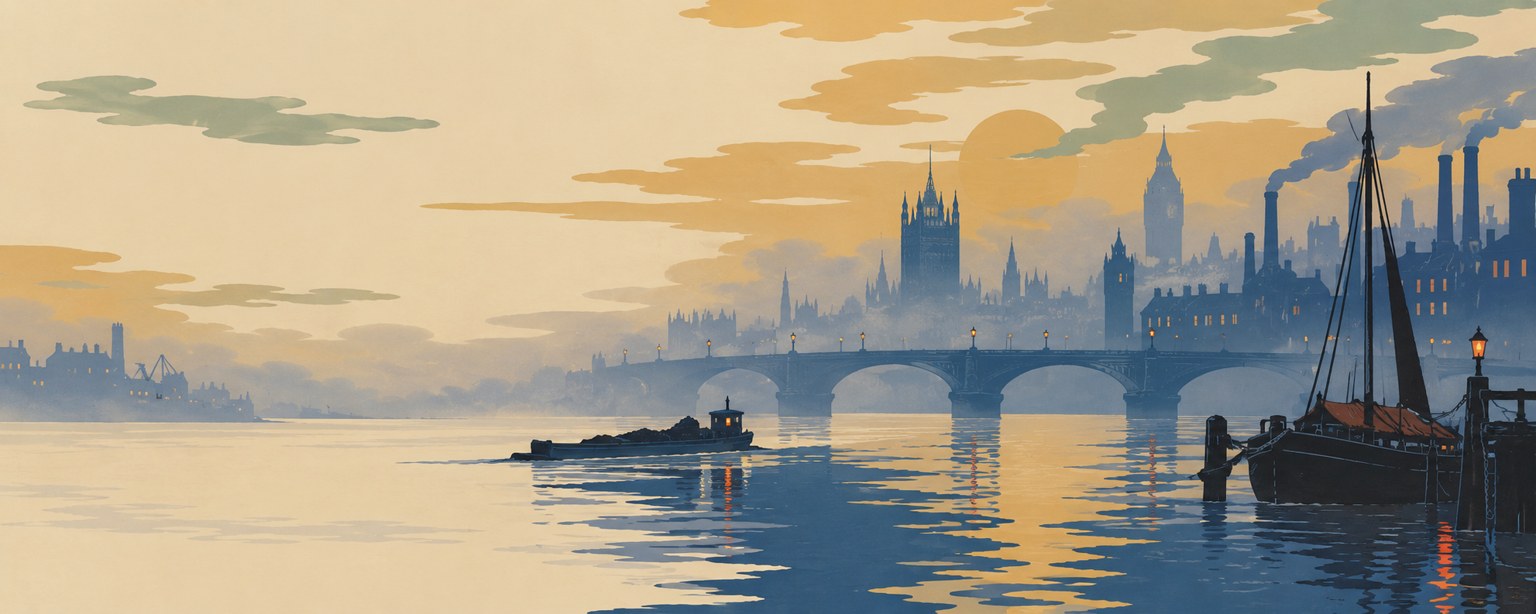
AI-generated · About the image
Set in the manner of Japonisme, a style from Stylogeny. In The Decay of Lying (1891) Vivian says Londoners only saw their fogs once painters had shown them. Japonisme was how those painters saw: off-centre, flat colour, a river at dusk; here the fog over the Thames.
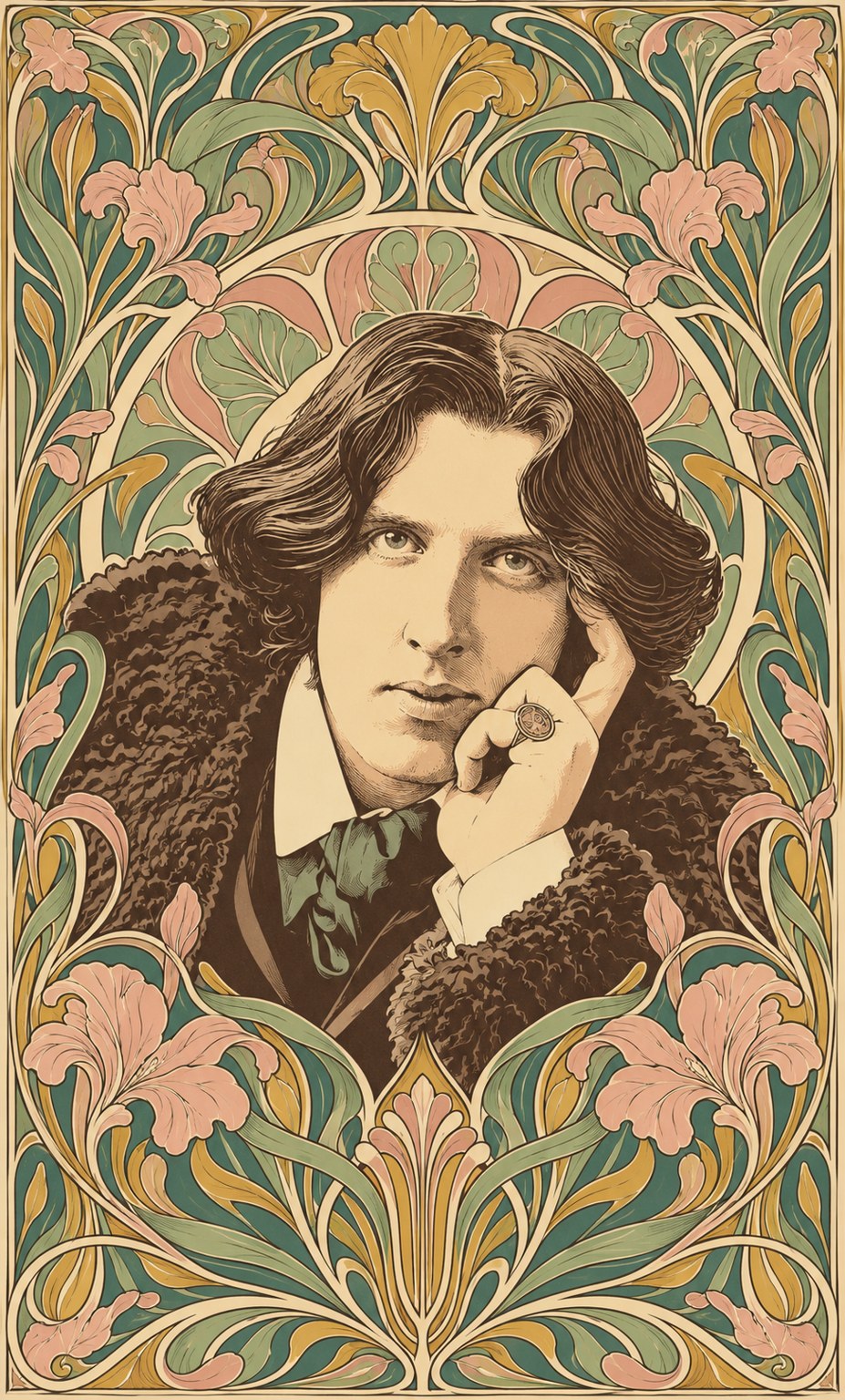
The picture is AI‑generated: not a historical work, and it holds no words of the quote. The small portrait beside the name is AI‑generated too, after a public-domain original named on the person’s page.
Life imitates art far more than art imitates life.
Genuine
Yes. In Intentions (1891), The Decay of Lying, said by Vivian. These are the character’s words, not a statement in Wilde’s own voice.
Found word for word by program in the full text.
The wording people share differs from the text; the words in the text are underlined below.
- Work
- Intentions, 1891
- Where
- The Decay of Lying
- Found at
- Paragraph 71 of the text
Researched by AI; checked by program against the full text on 31 October 2026. Editorial review: pending. How we check
On the page
[…] You think it would reduce genius to the position of a cracked looking-glass. But you don’t mean to say that you seriously believe that Life imitates Art, that Life in fact is the mirror, and Art the reality?
VIVIAN. Certainly I do. Paradox though it may seem—and paradoxes are always dangerous things—it is none the less true that Life imitates art far more than Art imitates life.12 […]
As it is with the visible arts, so it is with literature. […]
Here the imitation, as far as it went, was of course accidental. In the following case the imitation was self-conscious. […]
The scene
The Decay of Lying is a dialogue between two young men, Cyril and Vivian, in the library of a country house; Wilde first published it in The Nineteenth Century in January 1889 and revised it for Intentions. Vivian is reading Cyril his article against realism, ‘a protest’ on behalf of the lost art of lying. Cyril asks whether he really means that life will try to reproduce the marvels of art, and Vivian answers with this sentence. He goes on to examples: the women of London who have come to look like Rossetti’s and Burne-Jones’s paintings, the boys who turn burglar after reading Jack Sheppard, the London fogs that only exist since the Impressionists painted them. At the end he sums up his doctrines, the third being that ‘Life imitates Art far more than Art imitates Life’.
What it means
Art does not copy the world so much as give it forms, which people and even nature then copy: we see, feel and behave as art has taught us to.
Often misread
Often shortened to ‘Life imitates art’ and used for any eerie coincidence between a film and the news. Vivian means something larger and admits it is a paradox: that art invents types and ways of seeing which life then follows. Wilde gives it to a character in a dialogue, but it is the essay’s own thesis.
Also shared as
- ShortenedLife imitates art. The everyday form, used for real events that resemble fiction.
Before and after
Topics
Related quotes
- Man is least himself when he talks in his own person. Give him a mask, and he will tell you the truth.
- All art is quite useless.
- There is more sagacity in thy body than in thy best wisdom. (paraphrase) Friedrich Nietzsche
- The truth is rarely pure and never simple.
- There is no such thing as a moral or an immoral book. Books are well written, or badly written. That is all.
Sources
Cite it
Checked by people
People who checked this entry against its source, under their own names. Their checks do not change the verdict: an editor reviews every entry.
Comments