Live a good life. If there are gods and they are just, then they will not care how devout you have been, but will welcome you based on the virtues you have lived by. If there are gods, but unjust, then you should not want to worship them. If there are no gods, then you will be gone, but will have lived a noble life that will live on in the memories of your loved ones.
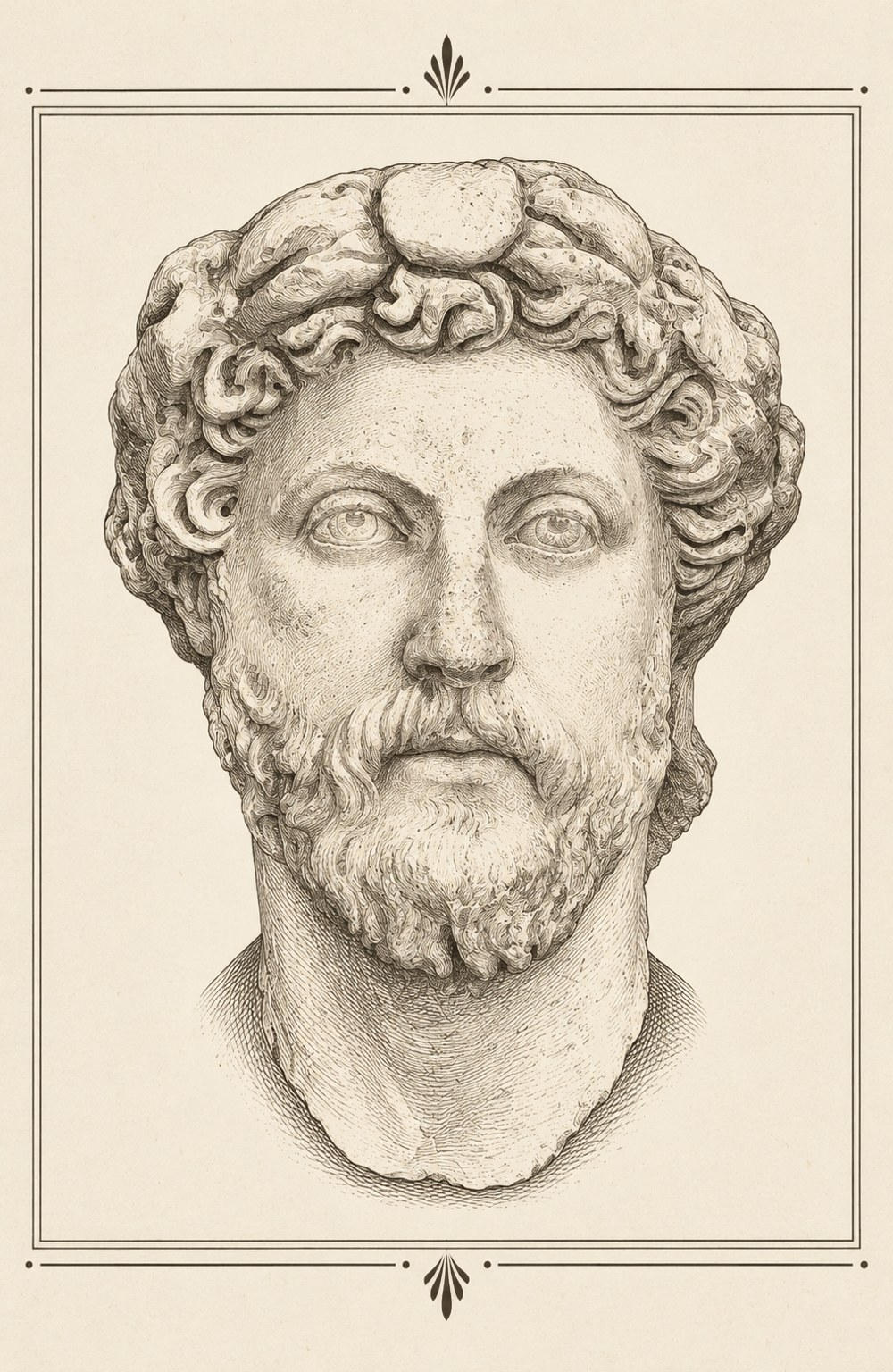
Not found
No. It is not in Aurelius’s works, and who first wrote it is not known.
The closest real passage, shown below, is found word for word by program in the Greek original and in George Long’s English translation (1862); the shared line is not in it.
- Closest passage
- Meditations (180), Book 2, section 11 (a related genuine passage, not the circulating quotation)
Researched by AI; closest passage located by program on 31 October 2026. Entry updated 23 October 2026. Editorial review: pending. How we check
Where you would expect it
The closest real passage: Meditations, Book 2, section 11 (a related genuine passage, not the circulating quotation). The shared line is not in it.
[…] Rightly then, and in a way worthy of philosophy, he said that the offence which is committed with pleasure is more blameable than that which is committed with pain; and on the whole the one is more like a person who has been first wronged and through pain is compelled to be angry; but the other is moved by his own impulse to do wrong, being carried towards doing something by desire.
Φιλοσόφως ὁ Θεόφραστος ἐν τῇ συγκρίσει τῶν ἁμαρτημάτων, ὡς ἄν τις κοινότερον τὰ τοιαῦτα συγκρίνειε, φησὶ βαρύτερα εἶναι τὰ κατ’ ἐπιθυμίαν πλημμελούμενα τῶν κατὰ θυμόν. ὁ γὰρ θυμούμενος μετά τινος λύπης καὶ λεληθυίας συστολῆς φαίνεται τὸν λόγον ἀποστρεφόμενος· ὁ δὲ κατ’ ἐπιθυμίαν ἁμαρτάνων, ὑφ’ ἡδονῆς ἡττώμενος ἀκολαστότερός πως φαίνεται καὶ θηλύτερος ἐν ταῖς ἁμαρτίαις. ὀρθῶς οὖν καὶ φιλοσοφίας ἀξίως ἔφη μείζονος ἐγκλήματος ἔχεσθαι τὸ μεθ’ ἡδονῆς ἁμαρτανόμενον ἤπερ τὸ μετὰ λύπης· ὅλως τε ὁ μὲν προηδικημένῳ μᾶλλον ἔοικε καὶ διὰ λύπης ἠναγκασμένῳ θυμωθῆναι· ὁ δὲ αὐτόθεν πρὸς τὸ ἀδικεῖν ὥρμηται, φερόμενος ἐπὶ τὸ πρᾶξαί τι κατ’ ἐπιθυμίαν.
Since it is possible that thou mayest depart from life this very moment, regulate every act and thought accordingly. But to go away from among men, if there are gods, is not a thing to be afraid of, for the gods will not involve thee in evil; but if indeed they do not exist, or if they have no concern about human affairs, what is it to me to live in a universe devoid of gods or devoid of Providence? But in truth they do exist, and they do care for human things,1 and they have put all the means in man’s power to enable him not to fall into real evils. And as to the rest, if there was anything evil, they would have provided for this also, that it should be altogether in a man’s power not to fall into it. […]
Ὡς ἤδη δυνατοῦ ὄντος ἐξιέναι τοῦ βίου, οὕτως ἕκαστα ποιεῖν καὶ λέγειν καὶ διανοεῖσθαι. τὸ δὲ ἐξ ἀνθρώπων ἀπελθεῖν, εἰ μὲν θεοὶ εἰσίν, οὐδὲν δεινόν· κακῷ γάρ σε οὐκ ἂν περιβάλοιεν· εἰ δὲ ἤτοι οὐκ εἰσὶν ἢ οὐ μέλει αὐτοῖς τῶν ἀνθρωπείων, τί μοι ζῆν ἐν κόσμῳ κενῷ θεῶν ἢ προνοίας κενῷ;
How quickly all things disappear, in the universe the bodies themselves, but in time the remembrance of them; what is the nature of all sensible things, and particularly those which attract with the bait of pleasure or terrify by pain, or are noised abroad by vapoury fame; how worthless, and contemptible, and sordid, and perishable, and dead they are—all this it is the part of the intellectual faculty to observe. […]
ἀλλὰ καὶ εἰσὶ καὶ μέλει αὐτοῖς τῶν ἀνθρωπείων καὶ τοῖς μὲν κατ’ ἀλήθειαν κακοῖς ἵνα μὴ περιπίπτῃ ὁ ἄνθρωπος, ἐπ’ αὐτῷ τὸ πᾶν ἔθεντο· τῶν δὲ λοιπῶν εἴ τι κακὸν ἦν, καὶ τοῦτο ἂν προείδοντο, ἵνα ἐπὶ παντὶ ᾖ τὸ μὴ περιπίπτειν αὐτῷ. ὃ δὲ χείρω μὴ ποιεῖ ἄνθρωπον, πῶς ἂν τοῦτο βίον ἀνθρώπου χείρω ποιήσειεν;
Nothing is more wretched than a man who traverses everything in a round, and pries into the things beneath the earth, as the poet says, and seeks by conjecture what is in the minds of his neighbours, without perceiving that it is sufficient to attend to the daemon within him, and to reverence it sincerely. […]
οὔτε δὲ κατ’ ἄγνοιαν οὔτε εἰδυῖα μέν, μὴ δυναμένη δὲ προφυλάξασθαι ἢ διορθώσασθαι ταῦτα ἡ τῶν ὅλων φύσις παρεῖδεν ἄν, οὔτ’ ἂν τηλικοῦτον ἥμαρτεν ἤτοι παρ’ ἀδυναμίαν ἢ παρ’ ἀτεχνίαν, ἵνα τὰ ἀγαθὰ καὶ τὰ κακὰ ἐπίσης τοῖς τε ἀγαθοῖς ἀνθρώποις καὶ τοῖς κακοῖς πεφυρμένως συμβαίνῃ.
θάνατος δέ γε καὶ ζωή, δόξα καὶ ἀδοξία, πόνος καὶ ἡδονή, πλοῦτος καὶ πενία, πάντα ταῦτα ἐπίσης συμβαίνει ἀνθρώπων τοῖς τε ἀγαθοῖς καὶ τοῖς κακοῖς, οὔτε καλὰ ὄντα οὔτε αἰσχρά. οὔτ’ ἄρ’ ἀγαθὰ οὔτε κακά ἐστι.
A gap the length of the shared sentence, which is not in the text.2
Where it comes from
Not in the Meditations or any other known writing of Marcus Aurelius. Wikiquote lists it under Misattributed, finds no printed source before 2009 and calls it an attribution that arose on the internet; WIST Quotations lists it as spurious, the closest passage being 2.11, ‘a very poor match’. The passage of 2.11 shares only the conditional frame (‘if there are gods… if they do not exist’). The earliest use reported is a forum signature of 25 February 2004, according to an anonymous commenter on the blog post that questioned the quote; it could not be seen here. It was posted as Marcus’s on LessWrong’s ‘Rationality quotes’ thread in October 2010 and questioned on the blog Three Shouts on a Hilltop (14 June 2011) and on Skeptics Stack Exchange (November 2011), where Alan Stedall, author of Marcus Aurelius: The Dialogues (2005), answered that it is not in the Meditations and speculated that a debate about divine justice in his own book might have inspired it; that guess is unconfirmed (and the reported 2004 use would predate his book, published 2005). Google Books could not be searched (API quota); archive.org full-text search finds the wording in books only from 2012 on (I Married an Atheist… Thank God!, Mom, Dad, I’m an Atheist, The Islamist Delusion, all 2012). Who wrote the words is not known.
How it travelled
- 180Before it · credited to Marcus AureliusMeditations 2.11: if there are gods, leaving life is nothing to fear; if there are none, or they do not care, life in such a universe is not worth living; but they do exist. The conditional frame only, not the wording or the argument.
But to go away from among men, if there are gods, is not a thing to be afraid of, for the gods will not involve thee in evil; but if indeed they do not exist, or if they have no concern about human affairs, what is it to me to live in a universe devoid of gods or devoid of Providence?
Marcus Aurelius, Meditations, translated by George Long (1862), Book 2, section 11. Checked in a full-text transcription. Source - 25 February 2004Earliest foundThe earliest internet use reported: a signature on a forum comment, on the forum Stormfront.org (“the white supremacist site”, in the commenter’s words), according to an anonymous commenter on Three Shouts on a Hilltop (21 November 2011), who adds that Google Books then showed no earlier printing.Comment by ‘Unknown’, 21 November 2011, on Sionnach Gorm, ‘Marcus Aurelius and source checking’, Three Shouts on a Hilltop (blog), 14 June 2011. Checked on another researcher’s citation, not seen first-hand. Source
- 7 October 2010Spread · credited to Marcus AureliusPosted on LessWrong’s monthly ‘Rationality quotes’ thread as Marcus Aurelius’s, where it drew discussion; a later reply (18 October 2011) notes that he probably did not say it.Comment by Scott Alexander, 7 October 2010, in ‘Rationality quotes: October 2010’, LessWrong. Checked in a full-text transcription. Source
- 14 June 2011Spread · credited to Marcus AureliusA blog post quotes it as Marcus’s and finds no source for it in the Meditations, the first questioning found.Sionnach Gorm, “Marcus Aurelius and source checking”, Three Shouts on a Hilltop (blog), 14 June 2011. Checked in a full-text transcription. Source
- 18 November 2011Spread · credited to Marcus AureliusAsked on Skeptics Stack Exchange whether Marcus Aurelius said it; the accepted view there (Alan Stedall, 3 March 2012) is that it is not in the Meditations.’Did Marcus Aurelius say “Live a good life”?’, Skeptics Stack Exchange, question 6999, 18 November 2011, with answers. Checked in a full-text transcription. Source
In context
Shared as Marcus Aurelius’s on posters, memes and in humanist and atheist circles, as a Stoic emperor’s case for living well whatever the truth about the gods. The genuine passage nearest to it, Meditations 2.11, is a reminder that one may leave life at any moment: if there are gods, death is nothing to fear, and a world without gods or providence would not be worth living in. Marcus then insists that the gods do exist and care for human affairs.
What it says
A wager for virtue: live well, because just gods would reward virtue rather than devotion, unjust gods deserve no worship, and if there are no gods, a good life lives on in the memory of those you love.
Often misread
It turns Marcus into an agnostic. In 2.11 he raises the possibility of no gods only to reject it (‘But in truth they do exist, and they do care for human things’), and he answers the worry about unjust gods the other way: the nature of the universe cannot have erred so that good and evil fall indiscriminately on the good and the bad; what falls on both alike, death and life, honour and pain, is neither good nor evil. The comfort of living on in the memories of loved ones is the kind of posthumous remembrance he repeatedly calls worthless, since those who remember will soon die too (4.19).
Use this instead
“But to go away from among men, if there are gods, is not a thing to be afraid of, for the gods will not involve thee in evil; but if indeed they do not exist, or if they have no concern about human affairs, what is it to me to live in a universe devoid of gods or devoid of Providence? But in truth they do exist, and they do care for human things”
Meditations (180), Book 2, section 11 (a related genuine passage, not the circulating quotation).
Topics
Related quotes
- Everything we hear is an opinion, not a fact. Everything we see is a perspective, not the truth. (not found)
- You have power over your mind—not outside events. Realize this, and you will find strength. (not found)
- To laugh often and much; … This is to have succeeded. (misattributed) Ralph Waldo Emerson
- Happiness is like a butterfly: the more you chase it, the more it will elude you. But if you turn your attention to other things, it will come and sit softly on your shoulder. (not found) Henry David Thoreau
- Anything worth doing is worth doing slowly. (not found) Mae West
Sources
- en.wikiquote.org/wiki/Marcus_Aurelius#Misattributed
- threeshoutsonahilltop.blogspot.com/2011/06/marcus-aurelius-and-source-checking.html
- wist.info/marcus-aureleus/17750
- skeptics.stackexchange.com/questions/6999/did-marcus-aurelius-say-live-a-good-life
- standardebooks.org/ebooks/marcus-aurelius/meditations/george-long/text/single-page (George Long translation, first published 1862; corpus meditations.en.txt, line 31)
- cdn.jsdelivr.net/gh/PerseusDL/canonical-greekLit@70427323b61267cdcd0256b9b02009c23392de07/data/tlg0562/tlg001/tlg0562.tlg001.perseus-grc2.xml (Greek text, book 2, chapter 11; corpus meditations.el.txt, line 56)
Cite it
“Live a good life. If there are gods and they are just, then they will not care how devout you have been, but will welcome you based on the virtues you have lived by. If there are gods, but unjust, then you should not want to worship them. If there are no gods, then you will be gone, but will have lived a noble life that will live on in the memories of your loved ones.” Attributed to Marcus Aurelius. No. It is not in Aurelius’s works, and who first wrote it is not known. Quotogeny, https://quotogeny.com/q/live-a-good-life-if-there-are-gods/ (checked 23 October 2026).
Have a different wording, or a source we missed? Check it or submit it.
Do you hold the rights to anything on this page? Tell us.
Checked by people
People who checked this entry against its source, under their own names. Their checks do not change the verdict: an editor reviews every entry.
Comments