Everything we hear is an opinion, not a fact. Everything we see is a perspective, not the truth.
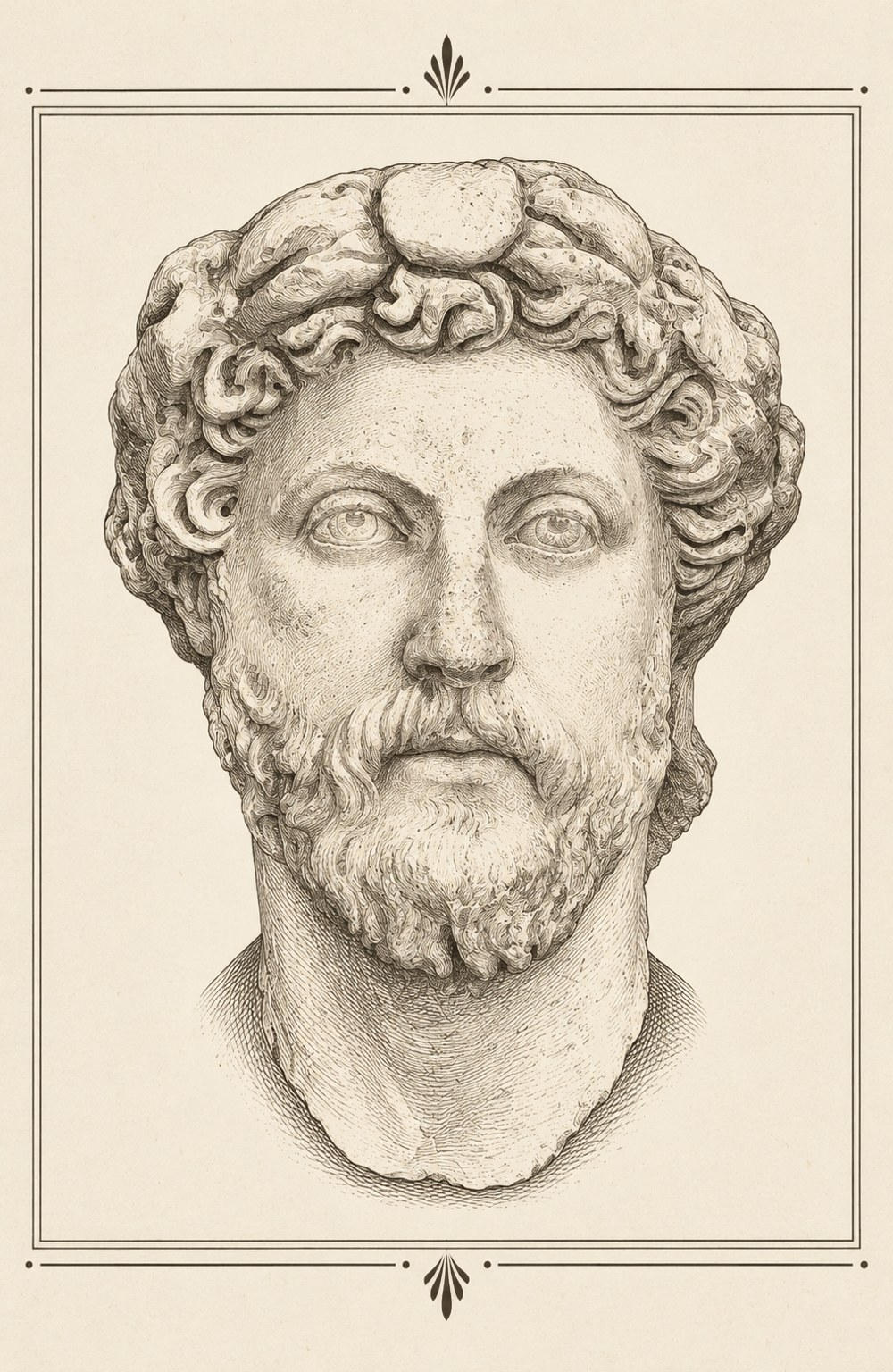
Not found
No. It is not in Aurelius’s works, and who first wrote it is not known.
The closest real passage, shown below, is found word for word by program in the Greek original and in George Long’s English translation (1862); the shared line is not in it.
- Closest passage
- Meditations (180), Book 2, section 15 (a related genuine passage, not the circulating two-sentence quotation)
Researched by AI; closest passage located by program on 31 October 2026. Entry updated 22 October 2026. Editorial review: pending. How we check
Where you would expect it
The closest real passage: Meditations, Book 2, section 15 (a related genuine passage, not the circulating two-sentence quotation). The shared line is not in it.
[…] For the present is the only thing of which a man can be deprived, if it is true that this is the only thing which he has, and that a man cannot lose a thing if he has it not.
τούτων οὖν τῶν δύο δεῖ μεμνῆσθαι· ἑνὸς μέν, ὅτι πάντα ἐξ ἀιδίου ὁμοειδῆ καὶ ἀνακυκλούμενα καὶ οὐδὲν διαφέρει, πότερον ἐν ἑκατὸν ἔτεσιν ἢ ἐν διακοσίοις ἢ ἐν τῷ ἀπείρῳ τὰ αὐτά τις ὄψεται· ἑτέρου δέ, ὅτι καὶ ὁ πολυχρονιώτατος καὶ ὁ τάχιστα τεθνηξόμενος τὸ ἴσον ἀποβάλλει. τὸ γὰρ παρόν ἐστι μόνον, οὗ στερίσκεσθαι μέλλει, εἴπερ γε ἔχει καὶ τοῦτο μόνον καὶ ὃ μὴ ἔχει τις οὐκ ἀποβάλλει.
Remember that all is opinion. For what was said by the Cynic Monimus is manifest: and manifest too is the use of what was said, if a man receives what may be got out of it as far as it is true.1
Ὅτι πᾶν ὑπόληψις. δῆλα μὲν γὰρ τὰ πρὸς τὸν Κυνικὸν Μόνιμον λεγόμενα· δῆλον δὲ καὶ τὸ χρήσιμον τοῦ λεγομένου, ἐάν τις αὐτοῦ τὸ νόστιμον μέχρι τοῦ ἀληθοῦς δέχηται.
The soul of man does violence to itself, first of all, when it becomes an abscess and, as it were, a tumour on the universe, so far as it can. […]
Ὑβρίζει ἑαυτὴν ἡ τοῦ ἀνθρώπου ψυχὴ μάλιστα μέν, ὅταν ἀπόστημα καὶ οἷον φῦμα τοῦ κόσμου, ὅσον ἐφ̓ ἑαυτῇ, γένηται· τὸ γὰρ δυσχεραίνειν τινὶ τῶν γινομένων ἀπόστασίς ἐστι τῆς φύσεως, ἧς ἐν μέρει αἱ ἑκάστου τῶν λοιπῶν φύσεις περιέχονται. ἔπειτα δέ, ὅταν ἄνθρωπόν τινα ἀποστραφῇ ἢ καὶ ἐναντία φέρηται ὡς βλάψουσα, οἷαί εἰσιν αἱ τῶν ὀργιζομένων. τρίτον ὑβρίζει ἑαυτήν, ὅταν ἡσσᾶται ἡδονῆς ἢ πόνου. τέταρτον, ὅταν ὑποκρίνηται καὶ ἐπιπλάστως καὶ ἀναλήθως τι ποιῇ ἢ λέγῃ. πέμπτον, ὅταν πρᾶξίν τινα ἑαυτῆς καὶ ὁρμὴν ἐπ’ οὐδένα σκοπὸν ἀφιῇ, ἀλλ’ εἰκῇ καὶ ἀπαρακολουθήτως ὁτιοῦν ἐνεργῇ, δέον καὶ τὰ μικρότατα κατὰ τὴν ἐπὶ τὸ τέλος ἀναφορὰν γίνεσθαι· τέλος δὲ λογικῶν ζῴων τὸ ἕπεσθαι τῷ τῆς πόλεως καὶ πολιτείας τῆς πρεσβυτάτης λόγῳ καὶ θεσμῷ.
Of human life the time is a point, and the substance is in a flux, and the perception dull, and the composition of the whole body subject to putrefaction, and the soul a whirl, and fortune hard to divine, and fame a thing devoid of judgement. […]
Τοῦ ἀνθρωπίνου βίου ὁ μὲν χρόνος στιγμή, ἡ δὲ οὐσία ῥέουσα, ἡ δὲ αἴσθησις ἀμυδρά, ἡ δὲ ὅλου τοῦ σώματος σύγκρισις εὔσηπτος, ἡ δὲ ψυχὴ ῥόμβος, ἡ δὲ τύχη δυστέκμαρτον, ἡ δὲ φήμη ἄκριτον· συνελόντι δὲ εἰπεῖν, πάντα τὰ μὲν τοῦ σώματος ποταμός, τὰ δὲ τῆς ψυχῆς ὄνειρος καὶ τῦφος, ὁ δὲ βίος πόλεμος καὶ ξένου ἐπιδημία, ἡ δὲ ὑστεροφημία λήθη.
A gap the length of the shared sentence, which is not in the text.2
Where it comes from
Not found in the complete Meditations in the atlas’s George Long translation: searches for everything we hear, everything we see, opinion not a fact and perspective not the truth returned no matches. Greek 2.15, 4.3, 8.47 and the judgment passages in Book 12 were considered; the supplied 2.15 is a qualified parallel, not proof that this modern saying descends from it. The drafting researcher reported a printing credited to Marcus in Lance Secretan’s excerpt in Transformation, 20 April 2006, p. 4, but the cited PDF returned 404 during independent review. The publisher’s surviving catalog confirms the issue, not the quoted page, so this remains an unconfirmed earlier lead. The earliest related wording directly inspected in this review is an unsigned variant adding necessarily in Forest Forum, October 2008, p. 12. The standard two-sentence wording is directly confirmed in a Wikiquote question dated 20 January 2013 that credits Marcus. Check Your Fact’s publisher metadata confirms Brad Sylvester’s fact-check dated 15 October 2019 and repeats the attribution in its description, but its article body and reported interviews could not be independently rechecked. Wikiquote and Thomas Colligan’s Modern Stoicism discussion were directly consulted as secondary assessments; neither identifies an ancient source for this wording. No coiner, original translation or first act of attribution was established.
How it travelled
- October 2008Before it · credited to no oneForest Forum prints an earlier close variant, adding necessarily in the second sentence, in its lighter-side section without an author credit. It is the earliest related wording independently inspected in this review, not proof of descent or of the standard wording’s first appearance.Forest Forum, Washington County Small Woodlands Association newsletter, October 2008, On the Lighter Side, p. 12. Checked in the text of a page scan, not the image. Source
- 20 January 2013Earliest found · credited to Marcus AureliusA public Wikiquote discussion repeats the standard wording as Marcus Aurelius’s and asks whether it is genuine. This is the earliest directly inspected occurrence of that exact two-sentence form in this review; an October 2008 close variant predates it and the reported 2006 printing remains unconfirmed.Talk:Marcus Aurelius, Is This a Real Marcus Aurelius quote?, opening question, 20 January 2013. Checked in a full-text transcription. Source
- 15 October 2019SpreadCheck Your Fact’s publisher metadata records Brad Sylvester’s fact-check and reproduces the saying in a description of a Facebook attribution. This establishes the dated publication and repetition, not the article’s uninspected interview contents.Brad Sylvester, FACT CHECK: Did Marcus Aurelius Say, ‘Everything We Hear Is An Opinion, Not A Fact’?, Check Your Fact, 15 October 2019. Checked in a full-text transcription. Source
In context
The modern two-sentence saying circulates as a warning about facts and perspectives, attributed to Marcus and sometimes to Meditations without a section. In the genuine passage shown here, Marcus invokes Monimus the Cynic and explicitly qualifies the usefulness of the thought. The following entry discusses ways in which the soul harms itself, including falsehood and purposeless action.
What it says
The circulating form warns that perception and testimony come through a point of view. The related passage in Marcus makes a qualified remark about judgment, not the unqualified claim that facts and truth never reach us.
Often misread
It is often used to endorse unrestricted relativism. Marcus’s qualification at 2.15 and his discussions of judgments about distress at 4.3 and 8.47 do not establish that all assertions are equally true or that external reality is only a perspective.
Use with care
The Greek and George Long passage supplied is the related 2.15, not an original for the meme. Do not credit the modern wording to Marcus or treat its actual coiner as known.
Use this instead
“Remember that all is opinion. For what was said by the Cynic Monimus is manifest: and manifest too is the use of what was said, if a man receives what may be got out of it as far as it is true.”
Meditations (180), Book 2, section 15 (a related genuine passage, not the circulating two-sentence quotation).
Topics
Related quotes
- The problem with the world is that the intelligent people are full of doubts, while the stupid ones are full of confidence. (not found) Charles Bukowski
- Educating the mind without educating the heart is no education at all. (not found) Aristotle
- The poet is a pretender. Fernando Pessoa
- Not everything that counts can be counted, and not everything that can be counted counts. (misattributed) Albert Einstein
- No pleasure is in itself evil, but the things which produce certain pleasures entail annoyances many times greater than the pleasures themselves. Epicurus
Sources
- en.wikiquote.org/wiki/Marcus_Aurelius#Misattributed
- en.wikiquote.org/wiki/Talk:Marcus_Aurelius#Is_This_a_Real_Marcus_Aurelius_quote?
- modernstoicism.com/did-the-stoics-really-say-that-by-thomas-colligan
- checkyourfact.com/2019/10/15/fact-check-marcus-aurelius-opinion-fact-perspective-truth-quote (publisher metadata and description inspected; article body unavailable in this review)
- worldbusiness.org/publications/transformation-april-20-2006 (publisher catalog confirms the issue date and Secretan connection; the reported quotation on p. 4 was not independently inspected in this review)
- wcswa.com/wp-content/uploads/ForestForum-2008-10.pdf
- standardebooks.org/ebooks/marcus-aurelius/meditations/george-long/text/single-page
- cdn.jsdelivr.net/gh/PerseusDL/canonical-greekLit@70427323b61267cdcd0256b9b02009c23392de07/data/tlg0562/tlg001/tlg0562.tlg001.perseus-grc2.xml
Cite it
“Everything we hear is an opinion, not a fact. Everything we see is a perspective, not the truth.” Attributed to Marcus Aurelius. No. It is not in Aurelius’s works, and who first wrote it is not known. Quotogeny, https://quotogeny.com/q/everything-we-hear-is-an-opinion-not-a-fact/ (checked 22 October 2026).
Have a different wording, or a source we missed? Check it or submit it.
Do you hold the rights to anything on this page? Tell us.
Checked by people
People who checked this entry against its source, under their own names. Their checks do not change the verdict: an editor reviews every entry.
Comments