Nothing can be pleasanter than an old age of leisure.
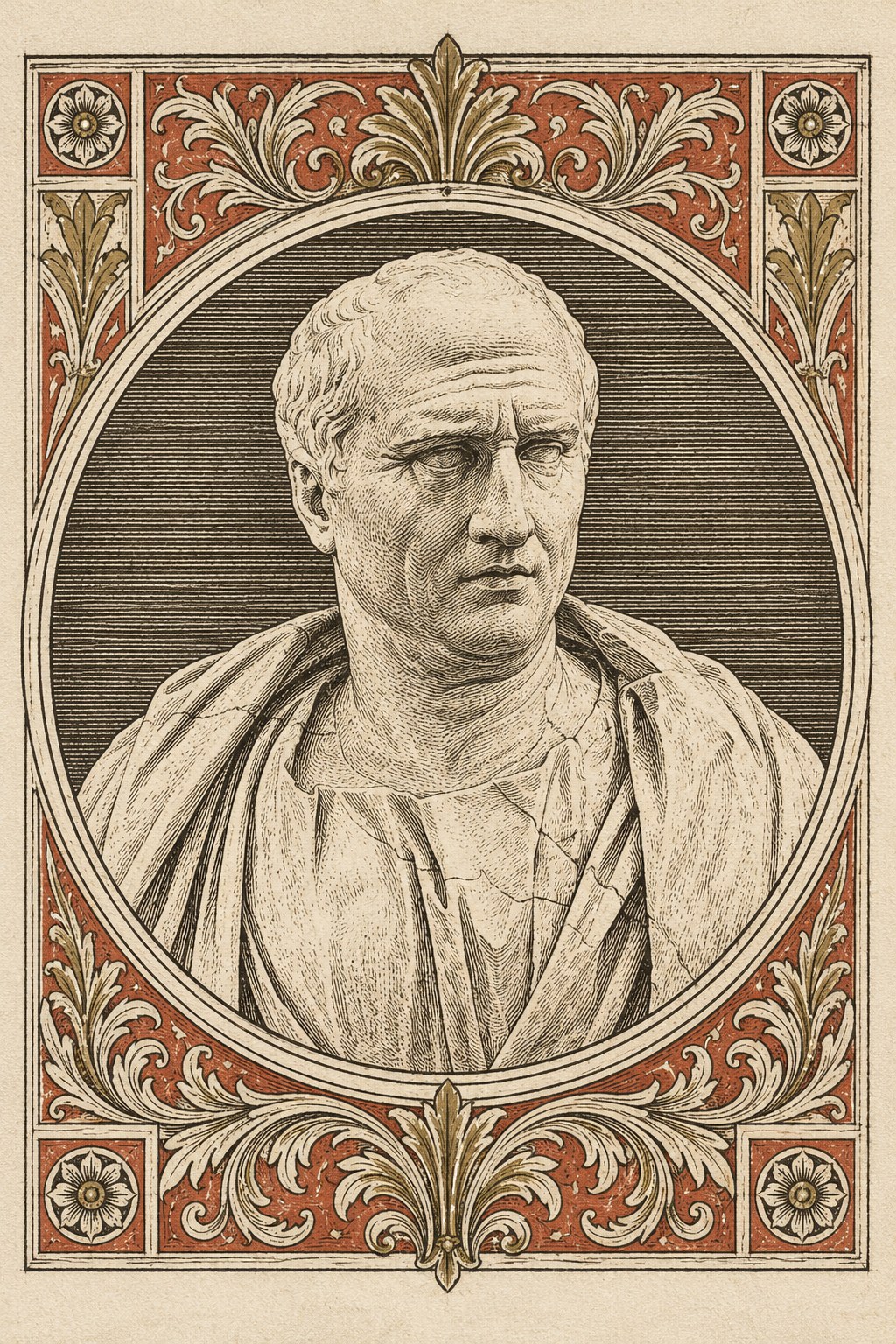
Genuine
Yes. In On Old Age (44 BC), Chapter XIV, section 49 (Cato Maior de Senectute 14.49), said by Marcus Porcius Cato the Elder. These are the character’s words, not a statement in Cicero’s own voice.
Found word for word by program in the Latin original and in E. S. Shuckburgh’s English translation.
- Work
- On Old Age (Cato Maior de Senectute), 44 BC
- Where
- Chapter XIV, section 49 (Cato Maior de Senectute 14.49)
- Found at
- Paragraph 80 of the Latin text, 55 of the English
- Translation
- E. S. Shuckburgh
Researched by AI; checked by program against the full text on 29 November 2026. Editorial review: pending. How we check
On the page
[…] However, he cannot be said to lack who does not want: my contention is that not to want is the pleasanter thing.
[…] Ut Turpione Ambivio magis delectatur, qui in prima cavea spectat, delectatur tamen etiam, qui in ultima, sic adulescentia voluptates propter intuens magis fortasse laetatur, sed delectatur etiam senectus procul eas spectans tantum quantum sat est.
[…] Why, what blessings are these—that the soul, having served its time, so to speak, in the campaigns of desire and ambition, rivalry and hatred, and all the passions, should live in its own thoughts, and, as the expression goes, should dwell apart! Indeed, if it has in store any of what I may call the food of study and philosophy, nothing can be pleasanter than an old age of leisure.1 We were witnesses to C. Gallus—a friend of your father’s, Scipio—intent to the day of his death on mapping out the sky and land. How often did the light surprise him while still working out a problem begun during the night! […]
49. At illa quanti sunt, animum, tamquam emeritis stipendiis libidinis, ambitionis, contentionis, inimicitiarum cupiditatum omnium, secum esse secumque, ut dicitur, vivere! Si vero habet aliquod tamquam pabulum studi atque doctrinae, nihil est otiosa senectute iucundius. Videbamus in studio dimetiendi paene caeli atque terrae C. Galum, familiarem patris tui, Scipio. Quotiens illum lux noctu aliquid describere ingressum, quotiens nox oppressit, cum mane coepisset! […]
15. I come now to the pleasures of the farmer, in which I take amazing delight. These are not hindered by any extent of old age, and seem to me to approach nearest to the ideal wise man’s life. […]
50. Quid in levioribus studiis, sed tamen acutis? Quam gaudebat bello suo Punico Naevius! quam Truculento Plautus, quam Pseudolo! […]
Need I mention the starting, planting, and growth of vines? I can never have too much of this pleasure—to let you into the secret of what gives my old age repose and amusement. […]
XV. 51. Venio nunc ad voluptates agricolarum, quibus ego incredibiliter delector; quae nec ulla impediuntur senectute et mihi ad sapientis vitam proxime videntur accedere. […]
The scene
Cato is defending old age against the complaint that it lacks youthful pleasures. Freedom from ambition and the passions gives the mind room to live with itself, provided it has study and learning to nourish it. He immediately illustrates this with Gaius Gallus working on astronomy into the night and with writers and scholars continuing their work in old age.
What it means
Leisure in old age can be deeply pleasurable when the mind has intellectual work to sustain it.
Often misread
The omitted condition matters: Cato praises leisure supplied with study and learning, not an empty retirement with nothing to do.
Topics
Related quotes
- But, it is said, memory dwindles. No doubt, unless you keep it in practice, or if you happen to be somewhat dull by nature.
- Again, you can’t connect the dots looking forward; you can only connect them looking backwards. Steve Jobs
- The only persons who are really at leisure are those who devote themselves to philosophy: and they alone really live: for they do not merely enjoy their own lifetime, but they annex every century to their own: all the years which have passed before them belong to them. Seneca the Younger
- But these are faults of character, not of the time of life.
- We judge of a man’s wisdom by his hope. Ralph Waldo Emerson
Sources
Cite it
Marcus Tullius Cicero, On Old Age (44 BC), Chapter XIV, section 49 (Cato Maior de Senectute 14.49), translated by E. S. Shuckburgh. Spoken by Marcus Porcius Cato the Elder. Checked at Quotogeny, https://quotogeny.com/q/nothing-pleasanter-than-an-old-age-of-leisure/ (29 November 2026).
Have a different wording, or a source we missed? Check it or submit it.
Do you hold the rights to anything on this page? Tell us.
Checked by people
People who checked this entry against its source, under their own names. Their checks do not change the verdict: an editor reviews every entry.
Comments