And for a test of the formation of the habits we must take the pleasure or pain which succeeds the acts;
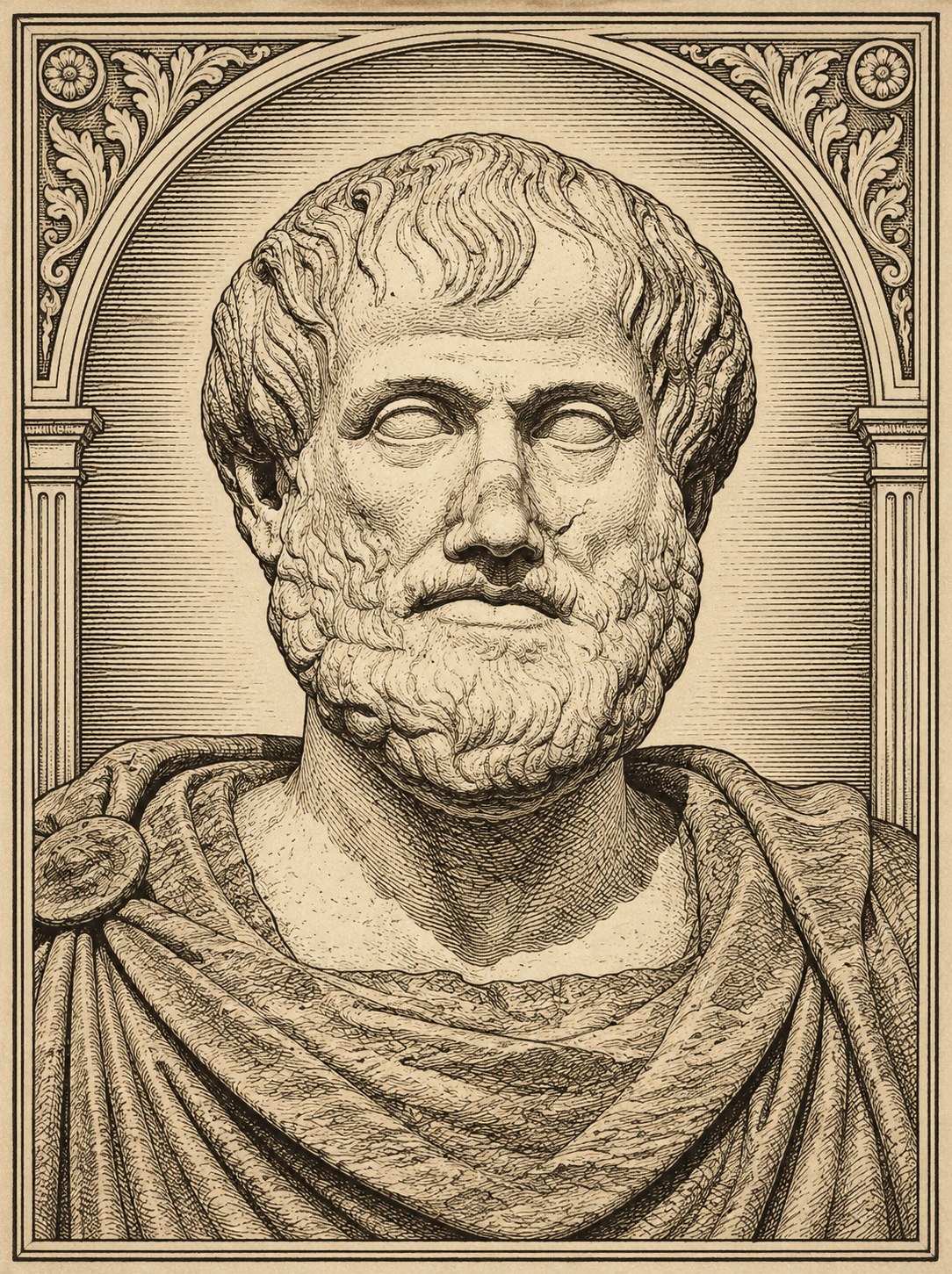
Genuine
Yes. In Nicomachean Ethics (330 BC), Book II, chapter 3, 1104b (local English heading: chapter II).
Found word for word by program in the Greek original and in D. P. Chase’s English translation.
- Work
- Nicomachean Ethics (Ἠθικὰ Νικομάχεια), 330 BC
- Where
- Book II, chapter 3, 1104b (local English heading: chapter II)
- Found at
- Paragraph 57 of the Greek text, 138 of the English
- Translation
- D. P. Chase
Researched by AI; checked by program against the full text on 29 November 2026. Editorial review: pending. How we check
On the page
Furthermore, not only do the origination, growth, and marring of the habits come from and by the same circumstances, but also the acts of working after the habits are formed will be exercised on the same: for so it is also with those other things which are more directly matters of sight, strength for instance: for this comes by taking plenty of food and doing plenty of work, and the man who has attained strength is best able to do these: and so it is with the Virtues, for not only do we by abstaining from pleasures come to be perfected in Self-Mastery, but when we have come to be so we can best abstain from them: similarly too with Courage: for it is by accustoming ourselves to despise objects of fear and stand up against them that we come to be brave; and after we have come to be so we shall be best able to stand up against such objects.
Ἀλλ᾽ οὐ μόνον αἱ γενέσεις καὶ αὐξήσεις καὶ αἱ φθοραὶ ἐκ τῶν αὐτῶν καὶ ὑπὸ τῶν αὐτῶν γίνονται, ἀλλὰ καὶ αἱ ἐνέργειαι ἐν τοῖς αὐτοῖς ἔσονται· καὶ γὰρ ἐπὶ τῶν ἄλλων τῶν φανερωτέρων οὕτως ἔχει, οἷον ἐπὶ τῆς ἰσχύος· γίνεται γὰρ ἐκ τοῦ πολλὴν τροφὴν λαμβάνειν καὶ πολλοὺς πόνους ὑπομένειν, καὶ μάλιστα ἂν δύναιτ᾽ αὐτὰ ποιεῖν ὁ ἰσχυρός. οὕτω δ᾽ ἔχει καὶ ἐπὶ τῶν ἀρετῶν· ἔκ τε γὰρ τοῦ ἀπέχεσθαι τῶν ἡδονῶν γινόμεθα σώφρονες, καὶ γενόμενοι μάλιστα δυνάμεθα ἀπέχεσθαι αὐτῶν· 1104b ὁμοίως δὲ καὶ ἐπὶ τῆς ἀνδρείας· ἐθιζόμενοι γὰρ καταφρονεῖν τῶν φοβερῶν καὶ ὑπομένειν αὐτὰ γινόμεθα ἀνδρεῖοι, καὶ γενόμενοι μάλιστα δυνησόμεθα ὑπομένειν τὰ φοβερά.
And for a test of the formation of the habits we must take the pleasure or pain which succeeds the acts; for he is perfected in Self-Mastery who not only abstains from the bodily pleasures but is glad to do so; whereas he who abstains but is sorry to do it has not Self-Mastery: he again is brave who stands up against danger, either with positive pleasure or at least without any pain; whereas he who does it with pain is not brave.[6]
Σημεῖον δὲ δεῖ ποιεῖσθαι τῶν ἕξεων τὴν ἐπιγινομένην ἡδονὴν ἢ λύπην τοῖς ἔργοις· ὁ μὲν γὰρ ἀπεχόμενος τῶν σωματικῶν ἡδονῶν καὶ αὐτῷ τούτῳ χαίρων σώφρων, ὁ δ᾽ ἀχθόμενος ἀκόλαστος, καὶ ὁ μὲν ὑπομένων τὰ δεινὰ καὶ χαίρων ἢ μὴ λυπούμενός γε ἀνδρεῖος, ὁ δὲ λυπούμενος δειλός. περὶ ἡδονὰς γὰρ καὶ λύπας ἐστὶν ἡ ἠθικὴ ἀρετή· διὰ μὲν γὰρ τὴν ἡδονὴν τὰ φαῦλα πράττομεν, διὰ δὲ τὴν λύπην τῶν καλῶν ἀπεχόμεθα. διὸ δεῖ ἦχθαί πως εὐθὺς ἐκ νέων, ὡς ὁ Πλάτων φησίν, ὥστε χαίρειν τε καὶ λυπεῖσθαι οἷς δεῖ· ἡ γὰρ ὀρθὴ παιδεία αὕτη ἐστίν.
For Moral Virtue has for its object-matter pleasures and pains, because by reason of pleasure we do what is bad, and by reason of pain decline doing what is right (for which cause, as Plato observes, men should have been trained straight from their childhood to receive pleasure and pain from proper objects, for this is the right education). […]
Ἔτι δ᾽ εἰ αἱ ἀρεταί εἰσι περὶ πράξεις καὶ πάθη, παντὶ δὲ πάθει καὶ πάσῃ πράξει ἕπεται ἡδονὴ καὶ λύπη, καὶ διὰ τοῦτ᾽ ἂν εἴη ἡ ἀρετὴ περὶ ἡδονὰς καὶ λύπας. μηνύουσι δὲ καὶ αἱ κολάσεις γινόμεναι διὰ τούτων· ἰατρεῖαι γάρ τινές εἰσιν, αἱ δὲ ἰατρεῖαι διὰ τῶν ἐναντίων πεφύκασι γίνεσθαι.
The following considerations may also serve to set this in a clear light. […]
Ἔτι, ὡς καὶ πρῴην εἴπομεν, πᾶσα ψυχῆς ἕξις, ὑφ᾽ οἵων πέφυκε γίνεσθαι χείρων καὶ βελτίων, πρὸς ταῦτα καὶ περὶ ταῦτα τὴν φύσιν ἔχει· δι᾽ ἡδονὰς δὲ καὶ λύπας φαῦλοι γίνονται, τῷ διώκειν ταύτας καὶ φεύγειν, ἢ ἃς μὴ δεῖ ἢ ὅτε οὐ δεῖ ἢ ὡς οὐ δεῖ ἢ ὁσαχῶς ἄλλως ὑπὸ τοῦ λόγου διορίζεται τὰ τοιαῦτα. διὸ καὶ ὁρίζονται τὰς ἀρετὰς ἀπαθείας τινὰς καὶ ἠρεμίας· οὐκ εὖ δέ, ὅτι ἁπλῶς λέγουσιν, ἀλλ᾽ οὐχ ὡς δεῖ καὶ ὡς οὐ δεῖ καὶ ὅτε, καὶ ὅσα ἄλλα προστίθεται. ὑπόκειται ἄρα ἡ ἀρετὴ εἶναι ἡ τοιαύτη περὶ ἡδονὰς καὶ λύπας τῶν βελτίστων πρακτική, ἡ δὲ κακία τοὐναντίον.
The scene
After describing how repeated actions both form and express character, Aristotle proposes a test of the resulting dispositions. Someone who abstains from bodily pleasures gladly differs from someone who abstains resentfully. The discussion connects moral education with learning to take pleasure and pain in the appropriate things, rather than merely performing the right outward action.
What it means
How we feel about our actions helps reveal the character we have formed.
Often misread
Not a claim that whatever feels pleasant is morally good. Aristotle is examining whether a person has learned to enjoy good actions and dislike bad ones; pleasure is evidence of a disposition, not an independent test of rightness.
Topics
Related quotes
- men train the young, guiding them on their course by the rudders of Pleasure and Pain.
- So then, whether we are accustomed this way or that straight from childhood, makes not a small but an important difference, or rather I would say it makes all the difference.
- this Wisdom has for its object particular facts, which come to be known from experience, which a young man has not because it is produced only by length of time.
- easy to miss the mark, but hard to hit it:
- And naught soe’er that’s great to such degree, Nor wonderful so far, but all mankind Little by little abandon their surprise. Lucretius
Sources
Cite it
Aristotle, Nicomachean Ethics (330 BC), Book II, chapter 3, 1104b (local English heading: chapter II), translated by D. P. Chase. Checked at Quotogeny, https://quotogeny.com/q/pleasure-and-pain-test-our-character/ (29 November 2026).
Have a different wording, or a source we missed? Check it or submit it.
Do you hold the rights to anything on this page? Tell us.
Checked by people
People who checked this entry against its source, under their own names. Their checks do not change the verdict: an editor reviews every entry.
Comments