See fancy things as they are. A royal purple robe is just sheep’s wool dyed with shellfish blood.
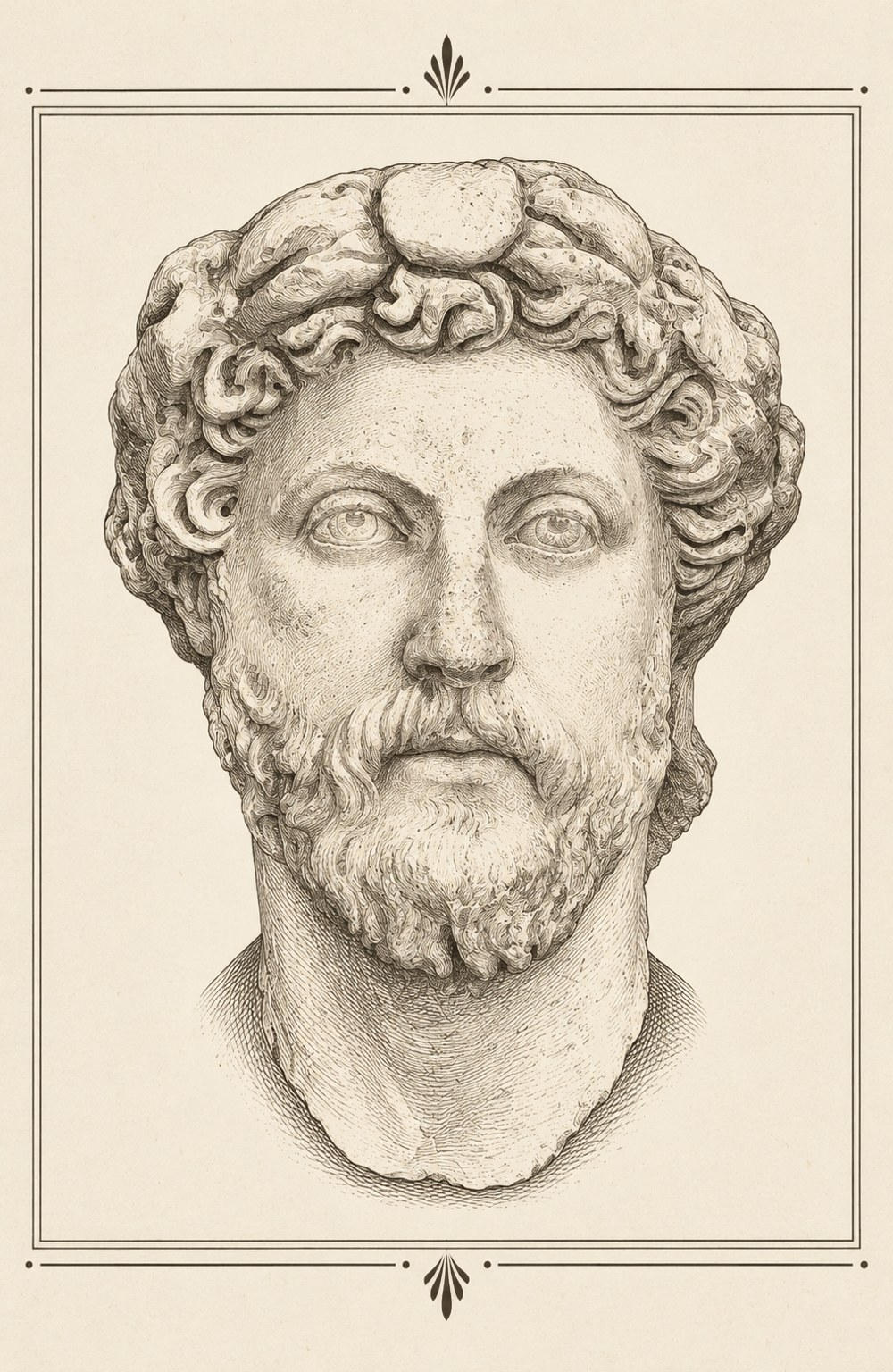
Paraphrase
Not in these words. The idea is in Meditations (180), Book 6, section 13.
The real passage, shown below, is found word for word by program in the Greek original and in George Long’s English translation (1862).
- Work
- Meditations (Τὰ εἰς ἑαυτόν), 180
- The real passage
- Book 6, section 13
Use this instead
“and again, that this Falernian is only a little grape juice, and this purple robe some sheep’s wool dyed with the blood of a shellfish”
Marcus Aurelius. Meditations (180), Book 6, section 13.
Researched by AI; closest passage located by program on 29 November 2026. Entry updated 22 November 2026. Editorial review: pending. How we check
The real passage
[…] Let the court and philosophy now be to thee stepmother and mother: return to philosophy frequently and repose in her, through whom what thou meetest with in the court appears to thee tolerable, and thou appearest tolerable in the court.
Εἰ μητρυιάν τε ἅμα εἶχες καὶ μητέρα, ἐκείνην τ̓ ἂν ἐθεράπευες καὶ ὅμως ἡ ἐπάνοδός σοι πρὸς τὴν μητέρα συνεχὴς ἐγίνετο. τοῦτό σοι νῦν ἐστιν ἡ αὐλὴ καὶ ἡ φιλοσοφία· ὧδε πολλάκις ἐπάνιθι καὶ προσαναπαύου ταύτῃ, δι’ ἣν καὶ τὰ ἐκεῖ σοι ἀνεκτὰ φαίνεται καὶ σὺ ἐν αὐτοῖς ἀνεκτός.
When we have meat before us and such eatables we receive the impression, that this is the dead body of a fish, and this is the dead body of a bird or of a pig; and again, that this Falernian is only a little grape juice, and this purple robe some sheep’s wool dyed with the blood of a shellfish:1 such then are these impressions, and they reach the things themselves and penetrate them, and so we see what kind of things they are. […]
Οἷον δὴ τὸ φαντασίαν λαμβάνειν ἐπὶ τῶν ὄψων καὶ τῶν τοιούτων ἐδωδίμων, ὅτι νεκρὸς οὗτος ἰχθύος, οὗτος δὲ νεκρὸς ὄρνιθος ἢ χοίρου· καὶ πάλιν, ὅτι ὁ Φάλερνος χυλάριόν ἐστι σταφυλίου καὶ ἡ περιπόρφυρος τριχία προβατίου αἱματίῳ κόγχης δεδευμένα· καὶ ἐπὶ τῶν κατὰ τὴν συνουσίαν ἐντερίου παράτριψις καὶ μετά τινος σπασμοῦ μυξαρίου ἔκκρισις· οἷαι δὴ αὗταί εἰσιν αἱ φαντασίαι καθικνούμεναι αὐτῶν τῶν πραγμάτων καὶ διεξιοῦσαι δι’ αὐτῶν, ὥστε ὁρᾶν οἷά τινά ποτέ ἐστιν· οὕτως δεῖ παρ’ ὅλον τὸν βίον ποιεῖν καὶ ὅπου λίαν ἀξιόπιστα τὰ πράγματα φαντάζεται, ἀπογυμνοῦν αὐτὰ καὶ τὴν εὐτέλειαν αὐτῶν καθορᾶν καὶ τὴν ἱστορίαν ἐφ’ ᾗ σεμνύνεται περιαιρεῖν. δεινὸς γὰρ ὁ τῦφος παραλογιστὴς καὶ ὅτε δοκεῖς μάλιστα περὶ τὰ σπουδαῖα καταγίνεσθαι, τότε μάλιστα καταγοητεύῃ. ὅρα γοῦν ὁ Κράτης τί περὶ αὐτοῦ τοῦ Ξενοκράτους λέγει.
Most of the things which the multitude admire are referred to objects of the most general kind, those which are held together by cohesion or natural organization, such as stones, wood, fig-trees, vines, olives. […]
Τὰ πλεῖστα, ὦν ἡ πληθὺς θαυμάζει, εἰς γενικώτατα ἀνάγεται τὰ ὑπὸ ἕξεως ἣ φύσεως συνεχόμενα, λίθους, ξύλα, συκᾶς, ἀμπέλους, ἐλαίας· τὰ δὲ ὑπὸ τῶν ὀλίγῳ μετριωτέρων εἰς τὰ ὑπὸ ψυχῆς, οἶον ποίμνας, ἀγέλας· τὰ δὲ ὑπὸ τῶν ἔτι χαριεστέρων εἰς τὰ ὑπὸ λογικῆς ψυχῆς, οὐ μέντοι καθολικῆς, ἀλλὰ καθὸ τεχνικὴ ἢ ἄλλως πως ἐντρεχής, ἢ κατὰ ψιλὸν τὸ πλῆθος ἀνδραπόδων κεκτῆσθαι. ὁ δὲ ψυχὴν λογικὴν καθολικὴν καὶ πολιτικὴν τιμῶν οὐδὲν ἔτι τῶν ἄλλων ἐπιστρέφεται, πρὸ ἁπάντων δὲ τὴν ἑαυτοῦ ψυχὴν λογικῶς καὶ κοινωνικῶς ἔχουσαν καὶ κινουμένην διασῴζει καὶ τῷ ὁμογενεῖ εἰς τοῦτο συνεργεῖ.
Some things are hurrying into existence, and others are hurrying out of it; and of that which is coming into existence part is already extinguished. […]
Τὰ μὲν σπεύδει γίνεσθαι, τὰ δὲ σπεύδει γεγονέναι, καὶ τοῦ γινομένου δὲ ἤδη τι ἀπέσβη· ῥύσεις καὶ ἀλλοιώσεις ἀνανεοῦσι τὸν κόσμον διηνεκῶς, ὥσπερ τὸν ἄπειρον αἰῶνα ἡ τοῦ χρόνου ἀδιάλειπτος φορὰ νέον ἀεὶ παρέχεται. ἐν δὴ τούτῳ τῷ ποταμῷ τί ἄν τις τούτων τῶν παραθεόντων ἐκτιμήσειεν, ἐφ’ οὗ στῆναι οὐκ ἔξεστιν; ὥσπερ εἴ τίς τι τῶν παραπετομένων στρουθαρίων φιλεῖν ἄρχοιτο, τὸ δ’ ἤδη ἐξ ὀφθαλμῶν ἀπελήλυθεν. τοιοῦτον δή τι καὶ αὐτὴ ἡ ζωὴ ἑκάστου, οἷον ἡ ἀφ’ αἵματος ἀναθυμίασις καὶ ἡ ἐκ τοῦ ἀέρος ἀνάπνευσις· ὁποῖον γάρ ἐστι τὸ ἅπαξ ἑλκύσαι τὸν ἀέρα καὶ ἀποδοῦναι, ὅπερ παρέκαστον ποιοῦμεν, τοιοῦτόν ἐστι καὶ τὸ τὴν πᾶσαν ἀναπνευστικὴν δύναμιν, ἣν χθὲς καὶ πρῴην ἀποτεχθεὶς ἐκτήσω, ἀποδοῦναι ἐκεῖ ὅθεν τὸ πρῶτον ἔσπασας.
How the shared form came about
A short modern paraphrase of Meditations 6.13 as it circulates on social media (seen as on-screen text in the reel ‘6 stoic quotes to kill your pride’ by invictuskhan_, 2026-11-17). The second sentence follows George Long’s ‘this purple robe some sheep’s wool dyed with the blood of a shellfish’ (his translation, 1862); the first sentence is not in Marcus. The Greek has the robe as ‘περιπόρφυρος’ (purple-bordered), which Long renders ‘purple robe’. I searched the Greek and Long’s English of the Meditations for the key words (purple, sheep’s wool, shellfish) and found the passage only here (6.13) and a kindred list in 9.36 (Greek: αἷμα ἡ πορφύρα, “the purple is blood”, corpus meditations.el.txt line 460). I did not find the earliest date of the short wording; the Instagram reel itself was not opened, only the requester’s note.
In context
Marcus describes an exercise: when food is before us, we should take the impression that this is the dead body of a fish, a bird or a pig; the Falernian wine is a little grape juice, the purple-bordered robe sheep’s wool dyed with a shellfish’s blood (the passage goes on to sex). Such impressions reach the things themselves, so that we see what they are. He then says to do this all through life, stripping what seems most worthy of its worthlessness, because vanity (τῦφος) is a clever deceiver.
What it says
Strip impressive things of their show by naming what they are made of, so that vanity and admiration lose their hold.
Often misread
The popular form’s opening sentence, ‘See fancy things as they are’, is a modern summary, and it leaves out the other examples (wine, meat, sex), which make the exercise one of plain description of everything, not a sneer at luxury or rank. Marcus is a ruler who wore the purple himself, and he turns the exercise on himself.
Topics
Related quotes
- Dogs bark at every one they do not know. Heraclitus
- Very little indeed is necessary for living a happy life.
- Most often, what we seek in life is something to be stubborn about, not to learn from. André Gide
- Do not waste the remainder of thy life in thoughts about others, when thou dost not refer thy thoughts to some object of common utility.
- Despise the pleasure that comes from the approval of the many. Seneca the Younger
Sources
- standardebooks.org/ebooks/marcus-aurelius/meditations/george-long/text/single-page (George Long translation, first published 1862; corpus meditations.en.txt, line 167)
- cdn.jsdelivr.net/gh/PerseusDL/canonical-greekLit@70427323b61267cdcd0256b9b02009c23392de07/data/tlg0562/tlg001/tlg0562.tlg001.perseus-grc2.xml (Greek text, book 6, chapter 13; corpus meditations.el.txt, line 217)
- instagram.com/reel/Df1JzoovLrC (where the short wording was seen; not opened)
Cite it
“See fancy things as they are. A royal purple robe is just sheep’s wool dyed with shellfish blood.” Attributed to Marcus Aurelius. Not in these words. The idea is in Meditations (180), Book 6, section 13. Quotogeny, https://quotogeny.com/q/see-fancy-things-as-they-are-a-royal-purple-robe/ (checked 22 November 2026).
Have a different wording, or a source we missed? Check it or submit it.
Do you hold the rights to anything on this page? Tell us.
Checked by people
People who checked this entry against its source, under their own names. Their checks do not change the verdict: an editor reviews every entry.
Comments