The creation of a thousand forests is in one acorn.
Genuine
Yes. In Essays: First Series (1841), Essay I, “History”, opening discussion of the universal mind.
Found word for word by program in the full text.
The wording people share differs from the text; the words in the text are underlined below.
- Work
- Essays: First Series (Essays), 1841
- Where
- Essay I, “History”, opening discussion of the universal mind
- Found at
- Paragraph 11 of the text
Researched by AI; checked by program against the full text on 29 November 2026. Editorial review: pending. How we check
On the page
[…] Who hath access to this universal mind is a party to all that is or can be done, for this is the only and sovereign agent.
[…] But the thought is always prior to the fact; all the facts of history preexist in the mind as laws. Each law in turn is made by circumstances predominant, and the limits of nature give power to but one at a time. A man is the whole encyclopaedia of facts. The creation of a thousand forests is in one acorn, and Egypt, Greece, Rome, Gaul, Britain, America, lie folded already in the first man.1 Epoch after epoch, camp, kingdom, empire, republic, democracy, are merely the application of his manifold spirit to the manifold world.
This human mind wrote history, and this must read it. The Sphinx must solve her own riddle. If the whole of history is in one man, it is all to be explained from individual experience. […]
It is the universal nature which gives worth to particular men and things. Human life, as containing this, is mysterious and inviolable, and we hedge it round with penalties and laws. […]
The scene
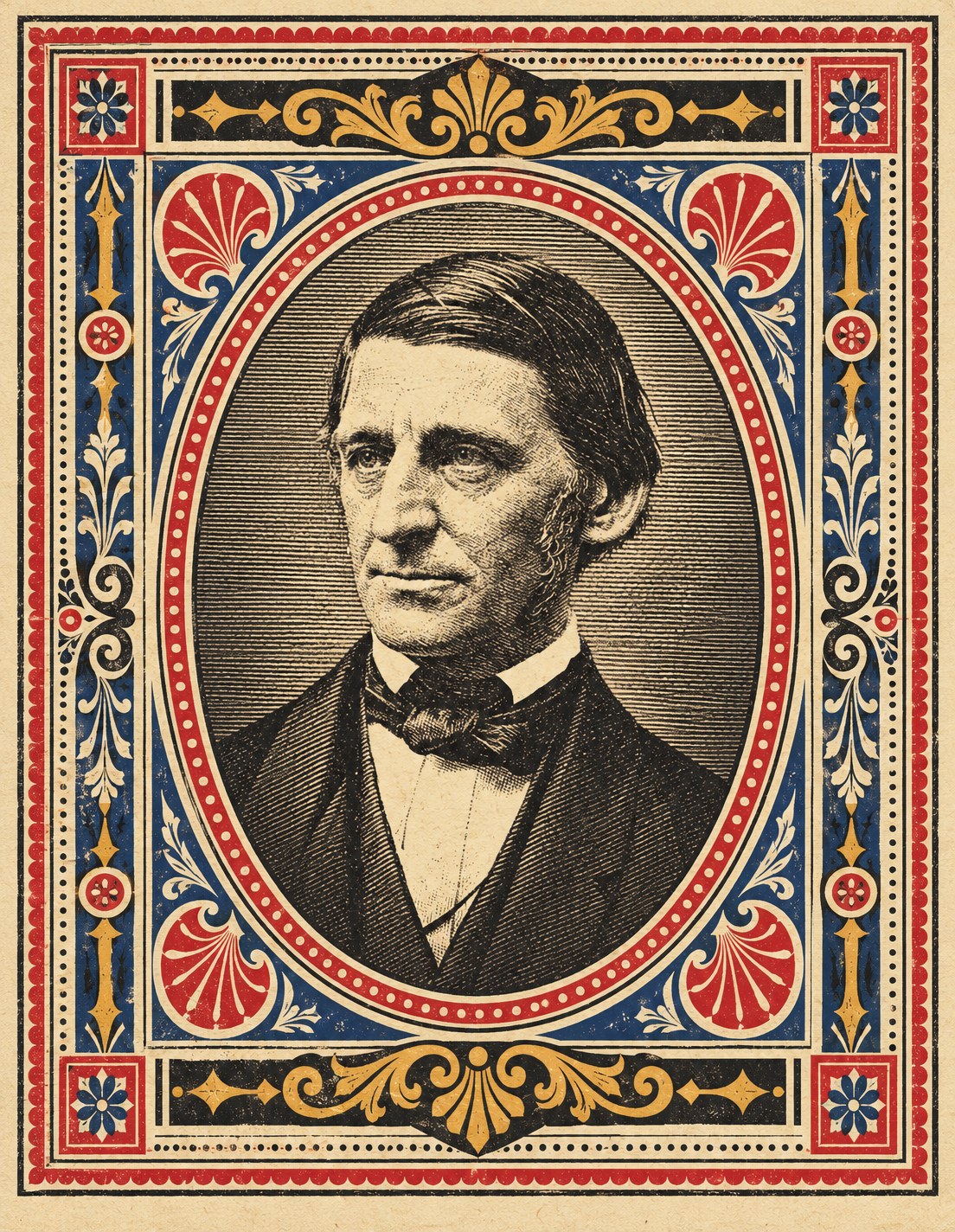
At the beginning of History, Emerson argues that a single mind is shared by all people, so that the record of civilization can be understood through individual experience. He compares the historical possibilities latent in human nature with the forests latent in an acorn, then names the succession of empires and political forms as expressions of that common spirit.
What it means
A small beginning contains immense possibilities; here the particular claim is that the capacities expressed throughout history are already present in human nature.
Often misread
Often used simply as advice to start small or plant a tree. The acorn is Emerson’s analogy for the relation between the individual mind and the whole of human history, not a claim that every project is destined for spectacular growth.
Topics
Related quotes
- Human potential, though not always apparent, is there waiting to be discovered and invited forth. (paraphrase) William W. Purkey
- The soul is dyed by the thoughts. Marcus Aurelius
- Religions are different roads converging to the same point. Mahatma Gandhi
- We judge of a man’s wisdom by his hope.
- Things for things shall kindle torches new. Lucretius
Cite it
Ralph Waldo Emerson, Essays: First Series (1841), Essay I, “History”, opening discussion of the universal mind. Checked at Quotogeny, https://quotogeny.com/q/the-creation-of-a-thousand-forests-is-in-one-acorn/ (29 November 2026).
Have a different wording, or a source we missed? Check it or submit it.
Do you hold the rights to anything on this page? Tell us.
Checked by people
People who checked this entry against its source, under their own names. Their checks do not change the verdict: an editor reviews every entry.
Comments