Times are bad. Children no longer obey their parents, and everyone is writing a book.
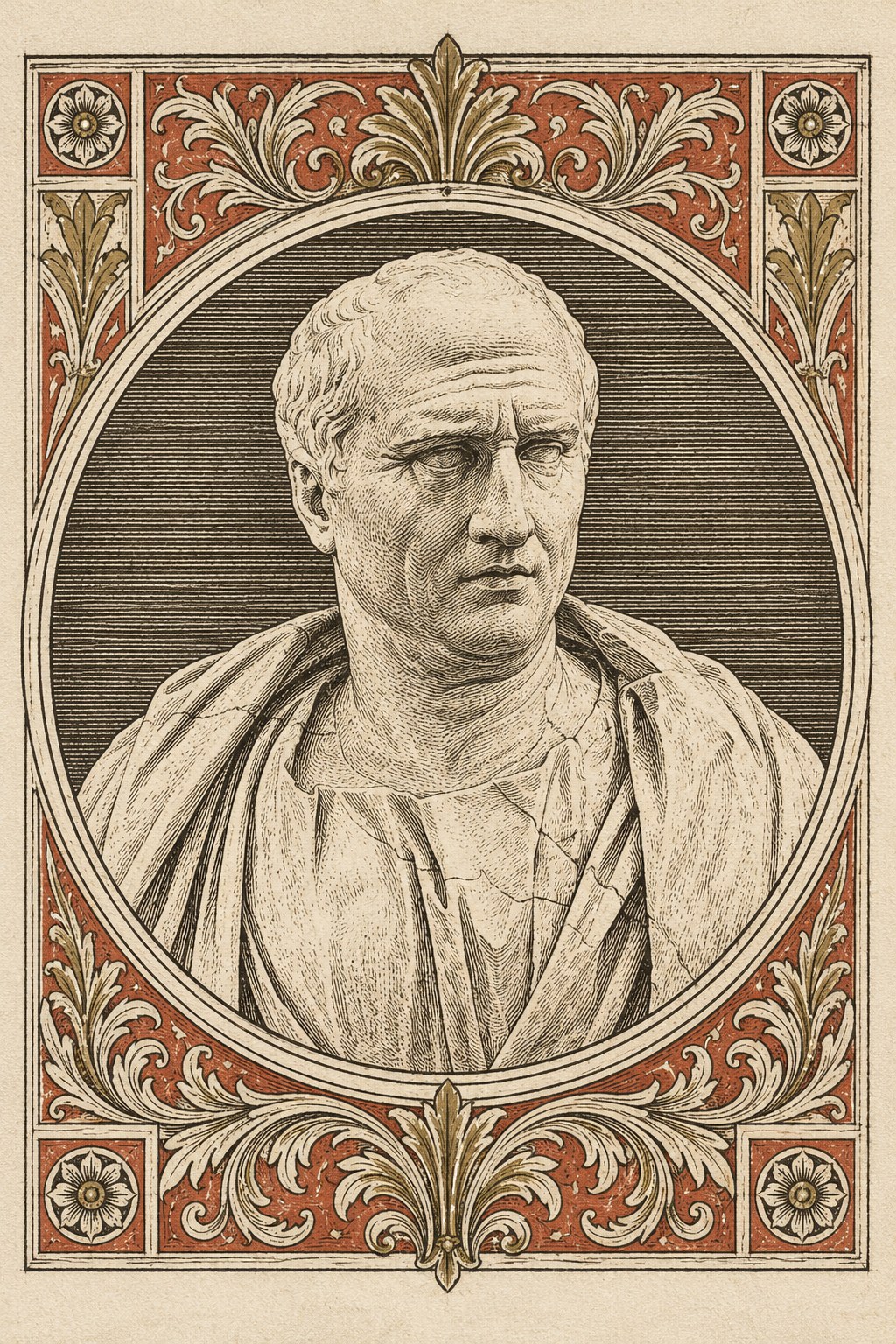
Not found
No. No. It is a twentieth-century filler, first printed in 1908 as the translation of an ancient tablet, and credited to Cicero only from about 2001.
Researched by AI. Entry updated 23 October 2026. Editorial review: pending. How we check
About this quote
Where it comes from
Quote Investigator (22 October 2012) traces the saying to a filler printed in August 1908 in Bassett’s Scrap Book, a magazine of the League of American Wheelmen, as the ‘translation of an inscription on a tablet in the Imperial Museum at Constantinople’ by Naram Sin, ‘5000 B.C.’ (seen here in the archive.org OCR of the volume, p. 84). Many versions followed: G. T. W. Patrick said in 1913 that he had seen such an inscription in the museum; from 1922 printings credited an Assyrian tablet of 2800 BC, and from 1925 an Egyptian. Quote Investigator found the condensed form credited to Cicero first in InfoWorld (16 April 2001), and found no compelling evidence that any of the versions was inscribed on an ancient tablet. No source in Cicero has been found; Wikiquote lists it under Misattributed. The English texts of Cicero held in the atlas (On Friendship, On Old Age, selected chapters of On Duties, Against Catiline I, Philippic XII, On the Laws III, the letter to Varro Fam. IX.4) do not contain ‘write a book’ or ‘obey their parents’.
How it travelled
- August 1908Earliest found · credited to Naram Sin (an inscription said to be in the Imperial Museum at Constantinople)Bassett’s Scrap Book, the organ of the League of American Wheelmen, prints the complaint as a translation of an inscription by Naram Sin, ‘5000 B.C.’, on a tablet in the Imperial Museum at Constantinople.
We have fallen upon evil times, the world has waxed old and wicked. Politics are very corrupt. Children are no longer respectful to their elders. Each man wants to make himself conspicuous and write a book.
Bassett’s Scrap Book: Scraps of History, Fact and Humor, vol. 6, no. 6 (August 1908), p. 84 (Boston: League of American Wheelmen), 84. Checked in the text of a page scan, not the image. Source - May 1913Reworded · credited to Naram SinG. T. W. Patrick, a philosophy professor at the State University of Iowa, writes in Popular Science Monthly that he saw such an inscription by Naram Sin, ‘3800 years B.C.’, in the museum at Constantinople; his version leaves out the book-writing.G. T. W. Patrick, ‘The New Optimism’, Popular Science Monthly, May 1913, pp. 492–493, 493. Checked on another researcher’s citation, not seen first-hand. Source
- 1922Reworded · credited to an Assyrian tabletThe Connecticut State Librarian, George S. Godard, prints the lament as from an Assyrian tablet of 2800 B.C. preserved in Constantinople, now with children who no longer obey their parents.
Our earth is degenerate in these latter days; there are signs that the world is speedily coming to an end; bribery and corruption are common; children no longer obey their parents; every man wants to write a book, and the end of the world is evidently approaching.
Report of the State Librarian to the Governor, State of Connecticut, Public Document No. 13, ‘Librarian’s Report, 1920-22’ (submitted 18 November 1922 by George S. Godard), 93. Checked on another researcher’s citation, not seen first-hand. Source - March 1925Credited to an EgyptianThe Ounce, a monthly of the Big Brother and Big Sister Federation, New York, assigns the words to an Egyptian of 6,000 years ago, the writing ‘now in the Imperial Museum, Constantinople’.
Our earth is becoming degenerate in these latter days. There are signs that the world is rapidly approaching the end. Children will no longer obey their parents. Everybody wants to write a book. The end of the world is manifestly drawing nigh.
’Evil Days’, The Ounce (Big Brother and Big Sister Federation, New York), March 1925, 8. Checked on another researcher’s citation, not seen first-hand. Source - 1948Spread · credited to an Egyptian priestA note in the journal World Affairs credits the words to an Egyptian priest of about 4000 BC.
Our earth is degenerate. Children no longer obey their parents. Everybody wants to write a book. The end of the world is near.
Mabel Soule Call, ‘Notes’, World Affairs, vol. 111, no. 4 (Winter 1948), p. 280, 280. Checked on another researcher’s citation, not seen first-hand. Source - 16 April 2001Credited to CiceroA column in InfoWorld gives the condensed form credited to Cicero, the earliest such credit Quote Investigator found.
Times are bad. Children no longer obey their parents, and everyone is writing a book.
Bob Lewis, ‘IS Survival Guide: In rough seas, does your leadership style inspire buoyancy—or mutiny?’, InfoWorld, vol. 23, no. 16 (16 April 2001), p. 49, 49. Checked on another researcher’s citation, not seen first-hand. Source
In context
Shared as proof that every age complains about the young, usually credited to Cicero, sometimes with his dates. The complaint is an old American filler item: from 1908 on it was printed as the translation of an ancient tablet, said to be by King Naram Sin and kept in the museum at Constantinople, and later of an Assyrian tablet or an Egyptian priest. Quote Investigator found Cicero’s name on it only from 2001.
What it says
A joke on the timelessness of grumbling: the old complaints, bad times, disobedient children, and the vanity of everyone wanting to write a book, are presented as already ancient.
Often misread
Quoted as a real ancient Roman complaint, and so as evidence that people have always lamented the young. No such sentence is known from Cicero, and the older versions it descends from claimed a different, equally unproven ancient source.
Also shared as
- A misquotationOur Earth is degenerate in these later days; there are signs that the world is speedily coming to an end; bribery and corruption are common; children no longer obey their parents; every man wants to write a book and the end of the world is evidently approaching. The ‘Assyrian clay tablet dating to around 2800 B.C.’ form, as quoted by Quote Investigator from a Smithsonian Magazine web article of 12 November 2009. Much the same words are in George S. Godard’s Connecticut report of 1922. Where it was seen
Topics
Related quotes
- No man needs a vacation so much as the man who has just had one. (misattributed) Elbert Hubbard
- Asked what he thought of Western civilization, Gandhi replied: “I think it would be a good idea.” (not found) Mahatma Gandhi
- Golf is a good walk spoiled. (not found) Mark Twain
- Some cause happiness wherever they go; others whenever they go. (not found) Oscar Wilde
- Adam was but human—this explains it all. He did not want the apple for the apple’s sake, he wanted it only because it was forbidden. Mark Twain
Sources
- quoteinvestigator.com/2012/10/22/world-end (Quote Investigator, ‘Ancient Tablet: The World is Speedily Coming to an End. Everyone Wants to Write a Book’, 22 October 2012)
- en.wikiquote.org/wiki/Cicero#Misattributed (InfoWorld, 16 April 2001, p. 49; refers to Quote Investigator)
- archive.org/details/bassettsscrapboo56leag (Bassett’s Scrap Book, vols. 5–6, p. 84)
Cite it
“Times are bad. Children no longer obey their parents, and everyone is writing a book.” Attributed to Marcus Tullius Cicero. No. No. It is a twentieth-century filler, first printed in 1908 as the translation of an ancient tablet, and credited to Cicero only from about 2001. Quotogeny, https://quotogeny.com/q/times-are-bad-children-no-longer-obey-their-parents/ (checked 23 October 2026).
Have a different wording, or a source we missed? Check it or submit it.
Do you hold the rights to anything on this page? Tell us.
Checked by people
People who checked this entry against its source, under their own names. Their checks do not change the verdict: an editor reviews every entry.
Comments