That is why true artists despise nothing: they require themselves to understand rather than judge.
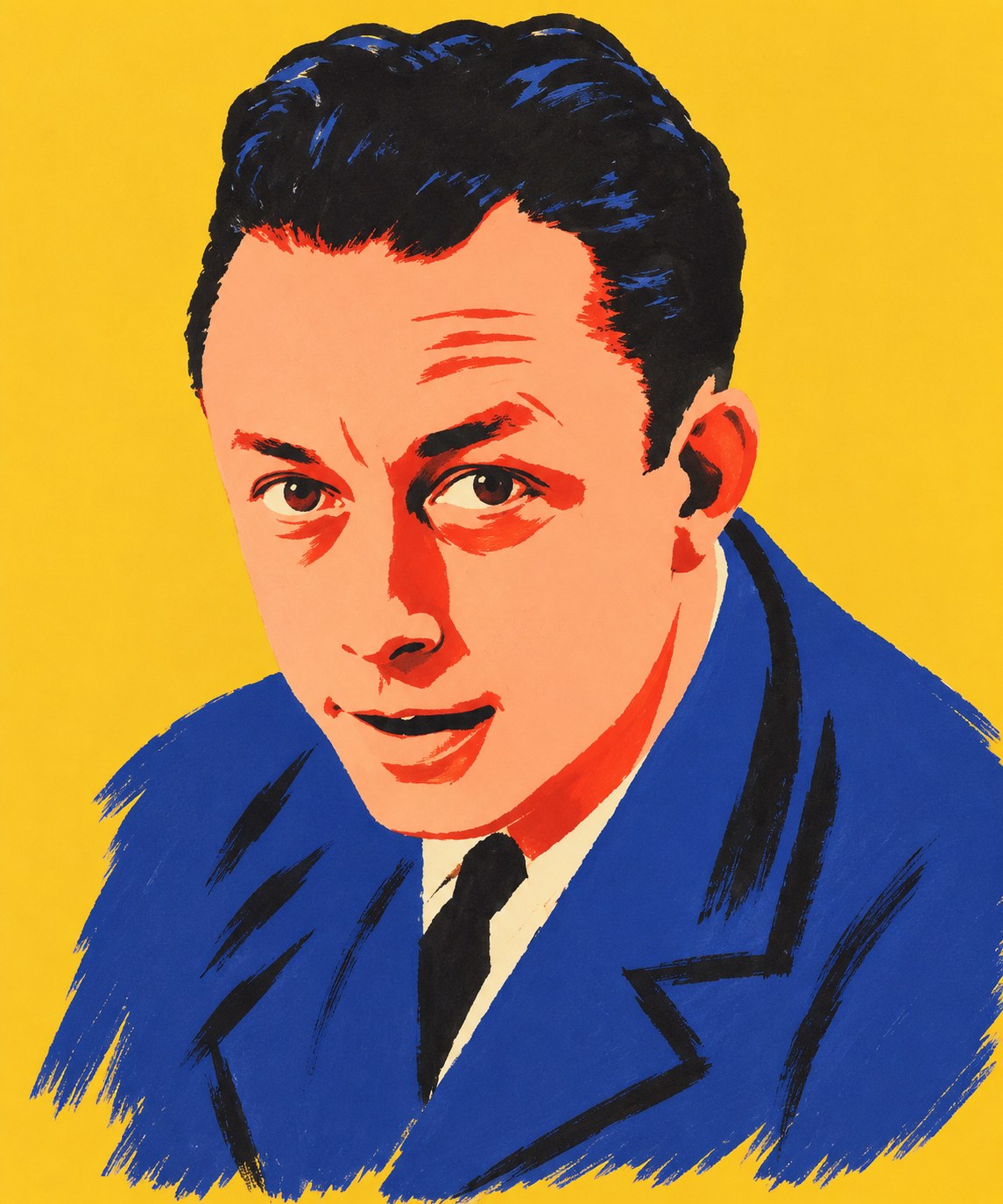
Genuine
Yes. In Albert Camus, speech at the Nobel Banquet, Stockholm City Hall, 10 December 1957; official French transcript on NobelPrize.org, copyright Éditions Gallimard.
Checked against Albert Camus, speech at the Nobel Banquet, Stockholm City Hall, 10 December 1957; official French transcript on NobelPrize.org, copyright Éditions Gallimard, in a full-text transcription.
- Where
- Nobel Banquet speech, Stockholm, 10 December 1957; paragraph beginning Je ne puis vivre personnellement sans mon art
- Translation
- Our own, not yet reviewed (no public-domain translation in our sources)
- Source
- Albert Camus, speech at the Nobel Banquet, Stockholm City Hall, 10 December 1957; official French transcript on NobelPrize.org, copyright Éditions Gallimard
- Checked
- In a full-text transcription
Researched by AI. Entry updated 29 October 2026. Editorial review: pending. How we check
About this quote
The scene
Camus explains why his art cannot be separated from other people. An artist who initially thinks himself different must acknowledge his likeness to others, moving between beauty and the human community. Camus follows this sentence with an appeal to a society in which the creator rather than the judge rules.
What it means
Art demands sympathetic understanding of human experience instead of contemptuous dismissal.
Often misread
It is a demand made on artists, not a prohibition on all moral judgment. In the very next paragraph Camus refuses a writer’s service to tyranny, and elsewhere in the same speech requires resistance to oppression.
Topics
Related quotes
- By definition, he cannot today put himself at the service of those who make history: he serves those who undergo it.
- Refusing to lie about what one knows, and resisting oppression.
- Any man can make mistakes, but only an idiot persists in his error. Marcus Tullius Cicero
- Judge the Russian people not by the abominations they so often commit, but by the great and holy things for which, even in their abomination, they constantly yearn. Fyodor Dostoevsky
- We are now facing a problem more of ethics than of physics. Bernard Baruch
Cite it
Albert Camus, Albert Camus, speech at the Nobel Banquet, Stockholm City Hall, 10 December 1957; official French transcript on NobelPrize.org, copyright Éditions Gallimard. Checked at Quotogeny, https://quotogeny.com/q/understand-rather-than-judge/ (29 October 2026).
Have a different wording, or a source we missed? Check it or submit it.
Do you hold the rights to anything on this page? Tell us.
Checked by people
People who checked this entry against its source, under their own names. Their checks do not change the verdict: an editor reviews every entry.
Comments