For a short term of life is long enough for living well and honourably.
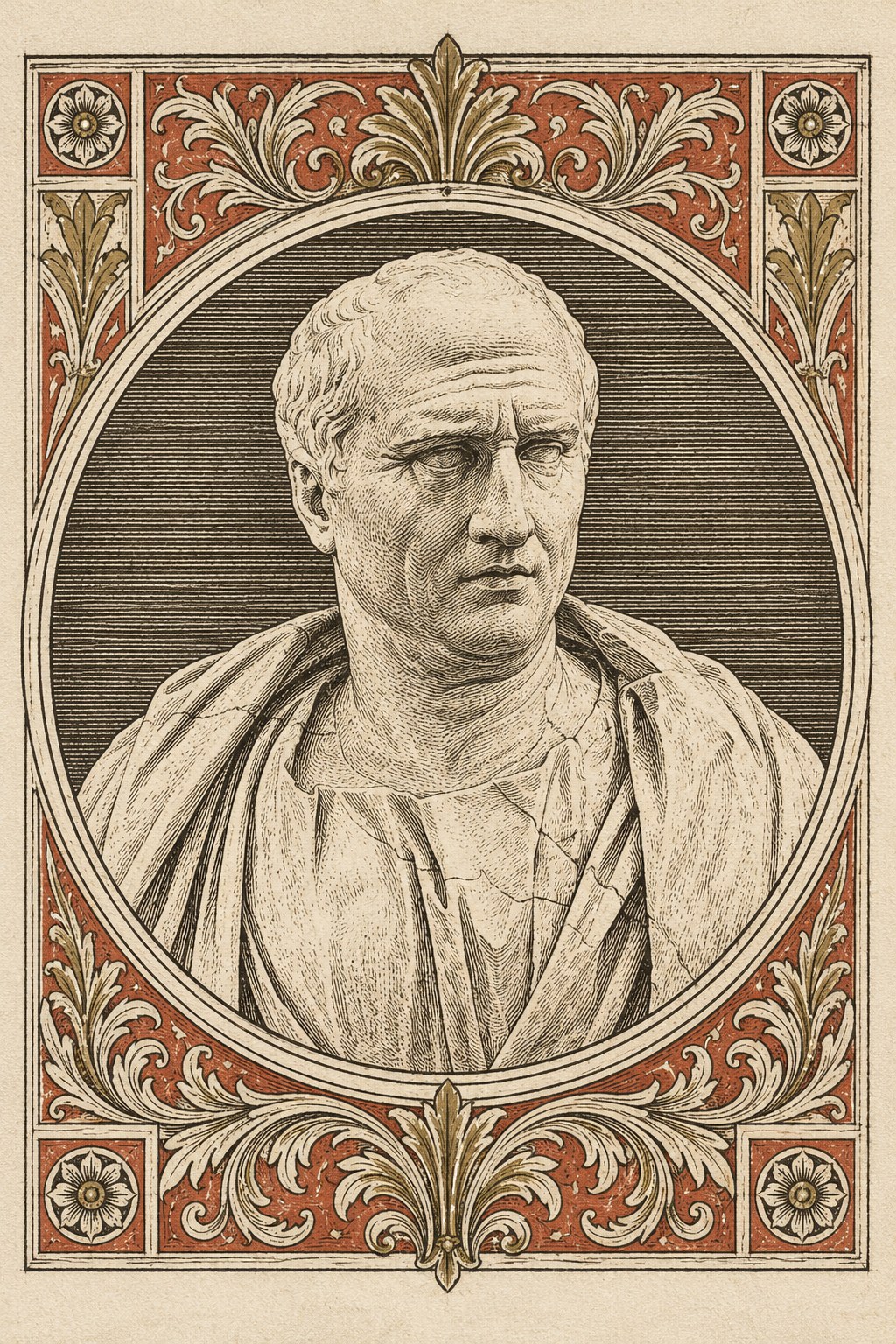
Genuine
Yes. In On Old Age (44 BC), Chapter XIX, section 70 (Cato Maior de Senectute 19.70), said by Marcus Porcius Cato the Elder. These are the character’s words, not a statement in Cicero’s own voice.
Found word for word by program in the Latin original and in E. S. Shuckburgh’s English translation.
- Work
- On Old Age (Cato Maior de Senectute), 44 BC
- Where
- Chapter XIX, section 70 (Cato Maior de Senectute 19.70)
- Found at
- Paragraph 101 of the Latin text, 69 of the English
- Translation
- E. S. Shuckburgh
Researched by AI; checked by program against the full text on 31 October 2026. Editorial review: pending. How we check
On the page
[…] “An old man has nothing even to hope.” Ah, but it is just there that he is in a better position than a young man, since what the latter only hopes he has obtained. The one wishes to live long; the other has lived long.
[…] Cum enim id advenit, tum illud, quod praeteriit, effluxit; tantum remanet, quod virtute et recte factis consecutus sis; horae quidem cedunt et dies et menses et anni, nec praeteritum tempus umquam revertitur, nec quid sequatur sciri potest; quod cuique temporis ad vivendum datur, eo debet esse contentus.
[…] Whatever time each is granted for life, with that he is bound to be content. An actor, in order to earn approval, is not bound to perform the play from beginning to end; let him only satisfy the audience in whatever act he appears. Nor need a wise man go on to the concluding “plaudite.” For a short term of life is long enough for living well and honourably.1 But if you go farther, you have no more right to grumble than farmers do because the charm of the spring season is past and the summer and autumn have come. […]
70. Neque enim histrioni, ut placeat, peragenda fabula est, modo, in quocumque fuerit actu, probetur, neque sapientibus usque ad ‘Plaudite’ veniendum est. Breve enim tempus aetatis satis longum est ad bene honesteque vivendum; sin processerit longius, non magis dolendum est, quam agricolae dolent praeterita verni temporis suavitate aestatem autumnumque venisse. […]
20. Again, there is no fixed borderline for old age, and you are making a good and proper use of it as long as you can satisfy the call of duty and disregard death. […]
71. Fructus autem senectutis est, ut saepe dixi, ante partorum bonorum memoria et copia. Omnia autem quae secundum naturam fiunt sunt habenda in bonis. Quid est autem tam secundum naturam quam senibus emori? […]
The result is that the short time of life left to them is not to be grasped at by old men with greedy eagerness, or abandoned without cause. […]
XX. 72. Senectutis autem nullus est certus terminus, recteque in ea vivitur, quoad munus offici exsequi et tueri possit [mortemque contemnere]; ex quo fit, ut animosior etiam senectus sit quam adulescentia et fortior. […]
The scene
Cato is answering the fourth complaint against old age: that death is near. He compares life to a play in which an actor can win approval without appearing in every act, and says that virtue and right actions matter more than length. He then compares later life to the summer and autumn that naturally follow spring. The English is E. S. Shuckburgh’s translation.
What it means
Living honourably does not require the longest possible lifespan; a life can be good without being long.
Often misread
Cato does not say that a longer life is worthless: the next sentence also defends being content with continuing to live. This is his argument about mortality, not a direct statement by Cicero outside the dialogue.
Topics
Related quotes
- Friendship improves Happiness and abates Misery, by the doubling of our Joy and dividing of our Grief. (paraphrase)
- To the well-organised mind, death is but the next great adventure. J. K. Rowling
- Do not pity the dead, Harry. Pity the living, and, above all, those who live without love. J. K. Rowling
- It does not do to dwell on dreams and forget to live, remember that. J. K. Rowling
- there is no such obstacle to true living as waiting, which loses today while it is depending on the morrow. Seneca the Younger
Sources
Cite it
Marcus Tullius Cicero, On Old Age (44 BC), Chapter XIX, section 70 (Cato Maior de Senectute 19.70), translated by E. S. Shuckburgh. Spoken by Marcus Porcius Cato the Elder. Checked at Quotogeny, https://quotogeny.com/q/a-short-life-is-long-enough-to-live-well/ (31 October 2026).
Have a different wording, or a source we missed? Check it or submit it.
Do you hold the rights to anything on this page? Tell us.
Checked by people
People who checked this entry against its source, under their own names. Their checks do not change the verdict: an editor reviews every entry.
Comments