The fact is that fewer people are endowed with virtue than wish to be thought to be so.
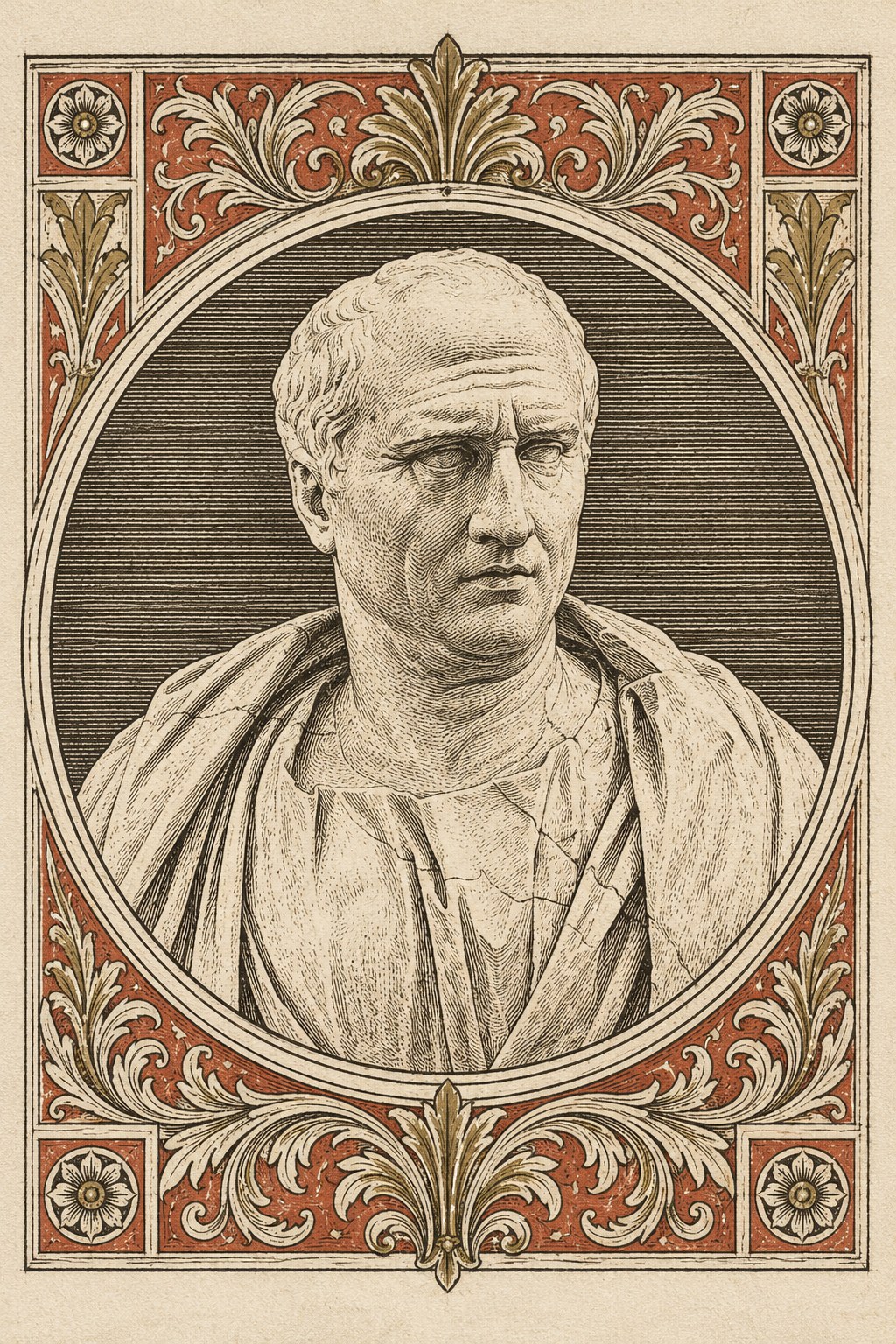
Genuine
Yes. In On Friendship (44 BC), Chapter XXVI, section 98 (Laelius de Amicitia 26.98), said by Gaius Laelius. These are the character’s words, not a statement in Cicero’s own voice.
Found word for word by program in the Latin original and in E. S. Shuckburgh’s English translation.
- Work
- On Friendship (Laelius de Amicitia), 44 BC
- Where
- Chapter XXVI, section 98 (Laelius de Amicitia 26.98)
- Found at
- Paragraph 121 of the Latin text, 73 of the English
- Translation
- E. S. Shuckburgh
Researched by AI; checked by program against the full text on 31 October 2026. Editorial review: pending. How we check
On the page
[…] This took place in my praetorship, five years before I was elected consul, which shows that the cause was successfully maintained more by the merits of the case than by the prestige of the highest office.
[…] Ita fit, ut is assentatoribus patefaciat aures suas maxime, qui ipse sibi assentetur et se maxime ipse delectet.
[…] And it follows that the man to open his ears widest to flatterers is he who first flatters himself and is fondest of himself. I grant you that Virtue naturally loves herself; for she knows herself and perceives how worthy of love she is. But I am not now speaking of absolute virtue, but of the belief men have that they possess virtue. The fact is that fewer people are endowed with virtue than wish to be thought to be so.1 It is such people that take delight in flattery. When they are addressed in language expressly adapted to flatter their vanity, they look upon such empty persiflage as a testimony to the truth of their own praises. […]
[98] Omnino est amans sui virtus; optime enim se ipsa novit, quamque amabilis sit, intellegit. Ego autem non de virtute nunc loquor sed de virtutis opinione. Virtute enim ipsa non tam multi praediti esse quam videri volunt. Hos delectat assentatio, his fictus ad ipsorum voluntatem sermo cum adhibetur, orationem illam vanam testimonium esse laudum suarum putant. Nulla est igitur haec amicitia, cum alter verum audire non vult, alter ad mentiendum paratus est. […]
How have I been befooled! no drivelling dotards On any stage were e’er so p1ayed upon.
Magnas vero agere gratias Thais mihi?
For even on the stage we have no grosser representation of folly than that of short-sighted and credulous old men. […]
Satis erat respondere: ‘magnas’; ‘ingentes’ inquit. Semper auget assentator id, quod is cuius ad voluntatem dicitur vult esse magnum.
The scene
Near the end of the dialogue, Laelius warns that flattery undermines friendship by destroying truthfulness. He distinguishes genuine virtue’s knowledge of its worth from the mere belief that one is virtuous. People who want the reputation without the reality welcome flattering words as evidence of their supposed goodness. The English is E. S. Shuckburgh’s translation.
What it means
The wish to be thought good is more widespread than goodness itself, which makes vanity vulnerable to flattery.
Often misread
This is part of an argument for truthful friendship, not a recommendation to substitute appearances for character. The sentence belongs to Laelius’s dialogue speech.
Topics
Related quotes
- Friendship improves Happiness and abates Misery, by the doubling of our Joy and dividing of our Grief. (paraphrase)
- Hilarious are the weak who think they are good because they have no claws. (paraphrase) Friedrich Nietzsche
- men covetously guard their property from waste, but when it comes to waste of time, they are most prodigal of that of which it would become them to be sparing. Seneca the Younger
- Everything has already been said; but as no one listens, one must always begin again. André Gide
- Nothing in this world is harder than speaking the truth, nothing easier than flattery. Fyodor Dostoevsky
Sources
Cite it
Marcus Tullius Cicero, On Friendship (44 BC), Chapter XXVI, section 98 (Laelius de Amicitia 26.98), translated by E. S. Shuckburgh. Spoken by Gaius Laelius. Checked at Quotogeny, https://quotogeny.com/q/fewer-people-have-virtue-than-wish-to-seem-so/ (31 October 2026).
Have a different wording, or a source we missed? Check it or submit it.
Do you hold the rights to anything on this page? Tell us.
Checked by people
People who checked this entry against its source, under their own names. Their checks do not change the verdict: an editor reviews every entry.
Comments