It is the mark of an educated mind to be able to entertain a thought without accepting it.
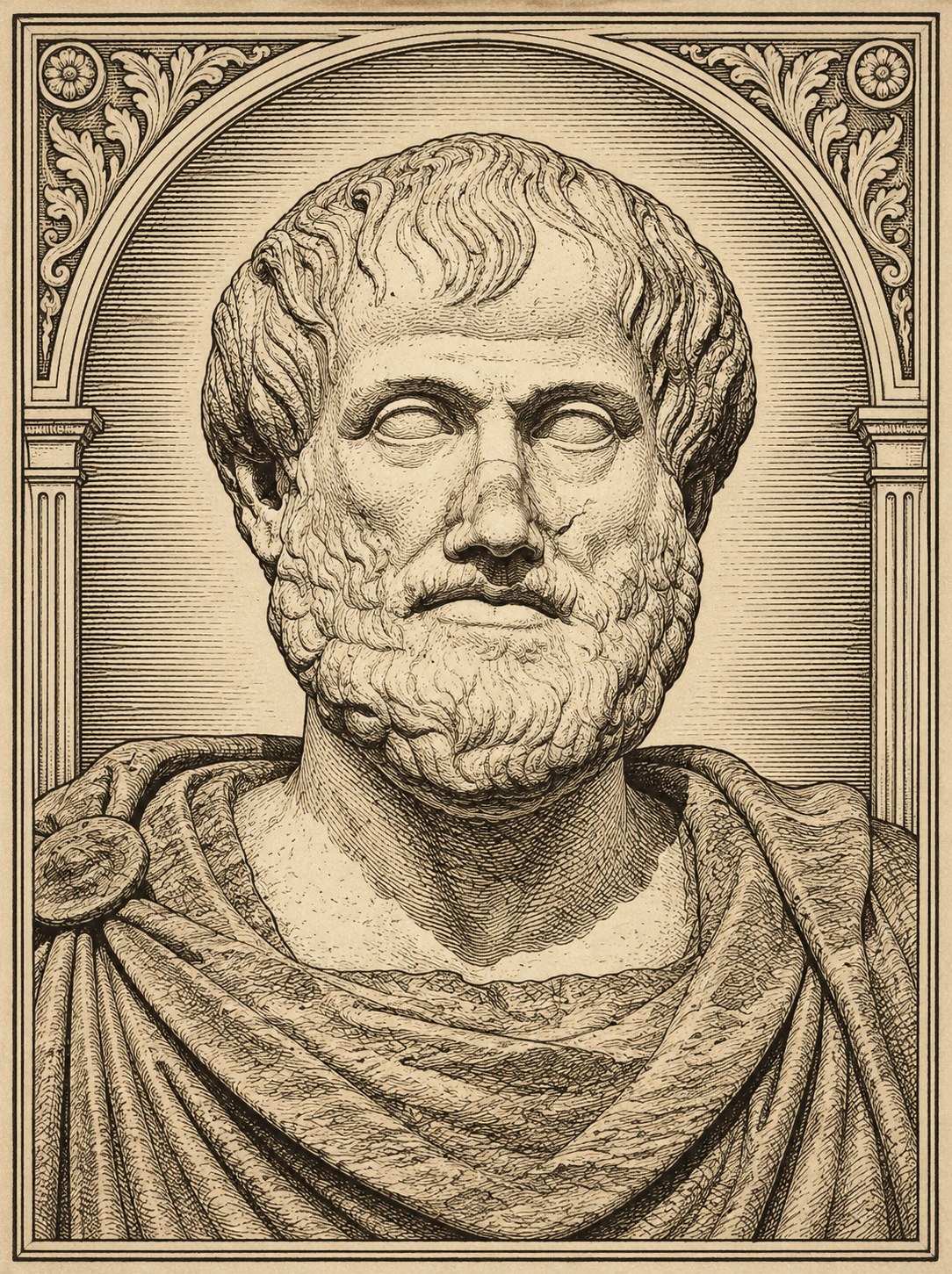
Not found
No. It is not in Aristotle’s works, and who first wrote it is not known.
The closest real passage, shown below, is found word for word by program in the Greek original and in D. P. Chase’s English translation; the shared line is not in it.
- Closest passage
- Nicomachean Ethics (330 BC), Related passage: Book I, chapter 3, 1094b23–27 (chapter I in D. P. Chase)
Researched by AI; closest passage located by program on 31 October 2026. Entry updated 21 October 2026. Editorial review: pending. How we check
Where you would expect it
The closest real passage: Nicomachean Ethics, Related passage: Book I, chapter 3, 1094b23–27 (chapter I in D. P. Chase). The shared line is not in it.
[…] Now the notions of nobleness and justice, with the examination of which πολιτικὴ is concerned, admit of variation and error to such a degree, that they are supposed by some to exist conventionally only, and not in the nature of things: but then, again, the things which are allowed to be goods admit of a similar error, because harm comes to many from them: for before now some have perished through wealth, and others through valour.
Εἰ δή τι τέλος ἐστὶ τῶν πρακτῶν ὃ δι᾽ αὑτὸ βουλόμεθα, τἆλλα δὲ διὰ τοῦτο, καὶ μὴ πάντα δι᾽ ἕτερον αἱρούμεθα (πρόεισι γὰρ οὕτω γ᾽ εἰς ἄπειρον, ὥστ᾽ εἶναι κενὴν καὶ ματαίαν τὴν ὄρεξιν), δῆλον ὡς τοῦτ᾽ ἂν εἴη τἀγαθὸν καὶ τὸ ἄριστον. ἆρ᾽ οὖν καὶ πρὸς τὸν βίον ἡ γνῶσις αὐτοῦ μεγάλην ἔχει ῥοπήν, καὶ καθάπερ τοξόται σκοπὸν ἔχοντες μᾶλλον ἂν τυγχάνοιμεν τοῦ δέοντος; εἰ δ᾽ οὕτω, πειρατέον τύπῳ γε περιλαβεῖν αὐτὸ τί ποτ᾽ ἐστὶ καὶ τίνος τῶν ἐπιστημῶν ἢ δυνάμεων. δόξειε δ᾽ ἂν τῆς κυριωτάτης καὶ μάλιστα ἀρχιτεκτονικῆς. τοιαύτη δ᾽ ἡ πολιτικὴ φαίνεται· τίνας γὰρ εἶναι χρεὼν τῶν ἐπιστημῶν ἐν ταῖς πόλεσι, 1094b καὶ ποίας ἑκάστους μανθάνειν καὶ μέχρι τίνος, αὕτη διατάσσει· ὁρῶμεν δὲ καὶ τὰς ἐντιμοτάτας τῶν δυνάμεων ὑπὸ ταύτην οὔσας, οἷον στρατηγικὴν οἰκονομικὴν ῥητορικήν· χρωμένης δὲ ταύτης ταῖς λοιπαῖς [πρακτικαῖς] τῶν ἐπιστημῶν, ἔτι δὲ νομοθετούσης τί δεῖ πράττειν καὶ τίνων ἀπέχεσθαι, τὸ ταύτης τέλος περιέχοι ἂν τὰ τῶν ἄλλων, ὥστε τοῦτ᾽ ἂν εἴη τἀνθρώπινον ἀγαθόν. εἰ γὰρ καὶ ταὐτόν ἐστιν ἑνὶ καὶ πόλει, μεῖζόν γε καὶ τελειότερον τὸ τῆς πόλεως φαίνεται καὶ λαβεῖν καὶ σῴζειν· ἀγαπητὸν μὲν γὰρ καὶ ἑνὶ μόνῳ, κάλλιον δὲ καὶ θειότερον ἔθνει καὶ πόλεσιν. ἡ μὲν οὖν μέθοδος τούτων ἐφίεται, πολιτική τις οὖσα.
We must be content then, in speaking of such things and from such data, to set forth the truth roughly and in outline; in other words, since we are speaking of general matter and from general data, to draw also conclusions merely general. And in the same spirit should each person receive what we say: for the man of education will seek exactness so far in each subject as the nature of the thing admits, it being plainly much the same absurdity to put up with a mathematician who tries to persuade instead of proving, and to demand strict demonstrative reasoning of a Rhetorician.1
Λέγοιτο δ᾽ ἂν ἱκανῶς, εἰ κατὰ τὴν ὑποκειμένην ὕλην διασαφηθείη· τὸ γὰρ ἀκριβὲς οὐχ ὁμοίως ἐν ἅπασι τοῖς λόγοις ἐπιζητητέον, ὥσπερ οὐδ᾽ ἐν τοῖς δημιουργουμένοις. τὰ δὲ καλὰ καὶ τὰ δίκαια, περὶ ὧν ἡ πολιτικὴ σκοπεῖται, πολλὴν ἔχει διαφορὰν καὶ πλάνην, ὥστε δοκεῖν νόμῳ μόνον εἶναι, φύσει δὲ μή. τοιαύτην δέ τινα πλάνην ἔχει καὶ τἀγαθὰ διὰ τὸ πολλοῖς συμβαίνειν βλάβας ἀπ᾽ αὐτῶν· ἤδη γάρ τινες ἀπώλοντο διὰ πλοῦτον, ἕτεροι δὲ δι᾽ ἀνδρείαν. ἀγαπητὸν οὖν περὶ τοιούτων καὶ ἐκ τοιούτων λέγοντας παχυλῶς καὶ τύπῳ τἀληθὲς ἐνδείκνυσθαι, καὶ περὶ τῶν ὡς ἐπὶ τὸ πολὺ καὶ ἐκ τοιούτων λέγοντας τοιαῦτα καὶ συμπεραίνεσθαι. τὸν αὐτὸν δὴ τρόπον καὶ ἀποδέχεσθαι χρεὼν ἕκαστα τῶν λεγομένων· πεπαιδευμένου γάρ ἐστιν ἐπὶ τοσοῦτον τἀκριβὲς ἐπιζητεῖν καθ᾽ ἕκαστον γένος, ἐφ᾽ ὅσον ἡ τοῦ πράγματος φύσις ἐπιδέχεται· παραπλήσιον γὰρ φαίνεται μαθηματικοῦ τε πιθανολογοῦντος ἀποδέχεσθαι καὶ ῥητορικὸν ἀποδείξεις ἀπαιτεῖν.
Now each man judges well what he knows, and of these things he is a good judge: on each particular matter then he is a good judge who has been instructed in it, and in a general way the man of general mental cultivation.[2]
Ἕκαστος δὲ κρίνει καλῶς ἃ γινώσκει, καὶ τούτων ἐστὶν ἀγαθὸς κριτής. […]
Hence the young man is not a fit student of Moral Philosophy, for he has no experience in the actions of life, while all that is said presupposes and is concerned with these: and in the next place, since he is apt to follow the impulses of his passions, he will hear as though he heard not, and to no profit, the end in view being practice and not mere knowledge.
Καὶ περὶ μὲν ἀκροατοῦ, καὶ πῶς ἀποδεκτέον, καὶ τί προτιθέμεθα, πεφροιμιάσθω ταῦτα.
A gap the length of the shared sentence, which is not in the text.2
Where it comes from
Not found as quoted in the Nicomachean Ethics, searched in all ten books of D. P. Chase’s English translation for educated mind, entertain a thought, without accepting, and entertain, and checked against Book I.3 in the downloaded Greek text (πεπαιδευμένου, ἀποδέχεσθαι, τἀκριβές). No other complete Aristotelian work was available locally, so this is not a claim to have searched the whole corpus. Wikiquote lists the saying as disputed, citing Lowell L. Bennion, Religion and the Pursuit of Truth (1959), p. 52; the Sententiae Antiquae discussion of 22 September 2018 rejects it and suggests the method passage as a possible source of confusion, but gives 1989 for Bennion. Neither cited Bennion edition was inspected, so those dates are reported leads, not independently verified earliest occurrences. The coiner is unknown. The Greek and English fields show a related genuine passage, not evidence that the popular wording is authentic.
In context
The circulating maxim is not the sentence in Aristotle’s opening discussion of method. In the real passage shown here, he explains that ethics cannot promise the same exactness as mathematics. An educated listener should ask for the kind of reasoning appropriate to each subject; he then discusses the experience and character required of a student of ethics.
What it says
The modern maxim recommends considering ideas without endorsing them. The actual Aristotelian passage concerns appropriate standards of proof and precision, a different claim.
Often misread
The shared references to education and accepting an argument do not make the modern sentence a translation. Aristotle is contrasting disciplinary methods, not defining open-mindedness as suspending assent.
Use with care
Do not quote the popular wording as Aristotle. The passage displayed is a genuine alternative about standards of precision, not the same thought.
Use this instead
“for the man of education will seek exactness so far in each subject as the nature of the thing admits, it being plainly much the same absurdity to put up with a mathematician who tries to persuade instead of proving, and to demand strict demonstrative reasoning of a Rhetorician.”
Nicomachean Ethics (330 BC), Related passage: Book I, chapter 3, 1094b23–27 (chapter I in D. P. Chase).
Topics
Related quotes
- Knowing yourself is the beginning of all wisdom. (not found)
- If all you have is a hammer, everything looks like a nail. (not found) Bernard Baruch
- No scientific statement is final: it is a likely formulation of observation and analysis. Carl Gustav Jung
- Gray is the color of truth. (misattributed) André Gide
- Educating the mind without educating the heart is no education at all. (not found)
Sources
Cite it
“It is the mark of an educated mind to be able to entertain a thought without accepting it.” Attributed to Aristotle. No. It is not in Aristotle’s works, and who first wrote it is not known. Quotogeny, https://quotogeny.com/q/entertain-a-thought-without-accepting-it/ (checked 21 October 2026).
Have a different wording, or a source we missed? Check it or submit it.
Do you hold the rights to anything on this page? Tell us.
Checked by people
People who checked this entry against its source, under their own names. Their checks do not change the verdict: an editor reviews every entry.
Comments