If all you have is a hammer, everything looks like a nail.
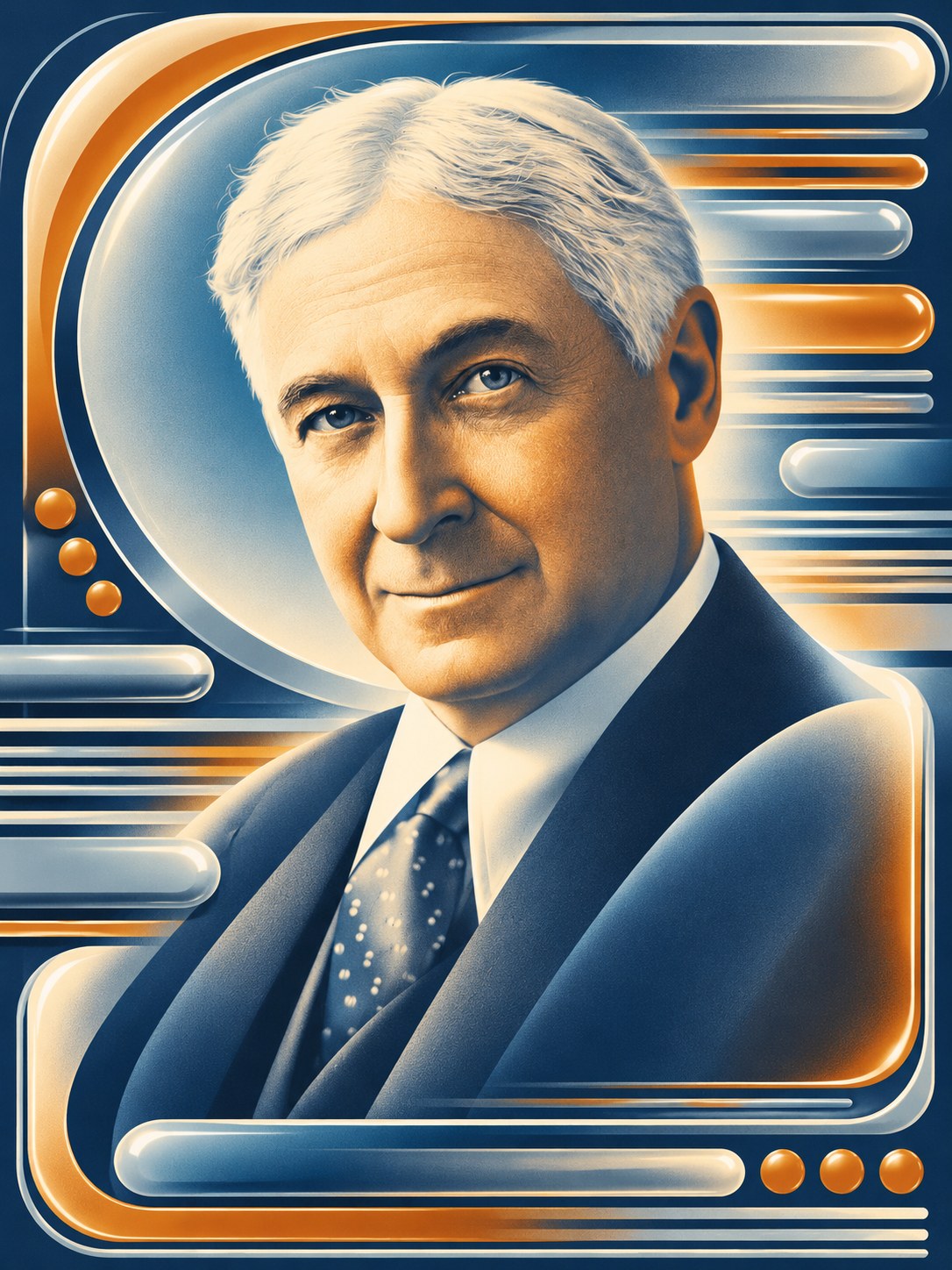
Not found
No. The attribution to Baruch is unsubstantiated. Earlier related formulations are documented under Kaplan, Tomkins and Maslow; the later Baruch label does not establish authorship.
Researched by AI. Entry updated 22 October 2026. Editorial review: pending. How we check
About this quote
Where it comes from
No primary Baruch source was established. Checked his 1946 atomic-energy address, the 1932 preface passage reprinted in the 1948 Congressional Record, and Wikiquote’s entry and discussion; no Baruch corpus is held locally, and his 1957 and 1960 memoirs were not searched. Quote Investigator traces the family to Kaplan’s hammer-and-pounding formulation reported in 1962, a nails analogy by Tomkins in 1963, and Maslow’s close formulation in 1966. The 1991 Baruch label is known here only through Wikiquote; neither that volume nor an earlier credit to Baruch was inspected. The origin of the exact popular wording remains unestablished.
How it travelled
- June 1962Earliest found · credited to Abraham KaplanThe earliest close formulation located by Quote Investigator is a report of Kaplan’s February conference speech: giving a boy a hammer makes everything seem to need pounding, without the word nail.Milton J. Horowitz, ‘Trends In Education’, Journal of Medical Education, vol. 37, June 1962; report of the AERA meeting of 19–21 February 1962, pp. 634 ff., quotation p. 637. Checked on another researcher’s citation, not seen first-hand. Source
- 1963Reworded · credited to Silvan S. TomkinsTomkins applies a hammer-and-nails analogy to the danger of adapting psychological questions to the available computer.Silvan S. Tomkins, ‘Simulation of Personality: The Interrelationships Between Affect, Memory, Thinking, Perception, and Action’, in Silvan S. Tomkins and Samuel Messick (eds.), Computer Simulation of Personality: Frontier of Psychological Theory (Wiley, 1963); reprinted in E. Virginia Demos (ed.), Exploring Affect (Cambridge University Press, 1995), p. 445. Checked on another researcher’s citation, not seen first-hand. Source
- 1966Reworded · credited to Abraham MaslowMaslow gives the familiar warning about a person with only a hammer treating everything as a nail.Abraham H. Maslow, The Psychology of Science: A Reconnaissance (New York: Harper & Row, 1966), pp. 15–16. Checked on another researcher’s citation, not seen first-hand. Source
- 1991Credited to Bernard BaruchA Murphy’s-law compilation labels the saying Baruch’s Observation, according to Wikiquote; this is the dated Baruch linkage located in this run, not a demonstrated first attribution.Arthur Bloch, The Complete Murphy’s Law: A Definitive Collection (1991), ‘Baruch’s Observation’. Checked on another researcher’s citation, not seen first-hand. Source
In context
The saying criticizes the habit of fitting a problem to a familiar method. Wikiquote places the Baruch attribution under Disputed and traces the label ‘Baruch’s Observation’ to Arthur Bloch’s 1991 collection of Murphy’s laws. Earlier research-methodology versions are associated with Abraham Kaplan, Silvan Tomkins and Abraham Maslow.
What it says
Having only one familiar tool or method can make people misidentify different problems as instances of the same thing.
Often misread
The label ‘Baruch’s Observation’ is not evidence that the financier originated the saying. Nor does the older formulation by Kaplan establish that he wrote this exact modern sentence.
Topics
Related quotes
- Gray is the color of truth. (misattributed) André Gide
- It is the mark of an educated mind to be able to entertain a thought without accepting it. (not found) Aristotle
- The problem with the world is that the intelligent people are full of doubts, while the stupid ones are full of confidence. (not found) Charles Bukowski
- When a shoeshine boy knows as much as I do about the stock market, it’s time to get out. (not found)
- Compound interest is the eighth wonder of the world. (not found) Albert Einstein
Sources
Cite it
“If all you have is a hammer, everything looks like a nail.” Attributed to Bernard Baruch. No. The attribution to Baruch is unsubstantiated. Earlier related formulations are documented under Kaplan, Tomkins and Maslow; the later Baruch label does not establish authorship. Quotogeny, https://quotogeny.com/q/if-all-you-have-is-a-hammer/ (checked 22 October 2026).
Have a different wording, or a source we missed? Check it or submit it.
Do you hold the rights to anything on this page? Tell us.
Checked by people
People who checked this entry against its source, under their own names. Their checks do not change the verdict: an editor reviews every entry.
Comments