It is not death that a man should fear, but he should fear never beginning to live.
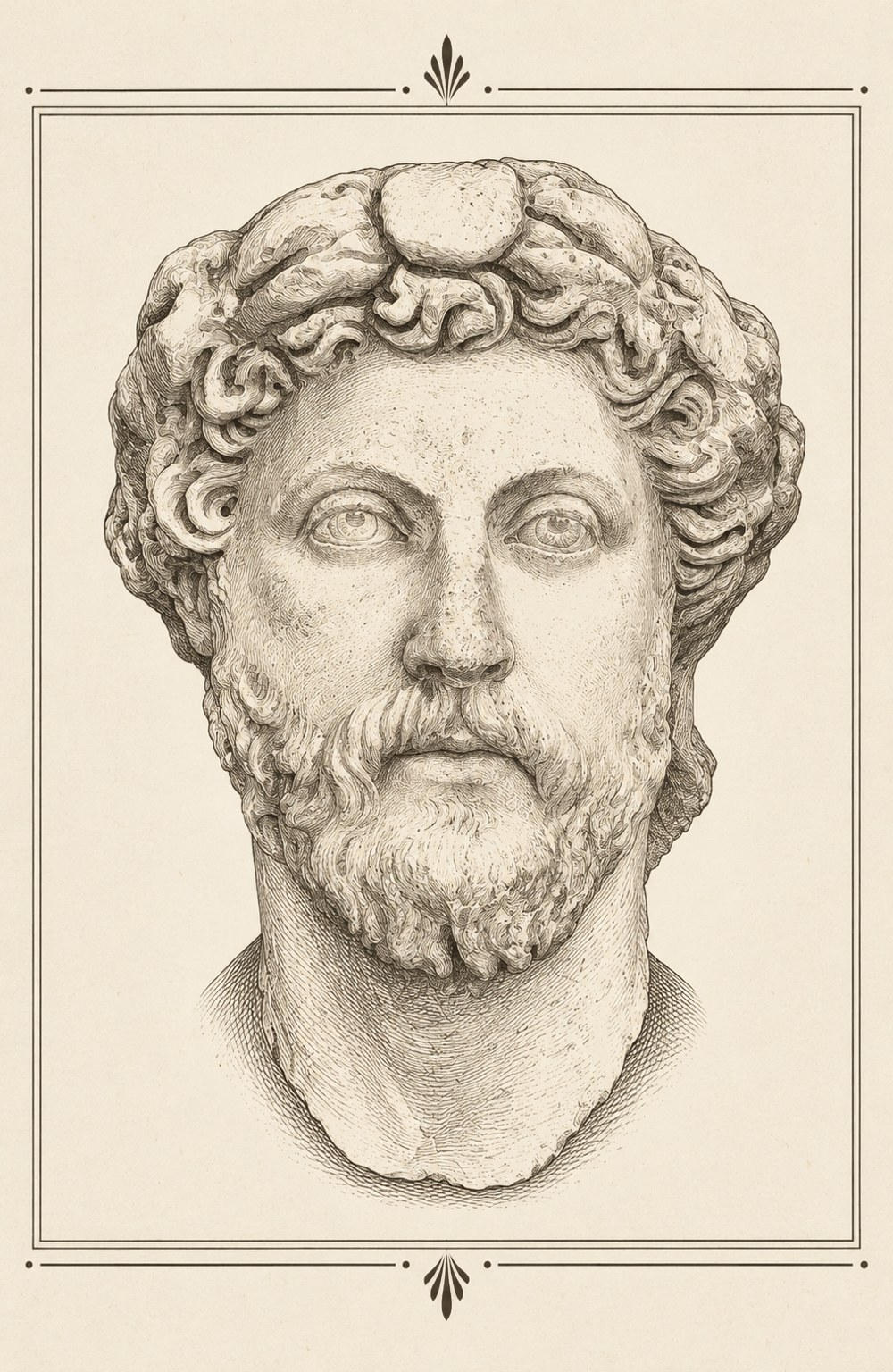
Paraphrase
Not in these words. The idea is in Meditations (180), Book 12, section 1.
The real passage, shown below, is found word for word by program in the Greek original and in George Long’s English translation (1862).
- Work
- Meditations (Τὰ εἰς ἑαυτόν), 180
- The real passage
- Book 12, section 1
Researched by AI; closest passage located by program on 31 October 2026. Entry updated 23 October 2026. Editorial review: pending. How we check
The real passage
[…] Souls of rational men or irrational?—Souls of rational men.—Of what rational men? Sound or unsound?—Sound.—Why then do you not seek for them?—Because we have them.—Why then do you fight and quarrel?
Πάντα ἐκεῖνα, ἐφ’ ἃ διὰ περιόδου εὔχῃ ἐλθεῖν, ἤδη ἔχειν δύνασαι, ἐὰν μὴ σαυτῷ φθονῇς. τοῦτο δέ ἐστιν, ἐὰν πᾶν τὸ παρελθὸν καταλίπῃς καὶ τὸ μέλλον ἐπιτρέψῃς τῇ προνοίᾳ καὶ τὸ παρὸν μόνον ἀπευθύνῃς πρὸς ὁσιότητα καὶ δικαιοσύνην. ὁσιότητα μέν, ἵνα φιλῇς τὸ ἀπονεμόμενον· σοὶ γὰρ αὐτὸ ἡ φύσις ἔφερε καὶ σὲ τούτῳ· δικαιοσύνην δέ, ἵνα ἐλευθέρως καὶ χωρὶς περιπλοκῆς λέγῃς τε τἀληθῆ καὶ πράσσῃς τὰ κατὰ νόμον καὶ κατ’ ἀξίαν· μὴ ἐμποδίζῃ δέ σε μήτε κακία ἀλλοτρία μήτε ὑπόληψις μήτε φωνὴ μηδὲ μὴν αἴσθησις τοῦ περιτεθραμμένου σοι σαρκιδίου· ὄψεται γὰρ τὸ πάσχον.
[…] Conformably to justice, that thou mayest always speak the truth freely and without disguise, and do the things which are agreeable to law and according to the worth of each. And let neither another man’s wickedness hinder thee, nor opinion nor voice, nor yet the sensations of the poor flesh which has grown about thee; for the passive part will look to this. If then, whatever the time may be when thou shalt be near to thy departure, neglecting everything else thou shalt respect only thy ruling faculty and the divinity within thee, and if thou shalt be afraid not because thou must some time cease to live, but if thou shalt fear never to have begun to live according to nature—then thou wilt be a man worthy of the universe which has produced thee,1 and thou wilt cease to be a stranger in thy native land, and to wonder at things which happen daily as if they were something unexpected, and to be dependent on this or that.
ἐὰν οὖν, ὅτε δήποτε πρὸς ἐξόδῳ γένῃ, πάντα τὰ ἄλλα καταλιπὼν μόνον τὸ ἡγεμονικόν σου καὶ τὸ ἐν σοὶ θεῖον τιμήσῃς καὶ μὴ τὸ παύσεσθαί ποτε τοῦ ζῆν φοβηθῇς, ἀλλὰ τό γε μηδέποτε ἄρξασθαι κατὰ φύσιν ζῆν, ἔσῃ ἄνθρωπος ἄξιος τοῦ γεννήσαντος κόσμου καὶ παύσῃ ξένος ὢν τῆς πατρίδος καὶ θαυμάζων ὡς ἀπροσδόκητα τὰ καθ’ ἡμέραν γινόμενα καὶ κρεμάμενος ἐκ τοῦδε καὶ τοῦδε.
God sees the minds [ruling principles] of all men bared of the material vesture and rind and impurities. […]
Ὁ θεὸς πάντα τὰ ἡγεμονικὰ γυμνὰ τῶν ὑλικῶν ἀγγείων καὶ φλοιῶν καὶ καθαρμάτων ὁρᾷ· μόνῳ γὰρ τῷ ἑαυτοῦ νοερῷ μόνων ἅπτεται τῶν ἐξ ἑαυτοῦ εἰς ταῦτα ἐρρυηκότων καὶ ἀπωχετευμένων. ἐὰν δὲ καὶ σὺ τοῦτο ἐθίσῃς ποιεῖν, τὸν πολὺν περισπασμὸν σεαυτοῦ περιαιρήσεις· ὁ γὰρ μὴ τὰ περικείμενα κρεᾴδια ὁρῶν, ἦ πού γε ἐσθῆτα καὶ οἰκίαν καὶ δόξαν καὶ τὴν τοιαύτην περιβολὴν καὶ σκηνὴν θεώμενος, ἀσχολήσεται.
The things are three of which thou art composed, a little body, a little breath [life], intelligence. […]
Τρία ἐστὶν ἐξ ὧν συνέστηκας· σωμάτιον, πνευμάτιον, νοῦς. τούτων τἄλλα μέχρι τοῦ ἐπιμελεῖσθαι δεῖν σά ἐστι, τὸ δὲ τρίτον μόνον κυρίως σόν. ὃ ἐὰν χωρίσῃς ἀπὸ σεαυτοῦ, τουτέστιν ἀπὸ τῆς σῆς διανοίας, ὅσα ἄλλοι ποιοῦσιν ἢ λέγουσιν ἢ ὅσα αὐτὸς ἐποίησας ἢ εἶπας καὶ ὅσα ὡς μέλλοντα ταράσσει σε καὶ ὅσα τοῦ περικειμένου σοι σωματίου ἢ τοῦ συμφύτου πνευματίου ἀπροαίρετα πρόσεστιν καὶ ὅσα ἡ ἔξωθεν περιρρέουσα δίνη ἑλίσσει, ὥστε τῶν συνειμαρμένων ἐξῃρημένην καὶ καθαρὰν τὴν νοερὰν δύναμιν ἀπόλυτον ἐφ’ ἑαυτῆς ζῆν, ποιοῦσαν τὰ δίκαια καὶ θέλουσαν τὰ συμβαίνοντα καὶ λέγουσαν τἀληθῆ·
How the shared form came about
The popular sentence is George Long’s own summary of Meditations 12.1, not a translation: in his essay “The Philosophy of Antoninus”, prefixed to his translation (London: Bell and Daldy, 1862), p. lxxiv, he writes “It is not death that a man should fear, but he should fear never beginning to live according to nature. (xii. 1.)” Quotation collections took his sentence for Marcus’s and most drop “according to nature”. His translation of the passage itself is the long conditional in en. Alice Zimmern’s 1887 revision of Collier has “only of never beginning to live in accordance with nature” (pp. 197–198, OCR); Collier’s own text (1726) does not.
How it travelled
- 1862Earliest found · credited to Marcus Aurelius (Long paraphrasing him, citing xii. 1)George Long sums up 12.1 in his own words in the essay prefixed to his translation.
It is not death that a man should fear, but he should fear never beginning to live according to nature.
George Long, “The Philosophy of Antoninus”, in The Thoughts of the Emperor M. Aurelius Antoninus (London: Bell and Daldy, 1862), p. lxxiv. Checked on a page scan. Source - 1887Reworded · credited to Marcus AureliusAlice Zimmern’s revision of Jeremy Collier’s translation renders 12.1 with “never beginning to live”, which Collier’s own text (1726: “but of missing the Ends on’t, and not living as you should do”) lacks.
if you are not at all afraid of losing your life, but only of never beginning to live in accordance with nature
The Meditations of Marcus Aurelius, translated by Jeremy Collier, revised by Alice Zimmern (London: Walter Scott, 1887; Camelot Series), pp. 197–198. Checked in the text of a page scan, not the image. Source
In context
The opening entry of the last book. Everything he hopes to reach by a roundabout road he can have now, if he leaves the past, trusts the future to providence and directs the present by piety and justice. If at his departure he honours only his ruling faculty and the divinity within, and fears not ceasing to live but never having begun to live according to nature, he will be worthy of the universe and no longer a stranger in his own land.
What it says
The thing to fear is not that life will end, but that you will die without ever having lived as a rational being should, in accordance with nature.
Often misread
The popular form drops ‘according to nature’ and so reads as a call to seize life, travel or take risks before it is too late. For Marcus, beginning to live means living by reason and virtue, honouring ‘the divinity within’, not living intensely.
Also shared as
- ShortenedIt is not death that a man should fear, but he should fear never beginning to live according to nature. George Long’s own sentence in his essay “The Philosophy of Antoninus” (1862, p. lxxiv), the source of the popular form. Where it was seen
Topics
Related quotes
- Do not act as if thou wert going to live ten thousand years. Death hangs over thee. While thou livest, while it is in thy power, be good.
- We do not have a very short time assigned to us, but we lose a great deal of it Seneca the Younger
- He who fears death will never act as becomes a living man. Seneca the Younger
- The universe is change; our life is what our thoughts make it. (paraphrase)
- The art of living is more like wrestling than dancing. (paraphrase)
Sources
- wist.info/marcus-aureleus/83268
- standardebooks.org/ebooks/marcus-aurelius/meditations/george-long/text/single-page (George Long translation, first published 1862; corpus meditations.en.txt, line 513)
- cdn.jsdelivr.net/gh/PerseusDL/canonical-greekLit@70427323b61267cdcd0256b9b02009c23392de07/data/tlg0562/tlg001/tlg0562.tlg001.perseus-grc2.xml (Greek text, book 12, chapter 1; corpus meditations.el.txt, line 577)
- archive.org/details/thoughtsofempero00marcrich/page/n77/mode/1up (Long 1862, “The Philosophy of Antoninus”, p. lxxiv)
Cite it
“It is not death that a man should fear, but he should fear never beginning to live.” Attributed to Marcus Aurelius. Not in these words. The idea is in Meditations (180), Book 12, section 1. Quotogeny, https://quotogeny.com/q/it-is-not-death-that-a-man-should-fear/ (checked 23 October 2026).
Have a different wording, or a source we missed? Check it or submit it.
Do you hold the rights to anything on this page? Tell us.
Checked by people
People who checked this entry against its source, under their own names. Their checks do not change the verdict: an editor reviews every entry.
Comments