The universe is change; our life is what our thoughts make it.
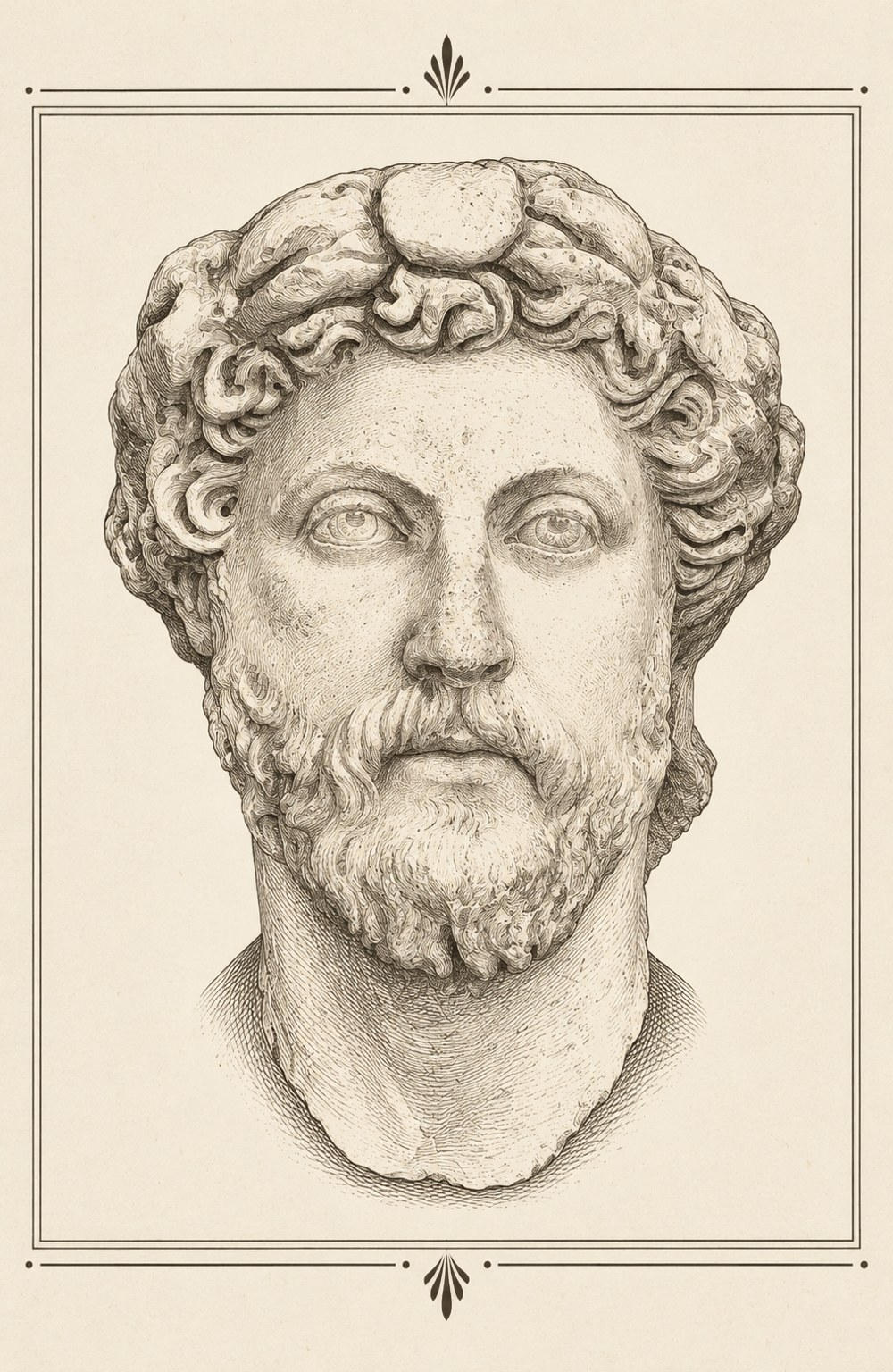
Paraphrase
Not in these words. The idea is in Meditations (180), Book 4, section 3, conclusion.
The real passage, shown below, is found word for word by program in the Greek original and in George Long’s English translation (1862).
- Work
- Meditations (Τὰ εἰς ἑαυτόν), 180
- The real passage
- Book 4, section 3, conclusion
Researched by AI; closest passage located by program on 31 October 2026. Entry updated 23 October 2026. Editorial review: pending. How we check
The real passage
[…] For the whole earth is a point, and how small a nook in it is this thy dwelling, and how few are there in it, and what kind of people are they who will praise thee.
ἀλλὰ τὸ δοξάριόν σε περισπάσει; ἀπιδὼν εἰς τὸ τάχος τῆς πάντων λήθης καὶ τὸ χάος τοῦ ἐφʼ ἑκάτερα ἀπείρου αἰῶνος καὶ τὸ κενὸν τῆς ἀπηχήσεως καὶ τὸ εὐμετάβολον καὶ ἄκριτον τῶν εὐφημεῖν δοκούντων καὶ τὸ στενὸν τοῦ τόπου, ἐν ᾧ περιγράφεται· ὅλη τε γὰρ ἡ γῆ στιγμὴ καὶ ταύτης πόστον γωνίδιον ἡ κατοίκησις αὕτη; καὶ ἐνταῦθα πόσοι καὶ οἷοί τινες οἱ ἐπαινεσόμενοι;
This then remains: Remember to retire into this little territory of thy own, and above all do not distract or strain thyself, but be free, and look at things as a man, as a human being, as a citizen, as a mortal. But among the things readiest to thy hand to which thou shalt turn, let there be these, which are two. One is that things do not touch the soul, for they are external and remain immovable; but our perturbations come only from the opinion which is within. The other is that all these things, which thou seest, change immediately and will no longer be; and constantly bear in mind how many of these changes thou hast already witnessed. The universe is transformation: life is opinion.1
λοιπὸν οὖν μέμνησο τῆς ὑποχωρήσεως τῆς εἰς τοῦτο τὸ ἀγρίδιον ἑαυτοῦ καὶ πρὸ παντὸς μὴ σπῶ μηδὲ κατεντείνου, ἀλλὰ ἐλεύθερος ἔσο καὶ ὅρα τὰ πράγματα ὡς ἀνήρ, ὡς ἄνθρωπος, ὡς πολίτης, ὡς θνητὸν ζῷον. ἐν δὲ τοῖς προχειροτάτοις, εἰς ἃ ἐγκύψεις, ταῦτα ἔστω τὰ δύο· ἕν μέν, ὅτι τὰ πράγματα οὐχ ἅπτεται τῆς ψυχῆς, ἀλλʼ ἔξω ἕστηκεν ἀτρεμοῦντα, αἱ δὲ ὀχλήσεις ἐκ μόνης τῆς ἔνδον ὑπολήψεως· ἕτερον δέ, ὅτι πάντα ταῦτα, ὅσα ὁρᾷς, ὅσον οὐδέπω μεταβαλεῖ καὶ οὐκ ἔτι ἔσται· καὶ ὅσων ἤδη μεταβολαῖς αὐτὸς παρατετύχηκας, συνεχῶς διανοοῦ. ὁ κόσμος ἀλλοίωσις, ὁ βίος ὑπόληψις.
If our intellectual part is common, the reason also, in respect of which we are rational beings, is common: if this is so, common also is the reason which commands us what to do, and what not to do; if this is so, there is a common law also; if this is so, we are fellow-citizens; if this is so, we are members of some political community; if this is so, the world is in a manner a state. […]
Εἰ τὸ νοερὸν ἡμῖν κοινόν, καὶ ὁ λόγος, καθʼ ὃν λογικοί ἐσμεν, κοινός· εἰ τοῦτο, καὶ ὁ προστακτικὸς τῶν ποιητέων ἢ μὴ λόγος κοινός· εἰ τοῦτο, καὶ ὁ νόμος κοινός· εἰ τοῦτο, πολῖταί ἐσμεν· εἰ τοῦτο, πολιτεύματός τινος μετέχομεν· εἰ τοῦτο, ὁ κόσμος ὡσανεὶ πόλις ἐστί· τίνος γὰρ ἄλλου φήσει τις τὸ τῶν ἀνθρώπων πᾶν γένος κοινοῦ πολιτεύματος μετέχειν; ἐκεῖθεν δέ, ἐκ τῆς κοινῆς ταύτης πόλεως, καὶ αὐτὸ τὸ νοερὸν καὶ λογικὸν καὶ νομικὸν ἡμῖν ἢ πόθεν; ὥσπερ γὰρ τὸ γεῶδές μοι ἀπό τινος γῆς ἀπομεμέρισται καὶ τὸ ὑγρὸν ἀφʼ ἑτέρου στοιχείου καὶ τὸ πνευματικὸν ἀπὸ πηγῆς τινος καὶ τὸ θερμὸν καὶ πυρῶδες ἔκ τινος ἰδίας πηγῆς (οὐδὲν γὰρ ἐκ τοῦ μηδενὸς ἔρχεται, ὥσπερ μηδʼ εἰς τὸ οὐκ ὂν ἀπέρχεται), οὕτω δὴ καὶ τὸ νοερὸν ἥκει ποθέν.
Death is such as generation is, a mystery of nature; a composition out of the same elements, and a decomposition into the same; and altogether not a thing of which any man should be ashamed, for it is not contrary to the nature of a reasonable animal, and not contrary to the reason of our constitution.
Ὁ θάνατος τοιοῦτον, οἷον γένεσις, φύσεως μυστήριον· σύγκρισις ἐκ τῶν αὐτῶν στοιχείων, εἰς ταὐτὰ λύσις. ὅλως δὲ οὐκ ἐφʼ ᾧ ἄν τις αἰσχυνθείη· οὐ γὰρ παρὰ τὸ ἑξῆς τῷ νοερῷ ζῴῳ οὐδὲ παρὰ τὸν λόγον τῆς κατασκευῆς.
How the shared form came about
A free translation of the closing words of Meditations 4.3, ὁ κόσμος ἀλλοίωσις, ὁ βίος ὑπόληψις: literally ‘the world is alteration, life is opinion (judgement)’; George Long (1862) has ‘The universe is transformation: life is opinion’. The popular form expands the second half into a sentence about thought making life. The wording is M. H. Morgan’s translation, made for John Bartlett’s Familiar Quotations, 9th edition (1891), p. 751 (“Translated by M. H. Morgan, Ph. D., of Harvard University”, p. 749), presumably the Harvard classicist Morris Hicky Morgan; Bartlett kept it in later editions, and Wikiquote cites it as “Translation M.H. Morgan”. Dale Carnegie made the second half a rule of positive thinking in How to Stop Worrying and Start Living (1948).
How it travelled
- 1891Earliest found · credited to Marcus AureliusM. H. Morgan’s translation of 4.3’s closing words, printed in Bartlett’s Familiar Quotations.
The universe is change; our life is what our thoughts make it.
John Bartlett, Familiar Quotations, 9th edition (Boston: Little, Brown, 1891; 1892 printing), Marcus Aurelius, translated by M. H. Morgan, p. 751. Checked on a page scan. Source - 1948Spread · credited to Marcus AureliusDale Carnegie quotes the second half alone, as Marcus’s, as a rule for positive thinking.
Our life is what our thoughts make it.
Dale Carnegie, How to Stop Worrying and Start Living (first published 1948; British edition, Kingswood, Surrey: The World’s Work, sixth impression 1953), p. 228. Checked in the text of a page scan, not the image. Source
In context
The end of the long entry on retreat: people seek retreats in the country, by the sea or in the mountains, but one can retire into one’s own soul at any moment. Marcus gives himself two principles to keep at hand there: things do not touch the soul, and disturbance comes only from the opinion within; and everything seen changes at once and will soon be gone. The entry closes on the five Greek words ‘ὁ κόσμος ἀλλοίωσις, ὁ βίος ὑπόληψις’.
What it says
Everything in the world is constantly changing, and what troubles us in life is our judgement of it rather than the things themselves.
Often misread
‘Our life is what our thoughts make it’ is often read as a promise that positive thinking will shape one’s circumstances. Ὑπόληψις is judgement or opinion: Marcus means that disturbance lies in our view of things, which is in our power to correct, not that thoughts change the world.
Also shared as
- Another public-domain translationThe universe is transformation: life is opinion. George Long’s translation (1862), Book 4, section 3. Where it was seen
- ShortenedOur life is what our thoughts make it. The second half alone, as Dale Carnegie used it (How to Stop Worrying and Start Living, 1948). Where it was seen
Topics
Related quotes
- You have power over your mind—not outside events. Realize this, and you will find strength. (not found)
- Everything we hear is an opinion, not a fact. Everything we see is a perspective, not the truth. (not found)
- The soul is dyed by the thoughts.
- The art of living is more like wrestling than dancing. (paraphrase)
- It is not death that a man should fear, but he should fear never beginning to live. (paraphrase)
Sources
- en.wikiquote.org/wiki/Marcus_Aurelius
- standardebooks.org/ebooks/marcus-aurelius/meditations/george-long/text/single-page (George Long translation, first published 1862; corpus meditations.en.txt, line 60)
- cdn.jsdelivr.net/gh/PerseusDL/canonical-greekLit@70427323b61267cdcd0256b9b02009c23392de07/data/tlg0562/tlg001/tlg0562.tlg001.perseus-grc2.xml (Greek text, book 4, chapter 3; corpus meditations.el.txt, line 102)
- archive.org/details/famil00bart/page/n764/mode/1up (Bartlett 1891, p. 751, Morgan translation)
Cite it
“The universe is change; our life is what our thoughts make it.” Attributed to Marcus Aurelius. Not in these words. The idea is in Meditations (180), Book 4, section 3, conclusion. Quotogeny, https://quotogeny.com/q/the-universe-is-change-our-life-is-what-our-thoughts-make-it/ (checked 23 October 2026).
Have a different wording, or a source we missed? Check it or submit it.
Do you hold the rights to anything on this page? Tell us.
Checked by people
People who checked this entry against its source, under their own names. Their checks do not change the verdict: an editor reviews every entry.
Comments