Law … is the highest reason implanted in nature, which prescribes those things which ought to be done, and forbids the contrary.
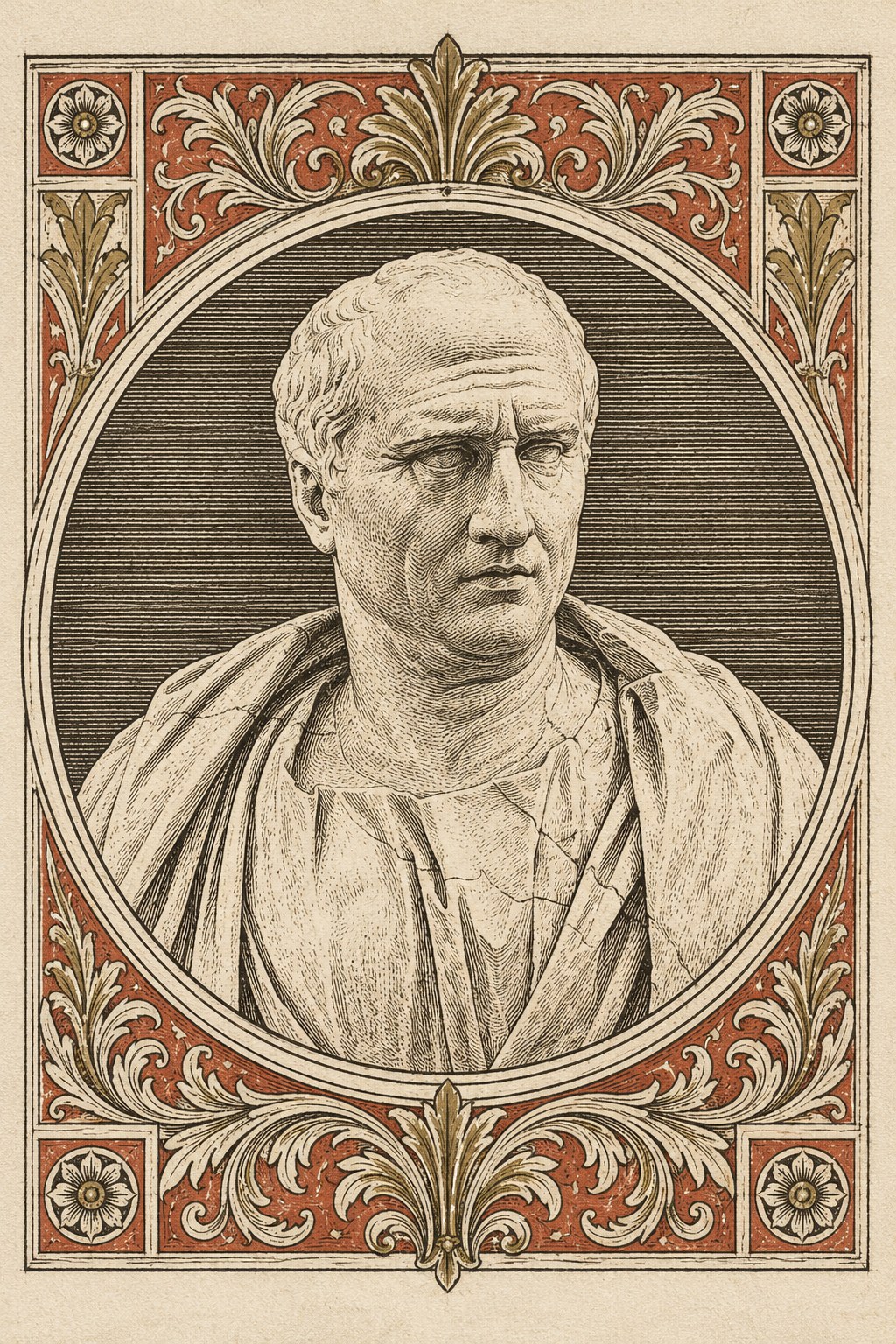
Genuine
Yes. In On the Laws (52 BC), Book I, chapter VI, section 18 (De Legibus I.6.18), said by Marcus. These are the character’s words, not a statement in Cicero’s own voice.
Found word for word by program in the Latin original and in Charles Duke Yonge’s English translation (1853).
- Work
- On the Laws (De Legibus), 52 BC
- Where
- Book I, chapter VI, section 18 (De Legibus I.6.18)
- Found at
- Paragraph 47 of the Latin text, 128 of the English
- Translation
- Charles Duke Yonge, 1853
Researched by AI; checked by program against the full text on 29 November 2026. Editorial review: pending. How we check
On the page
Let us congratulate ourselves, since death gives us something better than we enjoy in life, and not a worse condition of things; for that immortality may truly be termed divine, wherein the mind flourishes, emancipated from the body, and being delivered from sensualism, is free from evil.
Marcvs: Non ita est, Quinte, ac potius ignoratio iuris litigiosa est quam scientia. Sed hoc posterius: nunc iuris principia uideamus.
not .so much the science of law that. produces litigation, as the ignorance of it. But more of this by-and-by. At pre= sent: let us examine the first principles of Right. _ Now, many learned men have maintained that it springs from law. I hardly know if their opinion be not correct, at least according to their own definition; for “ law,” say they,: “is the highest reason implanted in nature, which prescribes those things which ought to be done, and forbids the contrary.1” And when this same reason is confirmed and estax blished in men’s minds, it is then law.
Igitur doctissimis uiris proficisci placuit a lege, haud scio an recte, si modo, ut idem definiunt, lex est ratio summa, insita in natura, quae iubet ea quae facienda sunt, prohibetque contraria. Eadem ratio, cum est in hominis mente confirmata et perfecta, lex est.
[19] Itaque arbitrantur prudentiam esse legem, cuius ea uis sit, ut recte facere iubeat, uetet delinquere, eamque rem illi Graeco putant nomine nÒmon a suum cuique tribuendo appellatam, ego nostro a legendo. […]
[20] Qvintvs: Commodius uero et ad rationem instituti sermonis sapientius.
The scene
Marcus argues that a discussion of law must begin with human nature and philosophy rather than with particular legal procedures or the Twelve Tables. He reports the learned philosophers’ definition of law as supreme reason in nature, and says that reason perfected in a human mind is likewise law. In the following section he distinguishes this fundamental law from the written enactments ordinarily called laws.
What it means
Law in its fundamental sense is a rational standard of what ought and ought not to be done, not merely an order someone has enacted.
Often misread
This is not a claim that every statute expresses perfect reason. Marcus explicitly distinguishes natural law from written legislation; he is reporting and adopting a philosophical definition, not defining all existing commands as just.
Topics
Related quotes
- The safety of the people shall be the highest law.
- The means may be likened to a seed, the end to a tree; and there is just the same inviolable connection between the means and the end as there is between the seed and the tree. Mahatma Gandhi
- Natural justice is a symbol or expression of expediency, to prevent one man from harming or being harmed by another. Epicurus
- Women have received from the gods the same reason as men. Musonius Rufus
- A human being is neither soul alone nor body alone, but something composed of these two. Musonius Rufus
Sources
Cite it
Marcus Tullius Cicero, On the Laws (52 BC), Book I, chapter VI, section 18 (De Legibus I.6.18), translated by Charles Duke Yonge (1853). Spoken by Marcus. Checked at Quotogeny, https://quotogeny.com/q/law-is-the-highest-reason-implanted-in-nature/ (29 November 2026).
Have a different wording, or a source we missed? Check it or submit it.
Do you hold the rights to anything on this page? Tell us.
Checked by people
People who checked this entry against its source, under their own names. Their checks do not change the verdict: an editor reviews every entry.
Comments