The price of anything is the amount of life you exchange for it.
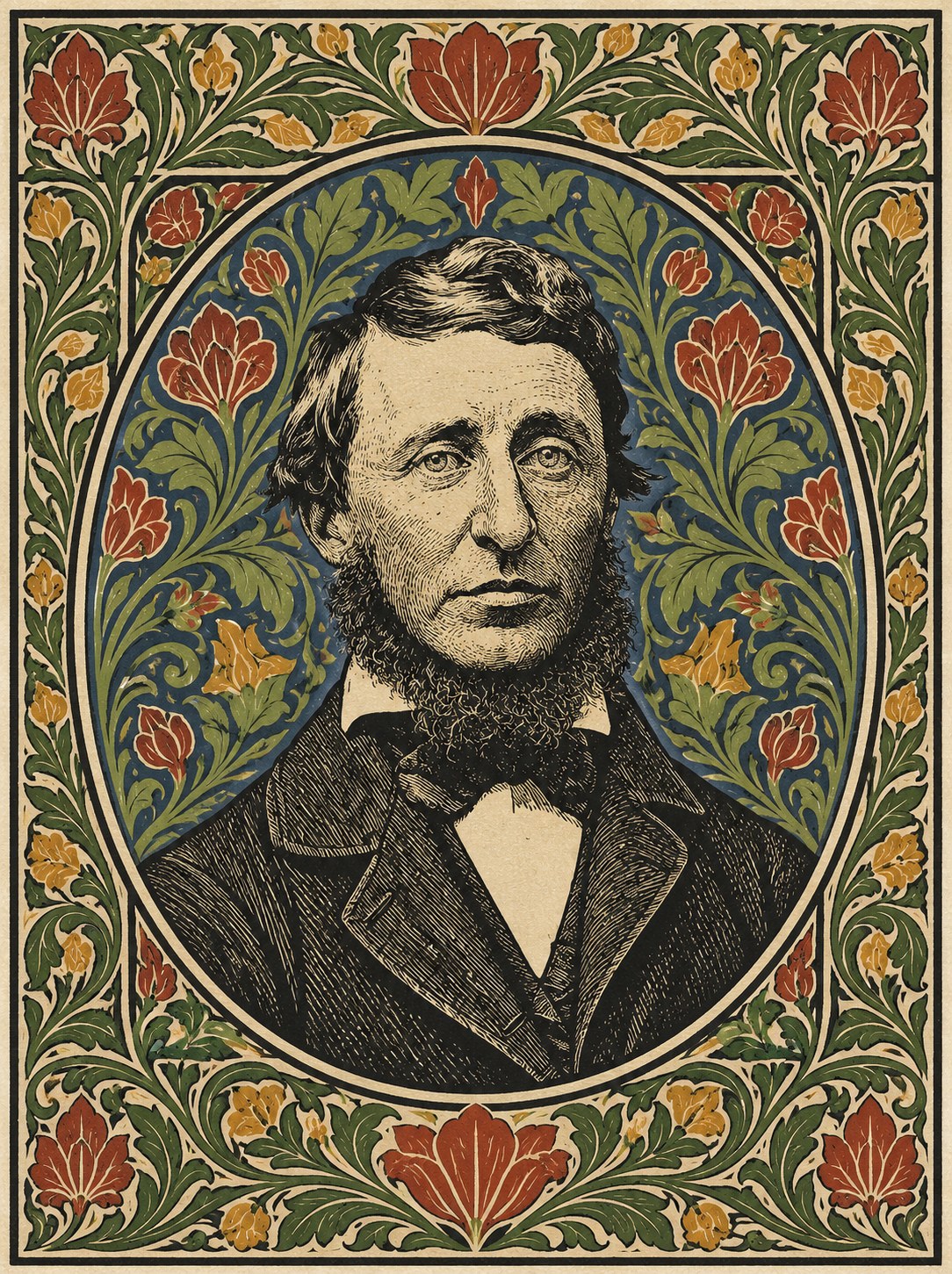
Paraphrase
Not in these words. The idea is in Walden (1854), Economy.
The real passage, shown below, is found word for word by program in the full text.
- Work
- Walden (Walden; or, Life in the Woods), 1854
- The real passage
- Economy
Researched by AI; closest passage located by program on 31 October 2026. Entry updated 28 October 2026. Editorial review: pending. How we check
The real passage
[…] Such a lodge was in the first instance constructed in a day or two at most, and taken down and put up in a few hours; and every family owned one, or its apartment in one.
[…] If it is asserted that civilization is a real advance in the condition of man,—and I think that it is, though only the wise improve their advantages,—it must be shown that it has produced better dwellings without making them more costly; and the cost of a thing is the amount of what I will call life which is required to be exchanged for it, immediately or in the long run.1 […]
It may be guessed that I reduce almost the whole advantage of holding this superfluous property as a fund in store against the future, so far as the individual is concerned, mainly to the defraying of funeral expenses. […]
“As I live, saith the Lord God, ye shall not have occasion any more to use this proverb in Israel.”
How the shared form came about
A shortened modernization of the sentence in Walden, Economy. The Walden Woods Project lists this exact popular form among Thoreau misquotations and supplies the original. The popular form replaces ‘cost of a thing’ with ‘price of anything’ and removes his qualification about what he calls life and the distinction between immediate and long-term payment. A KT Ranch post dated 26 April 2024 uses it in its title and explicitly calls it a paraphrase in the body; that post is a documented use, not a claim about the wording’s first appearance. The first person to condense it was not established.
In context
Thoreau asks whether civilization has really improved housing if a laborer must surrender years of life to own or rent a dwelling. He compares housing costs with the labor needed to earn them, making lifetime rather than money alone the measure of expense.
What it says
A purchase costs the portion of your life spent obtaining it, whether you pay that cost now or over time.
Often misread
The short form is faithful to the central thought but is not his exact sentence. The original explicitly includes deferred costs and belongs to a discussion of shelter and labor rather than investment returns.
Topics
Related quotes
- The language of friendship is not words but meanings.
- The art of living is more like wrestling than dancing. (paraphrase) Marcus Aurelius
- All addictions are a low-level search for God. (paraphrase) Carl Gustav Jung
- That which is not good for the swarm, neither is it good for the bee. (paraphrase) Marcus Aurelius
- Books are the treasured wealth of the world and the fit inheritance of generations and nations.
Sources
Cite it
“The price of anything is the amount of life you exchange for it.” Attributed to Henry David Thoreau. Not in these words. The idea is in Walden (1854), Economy. Quotogeny, https://quotogeny.com/q/the-price-of-anything-is-the-amount-of-life-you-exchange-for-it/ (checked 28 October 2026).
Have a different wording, or a source we missed? Check it or submit it.
Do you hold the rights to anything on this page? Tell us.
Checked by people
People who checked this entry against its source, under their own names. Their checks do not change the verdict: an editor reviews every entry.
Comments