All addictions are a low-level search for God.
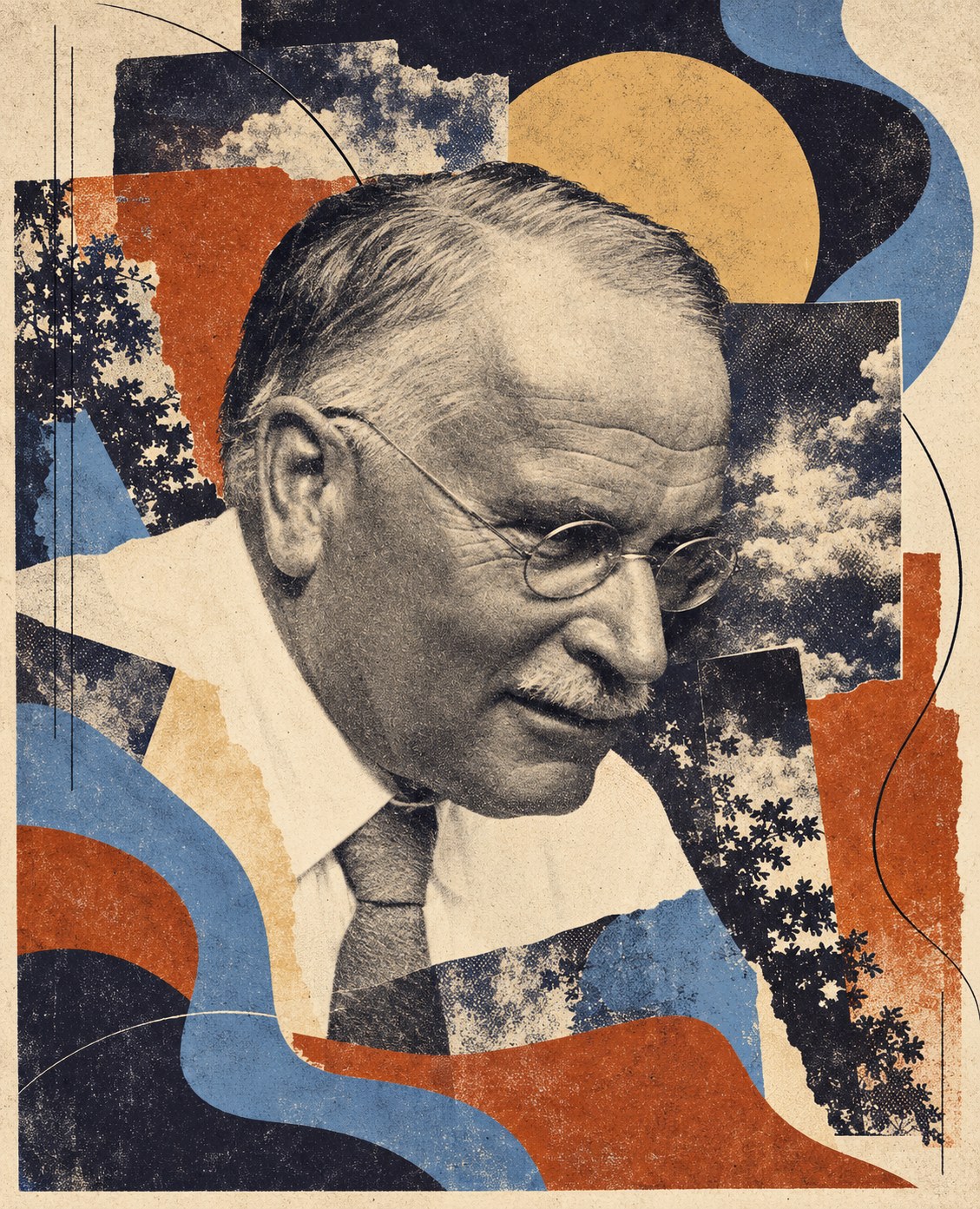
Paraphrase
Not in these words. The idea is in a letter to William G. Wilson (Bill W.), 30 January 1961.
Checked against C. G. Jung, letter to William G. Wilson, 30 January 1961, written in English. In C. G. Jung, Letters, vol. 2: 1951–1961, ed. Gerhard Adler with Aniela Jaffé, tr. R. F. C. Hull (Princeton University Press, Bollingen Series XCV:2, 1975), pp. 623–625; first printed in the AA Grapevine, January 1963, Letters vol. 2, p. 624, on a page scan.
- Work
- Letters (Briefe)
- The real passage
- Letter to William G. Wilson (Bill W.), 30 January 1961
- Source
- C. G. Jung, letter to William G. Wilson, 30 January 1961, written in English. In C. G. Jung, Letters, vol. 2: 1951–1961, ed. Gerhard Adler with Aniela Jaffé, tr. R. F. C. Hull (Princeton University Press, Bollingen Series XCV:2, 1975), pp. 623–625; first printed in the AA Grapevine, January 1963, Letters vol. 2, p. 624
- Checked
- On a page scan
Researched by AI. Entry updated 21 October 2026. Editorial review: pending. How we check
About this quote
How the shared form came about
A condensation of Jung’s letter to Bill Wilson of 30 January 1961, printed in the AA Grapevine in January 1963 and in Jung’s Letters, vol. 2 (1975). The popular form makes three changes: one man’s alcoholism becomes ‘all addictions’; ‘the equivalent on a low level of the spiritual thirst of our being for wholeness’ becomes ‘a low-level search’; and the medieval expression ‘the union with God’ becomes plain ‘God’. The words ‘low-level search for God’ were not found in Jung’s writings; who first put it that way was not established.
In context
Bill Wilson had written to Jung on 23 January 1961 to thank him: Jung’s frank words to a patient, Rowland Hazard (‘Roland H.’), about thirty years earlier, that his alcoholism was hopeless short of a real spiritual experience, had led through Hazard to the founding of Alcoholics Anonymous. In his reply, written a few months before his death, Jung says what he had not dared to tell Hazard: that, from many experiences with men of his kind, the craving for alcohol was a low-level equivalent of the thirst for wholeness. He ends: alcohol in Latin is ‘spiritus’, the same word as for the highest religious experience, so ‘the helpful formula therefore is: spiritus contra spiritum’.
What it says
The alcoholic’s craving is a misdirected form of the deepest human longing, the longing to be whole, which older religious language calls union with God; so what heals it is a real spiritual experience, or the protective company of others, not willpower alone.
Often misread
Applied to every compulsion, from sex to phones, as Jung’s verdict that addicts are seeking God. The letter speaks of one patient’s alcoholism and of ‘men of his kind’, and is careful with its words: ‘union with God’ is how the thirst for wholeness is ‘expressed in medieval language’, and Jung adds that such words arouse so many mistakes that he keeps aloof from them as far as possible. On 6 October 2026 the self-improvement creator Jett Franzen (@jettfranzen) quoted the popular form as Jung’s in a Substack essay on sexual behaviour and hookup culture.
Also shared as
- ShortenedAll addictions are a low-level search for God. Quoted as Jung’s by the self-improvement creator Jett Franzen (@jettfranzen) in his Substack essay ‘The Sexual Revolution: The Greatest Psyop of the Last 100 Years’, 6 October 2026; the published text keeps the note ‘[CHECK: see note on this quote]’ after it. Where it was seen
Before and after
Topics
Related quotes
- God whispers to us in our pleasures, speaks in our conscience, but shouts in our pains. C. S. Lewis
- The price of anything is the amount of life you exchange for it. (paraphrase) Henry David Thoreau
- The language of friendship is not words but meanings. Henry David Thoreau
- Books are the treasured wealth of the world and the fit inheritance of generations and nations. Henry David Thoreau
- What a man thinks of himself becomes his fate. (paraphrase) Henry David Thoreau
Sources
- archive.org/details/2-jung-letters-of-cg-jung-vol-2-1951-1961 (Letters vol. 2, pp. 623–625)
- silkworth.net/alcoholics-anonymous/dr-c-g-jungs-reply-to-bill-w-s-letter (Grapevine text, January 1963)
- en.wikiquote.org/wiki/Carl_Jung (not listed)
- jettfranzen.substack.com/p/the-sexual-revolution-the-greatest (Jett Franzen, 6 October 2026; quotes it as Jung’s)
Cite it
“All addictions are a low-level search for God.” Attributed to Carl Gustav Jung. Not in these words. The idea is in a letter to William G. Wilson (Bill W.), 30 January 1961. Quotogeny, https://quotogeny.com/q/all-addictions-are-a-search-for-god/ (checked 21 October 2026).
Have a different wording, or a source we missed? Check it or submit it.
Do you hold the rights to anything on this page? Tell us.
Checked by people
People who checked this entry against its source, under their own names. Their checks do not change the verdict: an editor reviews every entry.
Comments