Suffering becomes beautiful when anyone bears great calamities with cheerfulness, not through insensibility but through greatness of mind.
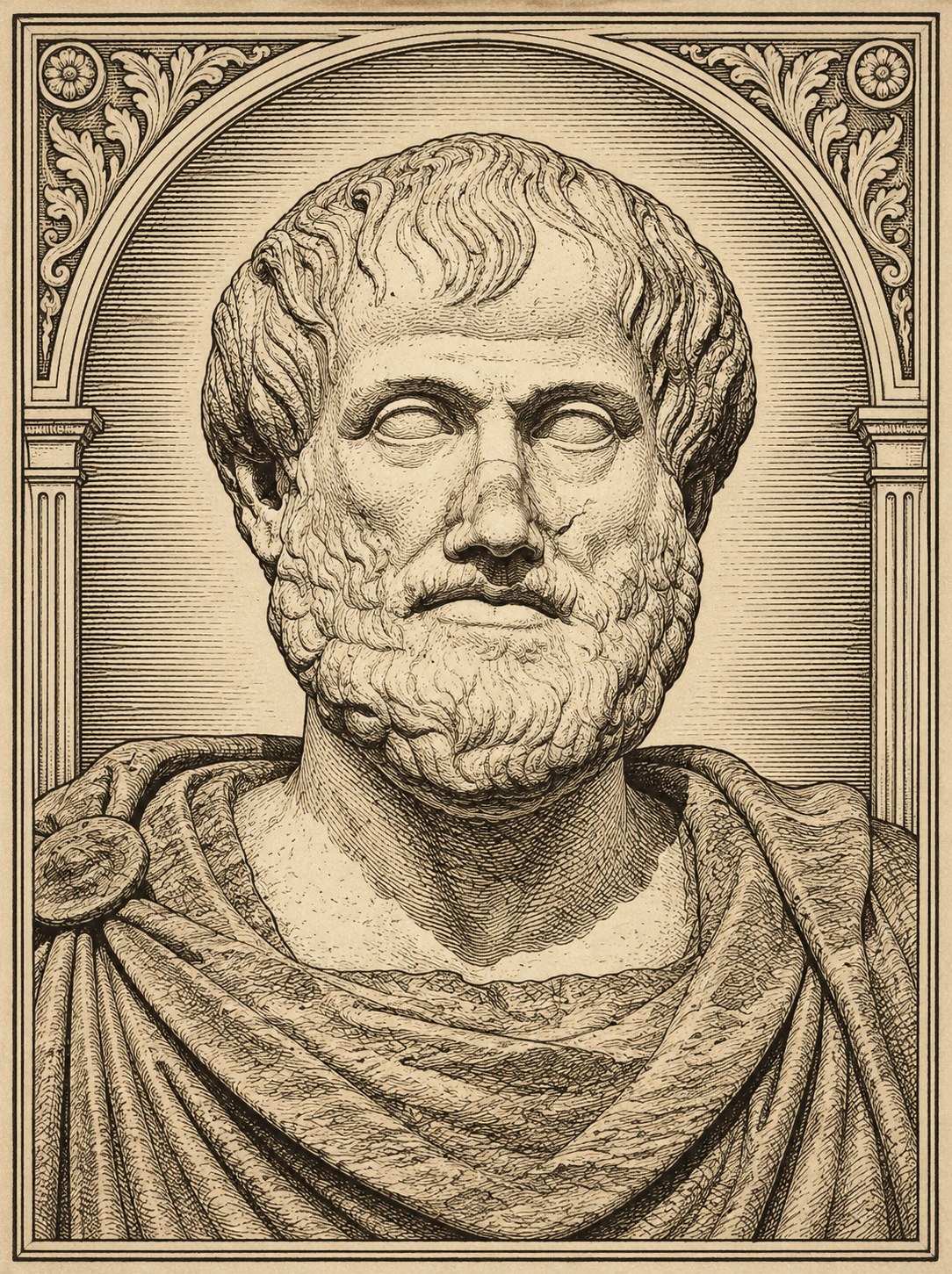
Paraphrase
Not in these words. The idea is in Nicomachean Ethics (330 BC), Book I, chapter 10 in the Bywater/Greek division (1100b; chapter VIII in D. P. Chase).
The real passage, shown below, is found word for word by program in the Greek original and in D. P. Chase’s English translation.
- Work
- Nicomachean Ethics (Ἠθικὰ Νικομάχεια), 330 BC
- The real passage
- Book I, chapter 10 in the Bywater/Greek division (1100b; chapter VIII in D. P. Chase)
Researched by AI; closest passage located by program on 31 October 2026. Entry updated 27 October 2026. Editorial review: pending. How we check
The real passage
[…] So then this stability which is sought will be in the happy man, and he will be such through life, since always, or most of all, he will be doing and contemplating the things which are in the way of virtue: and the various chances of life he will bear most nobly, and at all times and in all ways harmoniously, since he is the truly good man, or in the terms of our proverb “a faultless cube.”
Μαρτυρεῖ δὲ τῷ λόγῳ καὶ τὸ νῦν διαπορηθέν. περὶ οὐδὲν γὰρ οὕτως ὑπάρχει τῶν ἀνθρωπίνων ἔργων βεβαιότης ὡς περὶ τὰς ἐνεργείας τὰς κατ᾽ ἀρετήν· μονιμώτεραι γὰρ καὶ τῶν ἐπιστημῶν αὗται δοκοῦσιν εἶναι· τούτων δ᾽ αὐτῶν αἱ τιμιώταται μονιμώτεραι διὰ τὸ μάλιστα καὶ συνεχέστατα καταζῆν ἐν αὐταῖς τοὺς μακαρίους· τοῦτο γὰρ ἔοικεν αἰτίῳ τοῦ μὴ γίνεσθαι περὶ αὐτὰς λήθην. ὑπάρξει δὴ τὸ ζητούμενον τῷ εὐδαίμονι, καὶ ἔσται διὰ βίου τοιοῦτος· ἀεὶ γὰρ ἢ μάλιστα πάντων πράξει καὶ θεωρήσει τὰ κατ᾽ ἀρετήν, καὶ τὰς τύχας οἴσει κάλλιστα καὶ πάντῃ πάντως ἐμμελῶς ὅ γ᾽ ὡς ἀληθῶς ἀγαθὸς καὶ τετράγωνος ἄνευ ψόγου.
[…] But still, even in these, nobleness shines through when a man bears contentedly many and great mischances not from insensibility to pain but because he is noble and high-spirited.1
Πολλῶν δὲ γινομένων κατὰ τύχην καὶ διαφερόντων μεγέθει καὶ μικρότητι, τὰ μὲν μικρὰ τῶν εὐτυχημάτων, ὁμοίως δὲ καὶ τῶν ἀντικειμένων, δῆλον ὡς οὐ ποιεῖ ῥοπὴν τῆς ζωῆς, τὰ δὲ μεγάλα καὶ πολλὰ γινόμενα μὲν εὖ μακαριώτερον τὸν βίον ποιήσει (καὶ γὰρ αὐτὰ συνεπικοσμεῖν πέφυκεν, καὶ ἡ χρῆσις αὐτῶν καλὴ καὶ σπουδαία γίνεται), ἀνάπαλιν δὲ συμβαίνοντα θλίβει καὶ λυμαίνεται τὸ μακάριον· λύπας τε γὰρ ἐπιφέρει καὶ ἐμποδίζει πολλαῖς ἐνεργείαις. ὅμως δὲ καὶ ἐν τούτοις διαλάμπει τὸ καλόν, ἐπειδὰν φέρῃ τις εὐκόλως πολλὰς καὶ μεγάλας ἀτυχίας, μὴ δι᾽ ἀναλγησίαν, ἀλλὰ γεννάδας ὢν καὶ μεγαλόψυχος.
And if, as we have said, the acts of working are what determine the character of the life, no one of the blessed can ever become wretched, because he will never do those things which are hateful and mean. […]
Εἰ δ᾽ εἰσὶν αἱ ἐνέργειαι κύριαι τῆς ζωῆς, καθάπερ εἴπομεν, οὐδεὶς ἂν γένοιτο τῶν μακαρίων ἄθλιος· οὐδέποτε γὰρ πράξει τὰ μισητὰ καὶ τὰ φαῦλα. […]
Nor, in truth, is he shifting and easily changeable, for on the one hand from his happiness he will not be shaken easily nor by ordinary mischances, but, if at all, by those which are great and numerous; and, on the other, after such mischances he cannot regain his happiness in a little time; but, if at all, in a long and complete period, during which he has made himself master of great and noble things.
Οὐδὲ δὴ ποικίλος γε καὶ εὐμετάβολος· οὔτε γὰρ ἐκ τῆς εὐδαιμονίας κινηθήσεται ῥᾳδίως, οὐδ᾽ ὑπὸ τῶν τυχόντων ἀτυχημάτων ἀλλ᾽ ὑπὸ μεγάλων καὶ πολλῶν, ἔκ τε τῶν τοιούτων οὐκ ἂν γένοιτο πάλιν εὐδαίμων ἐν ὀλίγῳ χρόνῳ, ἀλλ᾽ εἴπερ, ἐν πολλῷ τινὶ καὶ τελείῳ, μεγάλων καὶ καλῶν ἐν αὐτῷ γενόμενος ἐπήβολος.
How the shared form came about
The popular wording does not occur in Aristotle, and it is not a rendering of this passage: neither the Chase translation stored here nor the 1835 Oxford translation quoted by Wikiquote (“bears and digests many and great misfortunes”) reads like it. Wikiquote lists it under Misattributed and says it was widely credited to him from the mid-to-late nineteenth century; that it derives from a gloss or commentary on this passage is Wikiquote’s inference. The earliest printing and the first credit to Aristotle were not traced in this run. The nearest real passage is shown.
In context
Aristotle is asking whether a man can be called happy while he lives, given the reverses of fortune. Great misfortunes, he says, mar blessedness because they bring pain and hinder many activities. Even so, goodness shines through when one bears them well; and a truly happy man, whose happiness lies in virtuous activity, will never become wretched.
What it says
Nobility is visible in how a person bears great misfortune, provided the calm is not mere insensibility to pain.
Often misread
The popular line says suffering itself “becomes beautiful”; Aristotle says that the nobility of the person shines through it, and just before he says that misfortunes injure happiness. He does not praise suffering.
Also shared as
- ShortenedSuffering becomes beautiful when anyone bears great calamities with cheerfulness, not through insensibility but through greatness of mind. The form listed by Wikiquote under Misattributed. Where it was seen
Topics
Related quotes
- We are troubled more often by opinion than by fact. Seneca the Younger
- Death is nothing to us. Lucretius
- The universe is change; our life is what our thoughts make it. (paraphrase) Marcus Aurelius
- It is not death that a man should fear, but he should fear never beginning to live. (paraphrase) Marcus Aurelius
- Hardships often prepare ordinary people for an extraordinary destiny. (misattributed) C. S. Lewis
Sources
Cite it
“Suffering becomes beautiful when anyone bears great calamities with cheerfulness, not through insensibility but through greatness of mind.” Attributed to Aristotle. Not in these words. The idea is in Nicomachean Ethics (330 BC), Book I, chapter 10 in the Bywater/Greek division (1100b; chapter VIII in D. P. Chase). Quotogeny, https://quotogeny.com/q/suffering-becomes-beautiful/ (checked 27 October 2026).
Have a different wording, or a source we missed? Check it or submit it.
Do you hold the rights to anything on this page? Tell us.
Checked by people
People who checked this entry against its source, under their own names. Their checks do not change the verdict: an editor reviews every entry.
Comments